A customer with a newer car gets a quote for an A/C recharge and asks a completely fair question: why is this so much more than it was on my last car? The answer is that somewhere around the middle of the last decade the industry changed refrigerant, and almost everything about servicing an air-conditioning system changed with it. Here is what actually sits behind the number.

What R-1234yf is, and why your car has it
R-1234yf is the refrigerant that replaced R-134a in car air conditioning. The reason is environmental rather than technical: R-134a has a global-warming potential of roughly 1,400 — meaning a pound leaked into the atmosphere traps as much heat as about 1,400 pounds of CO₂ — while R-1234yf sits at around 1. Regulators on both sides of the Atlantic phased the old refrigerant out of new vehicles, and manufacturers switched over.
The changeover was gradual. A handful of models were on R-1234yf as early as 2013 and 2014, adoption spread through the late 2010s, and by the start of this decade effectively every new car sold in the US was using it. In practice that means anything roughly 2015 or newer might be either, and there is no need to guess — there is a label under the hood stating the refrigerant type and the exact charge weight, and we confirm it before touching anything.
Why it costs more to service
Four things, and they stack:
- The refrigerant itself is expensive. R-1234yf has been running several times the price of R-134a per pound since it launched. On a system holding a pound and a half, that difference alone is most of the gap in the quote.
- It needs its own machine. Recovery and recharge equipment is refrigerant-specific. A shop servicing both has to buy, maintain and calibrate two complete stations — you cannot run 1234yf through a 134a machine, and the couplers are deliberately sized so you cannot even connect them.
- It is mildly flammable. R-1234yf is classified A2L: low toxicity, but it will burn under the right conditions, unlike R-134a. Equipment and handling procedures are built around that, which is part of why the machines cost what they do.
- Purity has to be verified. Contaminated refrigerant will damage a recovery machine and can turn a system into a much larger repair, so identification before recovery is standard practice, not an upsell.
Why you can’t do this one in the driveway
We are generally in favor of owners doing their own maintenance. This is the job where we are not, and the reasons are practical as much as legal.
- Venting refrigerant is illegal. Under the Clean Air Act, refrigerant has to be recovered rather than released, and technicians servicing vehicle A/C are required to be certified. That is not a shop-preference thing.
- Cross-contamination is expensive. Put the wrong refrigerant, or a sealant product, into a system and the next shop’s identifier will flag it. Now the car needs the system flushed and, if it made it into their equipment, the shop has a very costly problem too.
- Charge tolerances are tight. Modern systems hold a small, precisely specified amount and are charged by weight on a scale. Overcharging is not a harmless mistake — it raises head pressure and is a well-known way to kill a compressor.
- A can does not remove moisture. Water in the system is what forms acids and destroys components from the inside. The only thing that gets it out is a deep vacuum held for long enough, and no top-up can does that.
- Topping up hides the actual fault. A sealed system does not consume refrigerant. If yours is low, it leaked — and it will leak again.
What a proper recharge actually involves
When a car goes on the machine, the sequence looks like this — and each step exists because skipping it causes a specific failure:
- Identify the refrigerant. Confirm the type against the underhood label, and check purity before anything enters our equipment.
- Recover and weigh what is in there. How much comes out tells us a great deal. A system that gives back a fraction of its spec has a leak worth finding before it is refilled.
- Find the leak. Pressure testing, UV dye and electronic detection, at the usual suspects — condenser, seals, hoses, the compressor shaft seal, and the service ports themselves.
- Evacuate under deep vacuum. This boils moisture out of the system at room temperature. Rushing this step is the most common shortcut in the trade and the most damaging.
- Hold the vacuum. A system that will not hold vacuum has a leak, full stop. Better to find that with the gauges on than after a fresh charge has gone in.
- Restore the oil. The correct type and quantity of refrigerant oil for that system — and on hybrids and EVs with electrically driven compressors, that specifically means the non-conductive oil the manufacturer specifies, never generic PAG.
- Charge by weight to the factory figure, then verify: vent temperature, high and low side pressures, and the compressor cycling as it should under load.
Hybrids and EVs: one detail that matters enormously
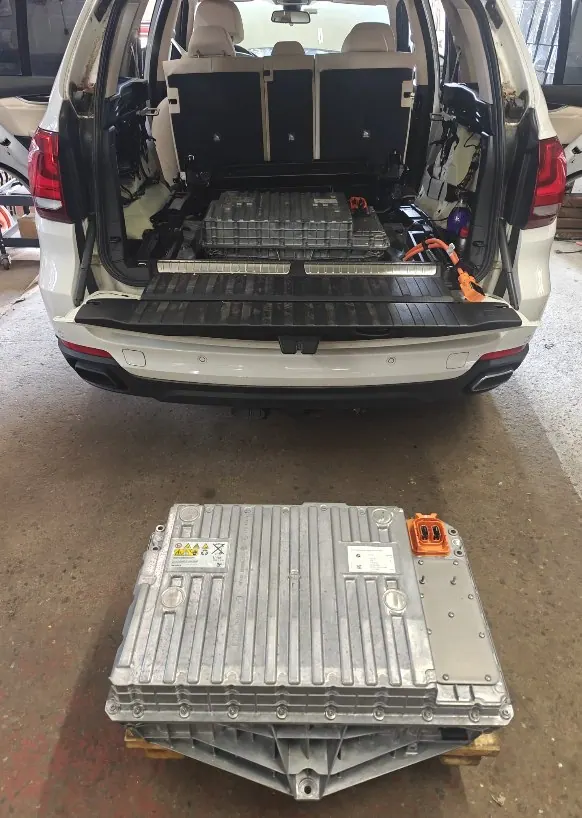
Vehicles with electrically driven A/C compressors run the compressor motor on high voltage, with the refrigerant oil in contact with its windings. Those systems require a specific non-conductive oil, and putting ordinary PAG oil into one can destroy a compressor that costs many times what the service did. Some also require an EV-specific machine or dedicated hoses to avoid cross-contamination. If your car is a hybrid or an EV, this is worth asking about wherever you take it — see EV & hybrid service for how we handle it.
Signs your system needs attention
- Cool but never properly cold → usually low on refrigerant, which means a leak.
- Cold, then warm as you drive → compressor clutch cycling, an overpressure cutoff, or the evaporator icing.
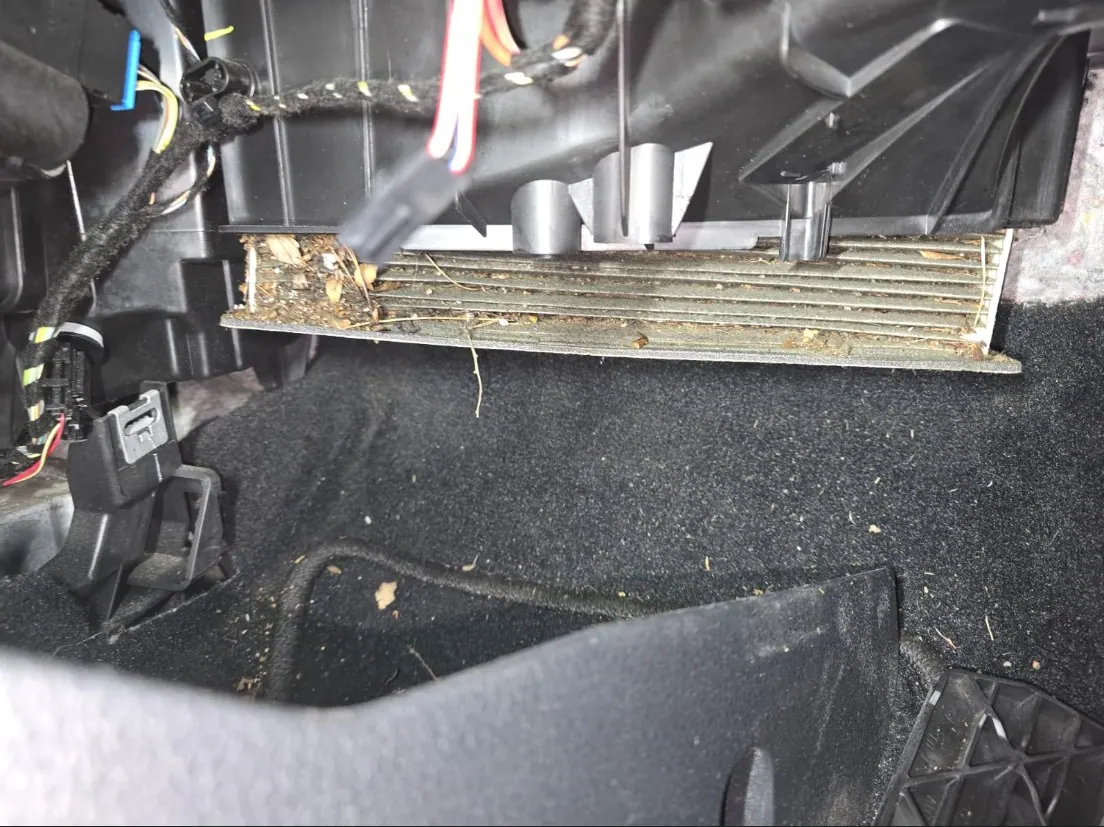
- Weak airflow at full fan → more often a clogged cabin filter or blower than a refrigerant problem.
- A musty smell on start-up → bacteria on the evaporator; that is the disinfection service, not a recharge.
- Noise or a burning smell when the A/C engages → stop using it and get it looked at before the compressor takes the rest of the system with it.
Our guide to why your A/C isn’t blowing cold walks through what each symptom points to, and getting the A/C ready for summer covers the pre-season check that keeps you out of this situation entirely.
Get it done properly, once
We service both R-134a and R-1234yf systems in Worcester, on dedicated equipment for each, and the order of operations does not change: find the leak, fix the leak, then recharge to spec. That is the difference between cold air that lasts a season and cold air that lasts years.
Book an A/C repair & recharge. If there are warning lights or electrical faults in the mix, electrical & diagnostics can sort them in the same visit, and anything else due goes under general repair & maintenance. Written quote before we touch anything.
Frequently asked questions
How much does an R-1234yf recharge cost?
At Iron Wolf Motors an R-1234yf recharge starts at $350, against $250 for an older R-134a system. The difference is the refrigerant itself, which costs several times more per pound, and the separate dedicated recovery and recharge machine these systems require. If there is a leak to repair, that is quoted separately and in writing before any work starts.
What is the difference between R-134a and R-1234yf?
They are chemically different refrigerants with very different environmental profiles. R-134a has a global-warming potential of roughly 1,400; R-1234yf is around 1, which is why regulations pushed manufacturers to switch. R-1234yf is also classed as mildly flammable, costs considerably more, and needs its own service equipment. The two are not interchangeable in either direction.
Can I put R-134a in a car that takes R-1234yf?
No. The service couplers are deliberately different sizes so the two cannot be cross-connected, and mixing refrigerants contaminates the system — which then has to be recovered and flushed, at far more cost than doing it correctly. It also contaminates any shop equipment that touches it afterwards, which is why any competent shop identifies the refrigerant before servicing.
Which cars use R-1234yf?
The switch rolled out gradually — a few models from 2013 and 2014, spreading through the late 2010s, until effectively every new car sold in the US was using it by the start of this decade. Anything from about 2015 onward could be either. There is a label under the hood stating the refrigerant type and the exact charge weight, and we confirm it before servicing.
Can I recharge R-1234yf myself with a can?
We strongly recommend against it. Venting refrigerant is illegal and servicing vehicle A/C requires certification; charge amounts are small and specified by weight, so overcharging from a can is easy and is a known cause of compressor failure; and a can cannot pull the vacuum that removes moisture from the system. Most importantly, if the system is low it is because it leaked — refilling it without finding the leak means being warm again within weeks.
How often should R-1234yf be recharged?
It should not need recharging on a schedule at all. A sealed A/C system does not consume refrigerant, so if the level is low, it has leaked. The right approach is to find and fix the leak, then recharge once to the factory weight — not to top it up every year.
Does an A/C recharge fix a leak?
No — it postpones the symptom. A recharge puts refrigerant back into a system that has already proven it cannot hold any, so it will be warm again, usually within weeks or months. It is also worth avoiding on cost grounds, since you are paying for expensive refrigerant that is going straight into the atmosphere. We find the leak first and quote the repair.