If your car’s air conditioning is blowing warm, the most common cause is a refrigerant leak — but it can also be a failing compressor, an electrical fault, or a blocked condenser. The worst thing you can do is keep dumping in “recharge in a can,” because that hides the real problem and can damage the system. Here’s how to read the symptoms and what a proper fix looks like.
Why your A/C blows warm — the common causes
- Low refrigerant from a leak (by far the most common). Refrigerant doesn’t get “used up” — if it’s low, it leaked, usually at a seal, hose, or the condenser.
- A failing compressor — the pump that circulates refrigerant. A worn clutch or internal failure stops it cooling.
- An electrical fault — a blown fuse, bad relay, or pressure switch can shut the system down.
- A clogged or damaged condenser — road debris and bugs block airflow, especially in stop-and-go traffic.
- A blend-door or climate-control fault — common when it’s cold from one vent and warm from another.
- A clogged cabin air filter — this shows up as weak airflow more than warm air.
What your symptoms are telling you
- Warm air all the time → most likely low refrigerant or a failing compressor.
- Cold at first, then warm → can be the compressor clutch cycling, an overpressure cutoff, or the evaporator freezing up.
- Cool but weak airflow → usually a clogged cabin filter or a blower-motor issue.
- Cold on one side only → a blend-door or dual-zone climate-control fault.
- Musty or moldy smell → bacteria in the evaporator or a dirty cabin filter.
Why a proper diagnosis matters
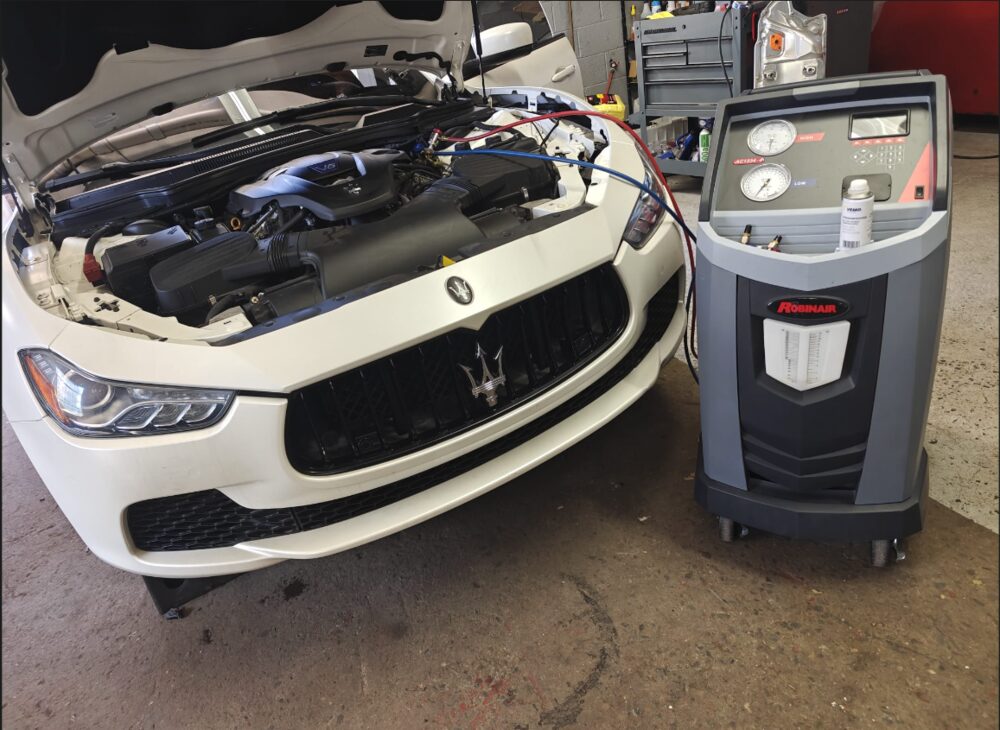
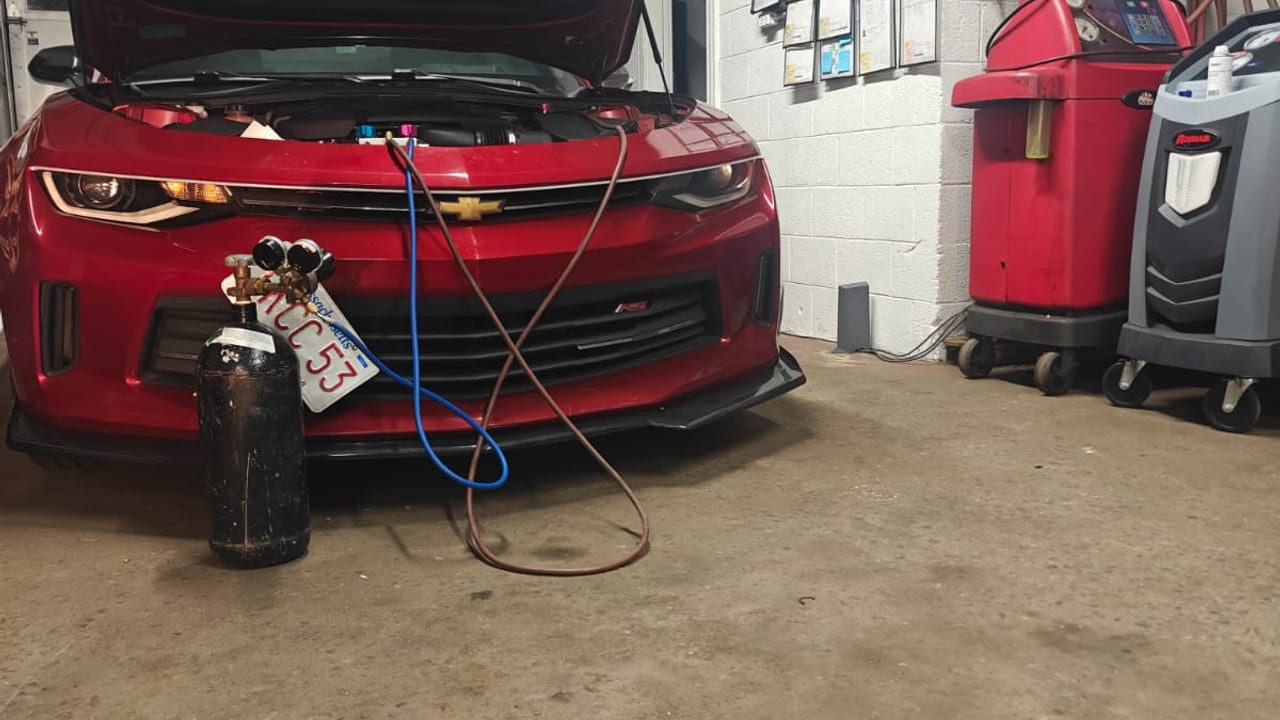
We pressure-test the system and use UV dye and electronic detection to find exactly where it’s leaking, repair the cause, then evacuate and recharge to your vehicle’s precise specification. That’s the difference between cold air that lasts a season and cold air that lasts years.
When to bring it in
Don’t wait — running a failing A/C can turn a cheap seal into an expensive compressor, and a healthy A/C also runs your defroster, which is a safety system year-round. We service both older R-134a and newer R-1234yf systems — and if your car is on the newer refrigerant, our guide to R-1234yf recharges explains why that service costs more. See our A/C repair & recharge service. If you’ve also got warning lights on, our electrical & diagnostics team can sort everything in one visit.
Frequently asked questions
Why does my A/C blow cold at first and then warm?
Common causes are the compressor clutch cycling off, a system that ices up because of moisture or a sensor fault, or a high-pressure cutoff from a clogged condenser. We test under load to pin down which it is.
Is it bad to drive with broken A/C?
It won’t strand you, but A/C also feeds your defroster for clearing fog and ice — a safety issue. And a small leak left alone often grows into a costly compressor failure, so it’s cheaper to fix early.
How much does an A/C recharge cost?
It depends on whether there’s a leak and where it is. A simple recharge is inexpensive; a leaking component costs more to repair. We diagnose first and quote before any work — no surprises.
Does my car use R-134a or R-1234yf refrigerant?
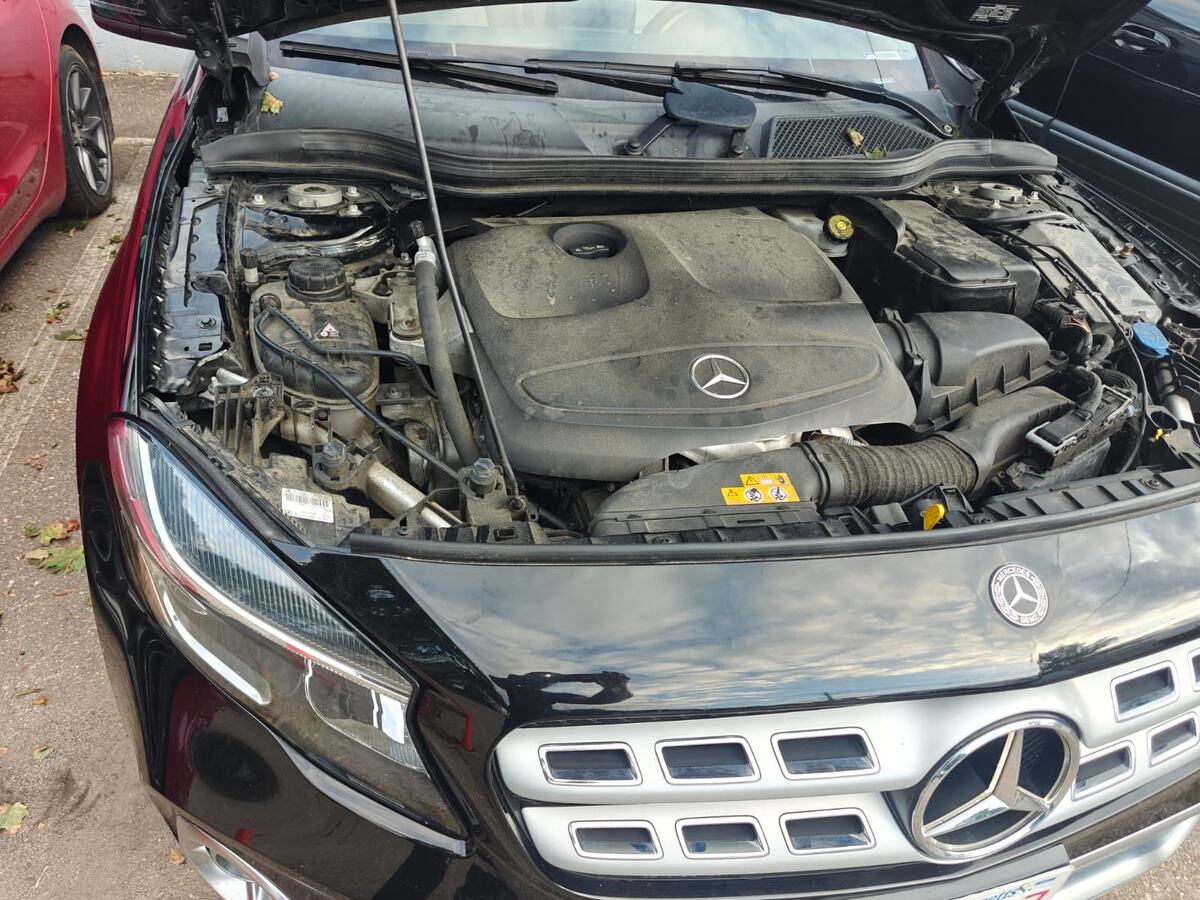
Older vehicles generally use R-134a, while most cars built in the last several years use R-1234yf. There is a label under the hood stating the type and the exact charge weight, and we confirm it before servicing the system. The two are not interchangeable and each needs its own dedicated equipment.
Why does my A/C smell bad when I turn it on?
That’s usually mold or bacteria growing on the evaporator, or a dirty cabin air filter. Cleaning the system and replacing the filter clears it up.