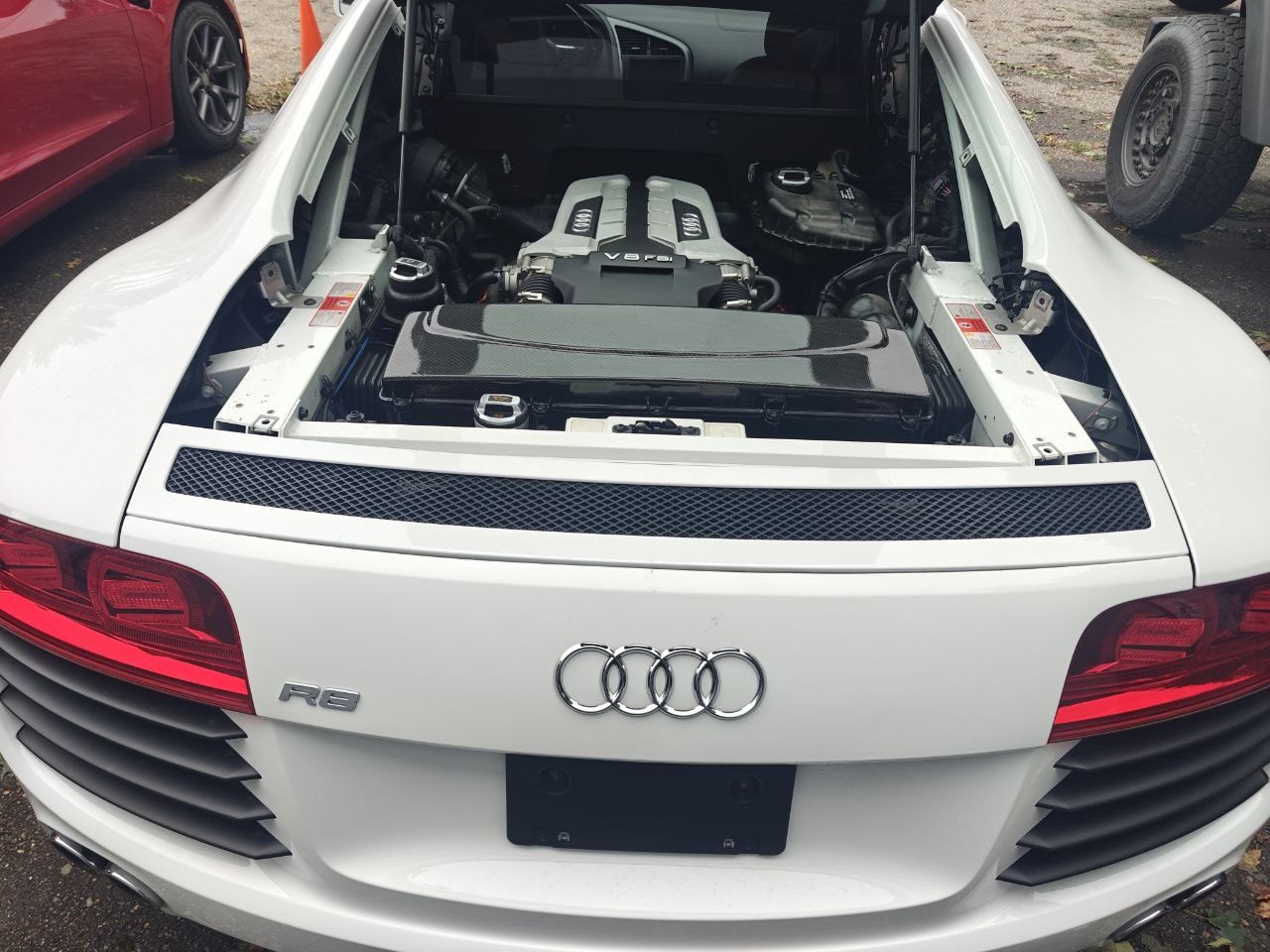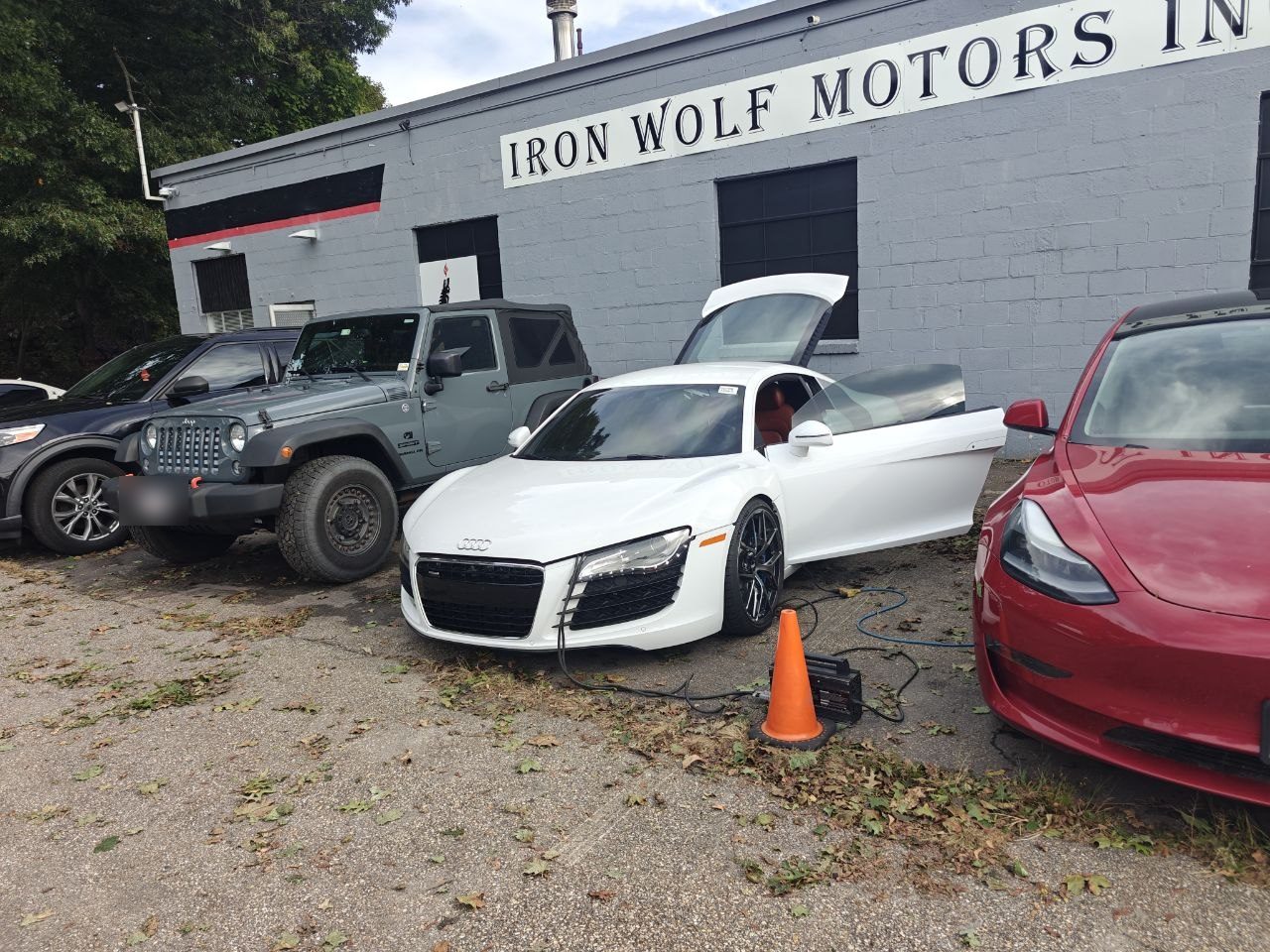
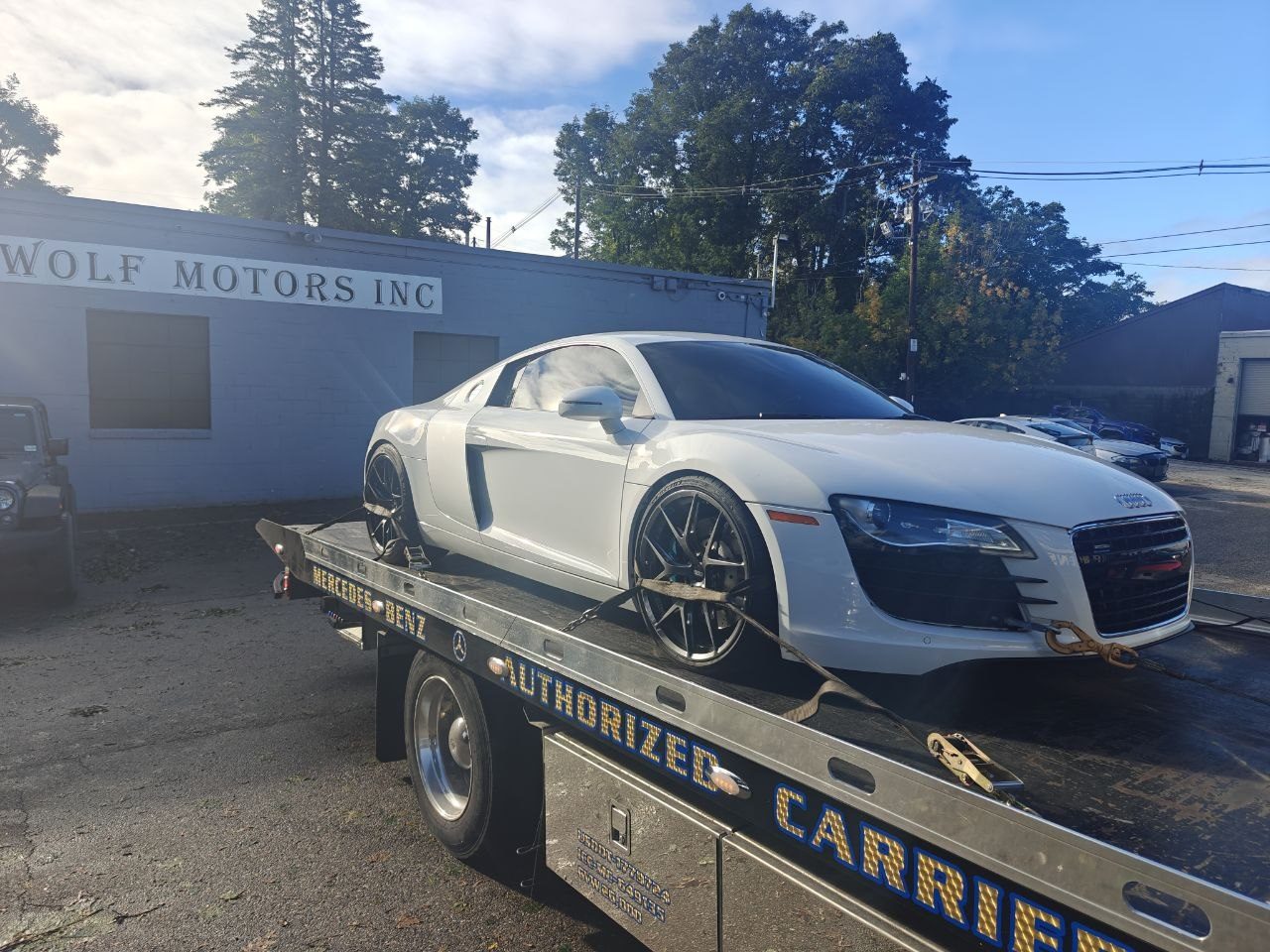
This R8 arrived on the back of a flatbed. It would not start, and the story behind it was longer than most: the car had been ECU-tuned, the owner wanted it put back to factory, and by the time it reached us three other shops had already tried. It came to us for ECU programming — the work of undoing what had been done.
Two engine computers, not one
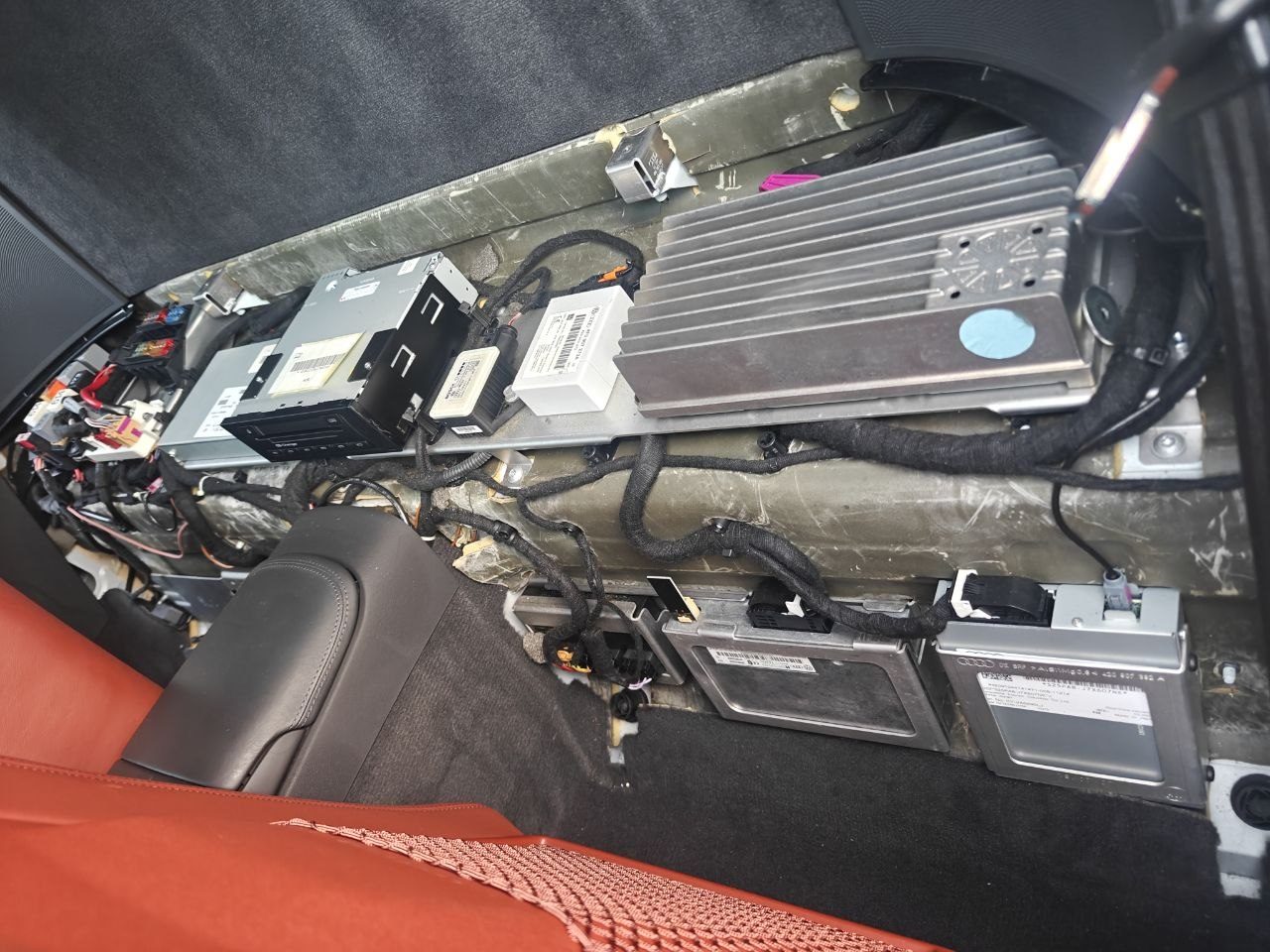
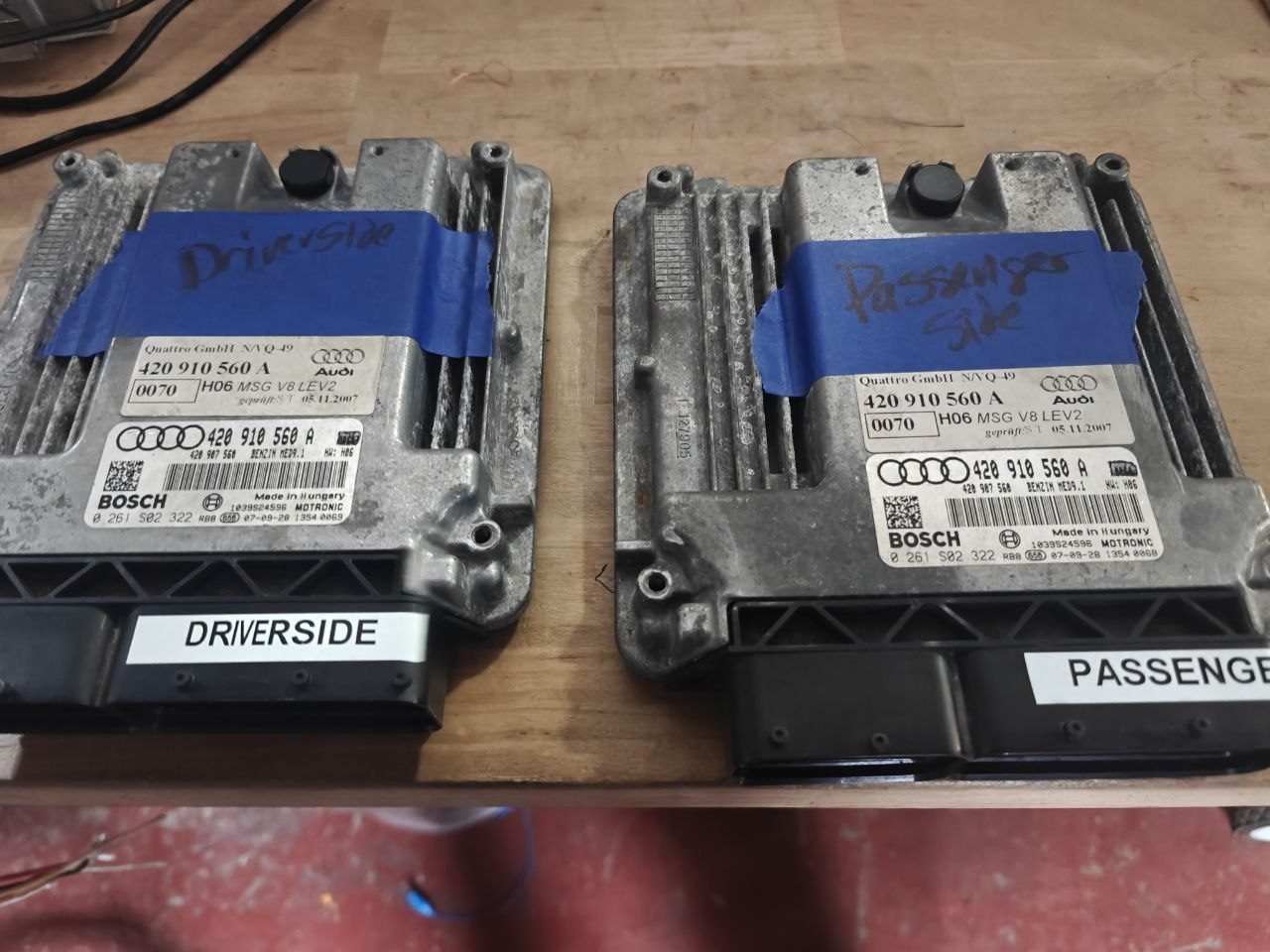
The first-generation R8 4.2 FSI V8 does not have a single engine computer. It has two Bosch ME9.1 engine control units, one for each bank of the V8. On this car both carry the same Audi part number, 420 910 560 A. They work as a pair, and the pair is tied into the rest of the car: the immobilizer has to recognise both of them, and both have to carry configuration that matches the car they are fitted to.
What we found
The car would not start, and the reason was not mechanical. Neither engine ECU would communicate with the diagnostic tool — no answer at all from either one. And the immobilizer was refusing to authorise the engine — with both ECUs out of step with it, it no longer recognised them as belonging to the car.
Between the tune and the three earlier attempts to reverse it, the car’s configuration had been corrupted. We cannot say exactly what each shop did — we were not there, and the car did not come with notes. What we could see was the result: two engine ECUs that had stopped talking, and an immobilizer that no longer recognised the engine.
Getting the ECUs back
An ECU that does not answer on the diagnostic connector cannot be repaired by retrying from the diagnostic connector. Both units came out of the car, were labelled by side so they could not be swapped, and were recovered on the bench until they communicated again. Only then did it make sense to put them back in the car and carry on.
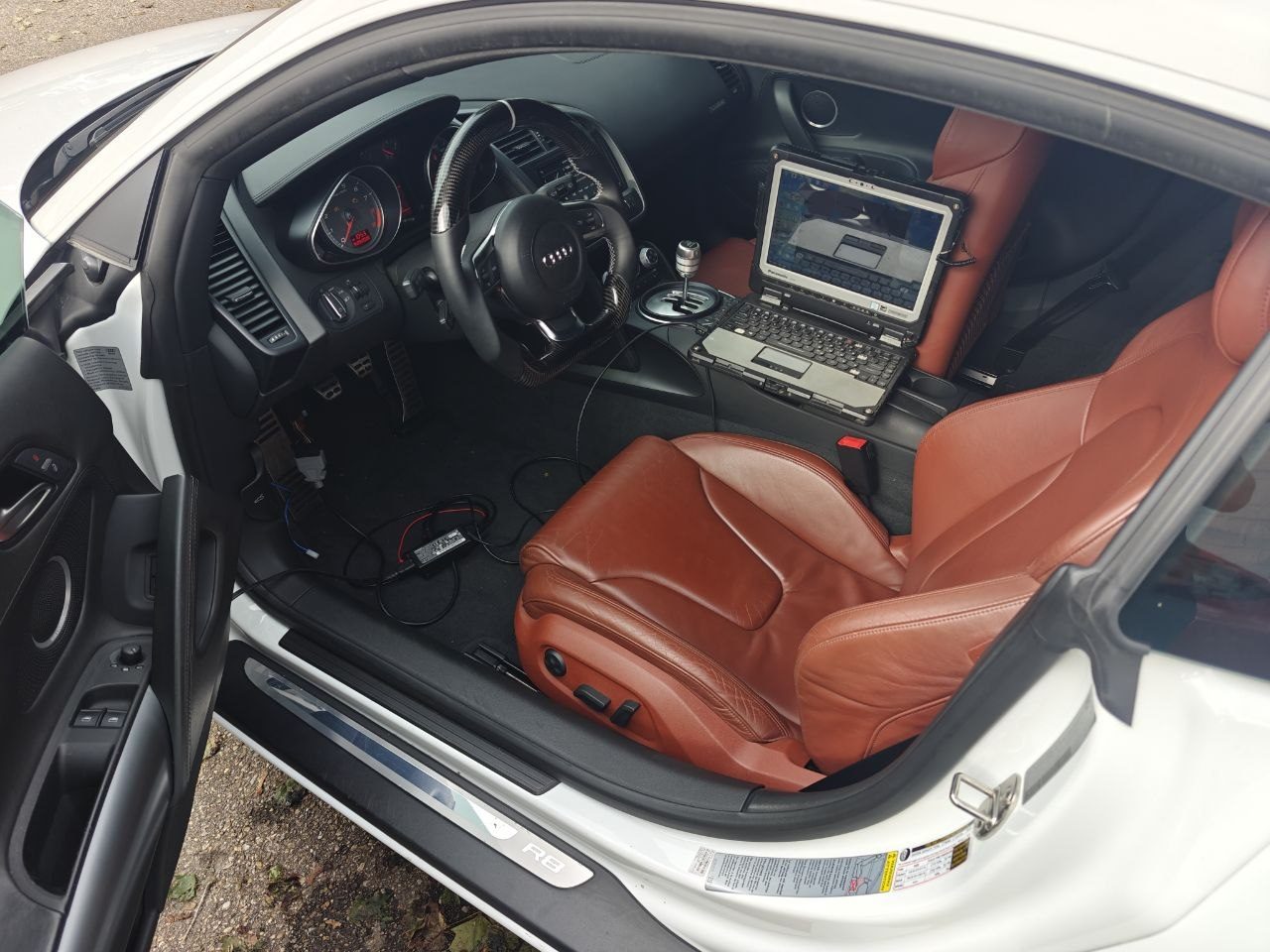
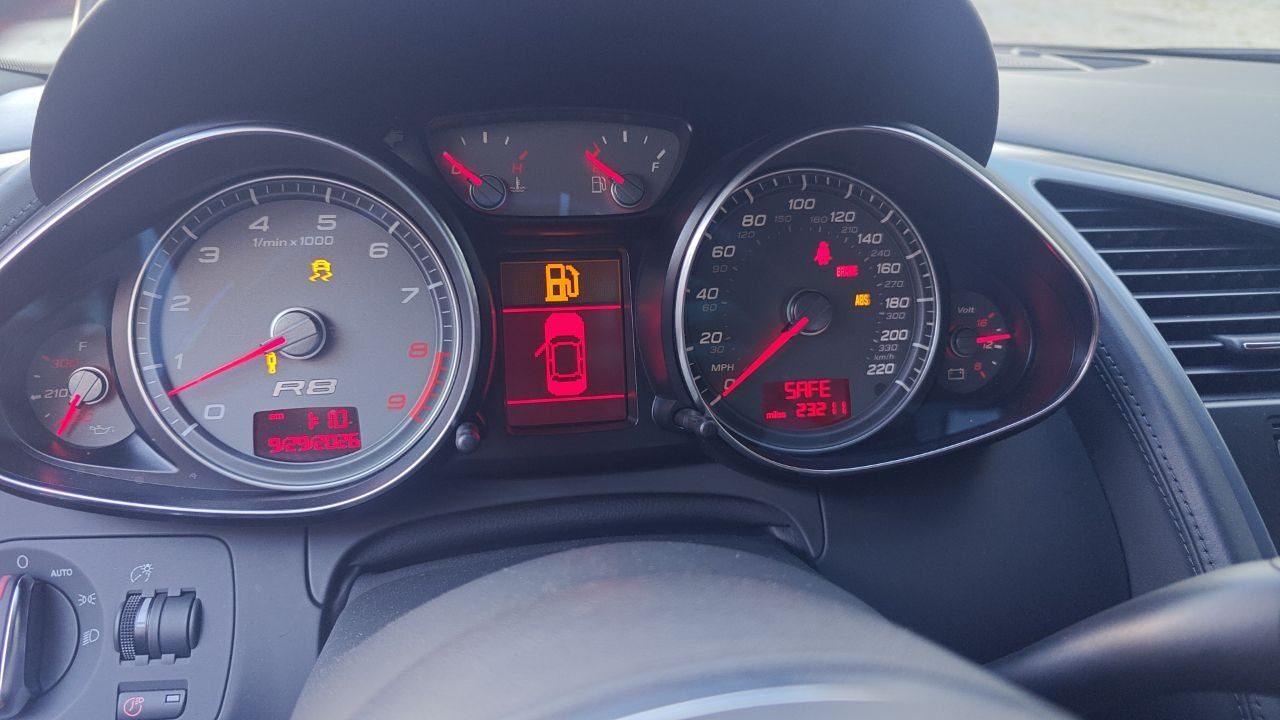
Throughout the programming work the car sat on a battery support unit, which holds the system voltage steady while modules are being written. You can see it in the photographs, on the ground by the cone, and the cluster voltmeter reading around 14 V. A battery sagging in the middle of a write is one of the most common ways an ECU ends up in exactly the state these two were in.
Immobilizer and factory configuration
With both ECUs talking again, the immobilizer was reprogrammed so that the cluster, the keys and both engine control units recognised each other as one car. Then the original factory configuration was restored and the modules coded back to the car — which was what the owner had asked for in the first place: the R8 as Audi built it, not as it had been tuned.
What to take from this
If your car has been tuned and you want it back to factory, the most useful thing you can do is stop after the first failed attempt. Every further try layers more changes on top of the last, and the next shop has to work out not only what the car should be, but everything that has been done to it since. It also helps to bring whatever you have: the tuner’s name, any saved files, any paperwork from previous shops.
And a no-start after programming work is an electrical diagnostics problem before it is a parts problem. Nothing on this R8 was mechanically broken. It needed the right Audi tooling, a stable power supply and a methodical order of work. More on when this kind of work is needed in our guide on when ECU programming is actually necessary.