Volkswagen Jetta Coolant Flush: What Aged Coolant Leaves Behind
A 2017 Volkswagen Jetta came in for a coolant flush. What came out of the system — debris caught in the strainer, and crusted deposits around the bottom of the radiator — is exactly why aged coolant is worth replacing on time, before it clogs the system and turns into overheating or a heater that stops working.
2017 Volkswagen Jetta October 23, 2026 3 min readDocumented by Alex
How it arrived
In for a coolant flush as maintenance.
Reported symptoms
Coolant aged and due for replacement
Outcome
The Jetta’s cooling system was flushed and refilled with fresh coolant of the correct specification, and the air bled out. The work carries our 12-month / 12,000-mile warranty on new parts, whichever comes first.
This 2017 Volkswagen Jetta came in for a coolant flush — routine maintenance, with no overheating yet. What came out of the system shows why that timing matters.
What came out
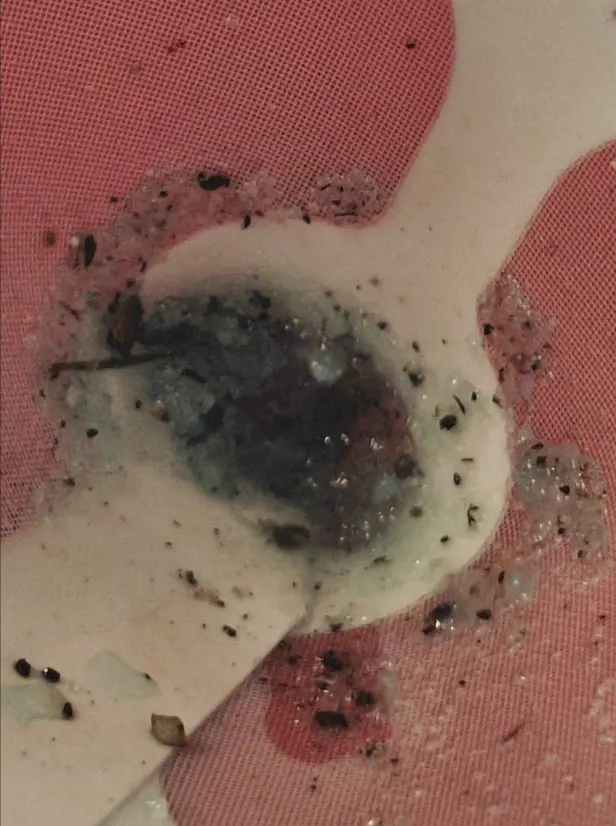
Caught in the strainer as the old coolant drained: dark particles and gritty, crystalline deposits.
Coolant does more than stop the engine freezing. It carries corrosion inhibitors that protect the metal and plastic inside the cooling system, and those inhibitors are used up over time. Once they are, corrosion products and deposits start to form and circulate. The old coolant from this Jetta came out carrying dark debris and gritty deposits.
Underneath: crusted, rust-colored deposits built up along the bottom of the radiator.
Why it matters
Clogged radiator — deposits narrow the passages, the radiator sheds less heat, and the engine runs hotter. Eventually that is an overheating engine.
Clogged heater core — the heater core has even smaller passages than the radiator. When it clogs, the cabin heat fails — which in a Massachusetts winter is also your defroster.
Water pump and thermostat — debris wears seals and can make a thermostat stick.
We flushed the cooling system and refilled it with fresh coolant of the correct specification, then bled the air out so the system fills completely.
What to take from this
Coolant looks fine from the reservoir long after it has stopped protecting the system. If you don’t know when yours was last changed, ask at your next oil change or general service. More on looking after the brand on our Volkswagen service page.
From the job
What we photographed
Debris from the old coolant.Deposits along the bottom of the radiator.
FAQ
Questions this job raises
Why is a coolant flush important?
Aged coolant loses its corrosion protection. Deposits and debris form and can clog the radiator and heater core, leading to overheating or a cabin heater that stops working.
What can old coolant do to a Volkswagen Jetta?
On this 2017 Jetta the old coolant came out with debris and gritty deposits, and deposits had crusted along the bottom of the radiator. Left longer, that clogs the system.
Can old coolant cause the heater to stop working?
Yes. The heater core has small passages that clog easily. A clogged heater core means little or no cabin heat, and a weak defroster.
How do I know if my coolant needs changing?
You usually can’t tell from the reservoir. Have the coolant condition checked at regular services and follow the maintenance schedule for your car.
Do you do coolant flushes in Worcester?
Yes. We flush and refill cooling systems on Volkswagen and most other makes at our Worcester, MA shop.