209 Stafford St, Worcester, MA 01603Get directionsMon–Fri 8AM–5PM · Sat 8AM–2PM
Engine & Oil Leaks

Mercedes-Benz GLA250, Towed In Leaking Oil: A Cracked Oil Cooler, Not a Gasket

A GLA250 arrived on a flatbed with oil still dripping off the underside. The leak was not a seal or a gasket — the oil cooler itself was cracked. Replaced as a complete genuine Mercedes filter housing assembly, with an oil service and a coolant flush to finish.

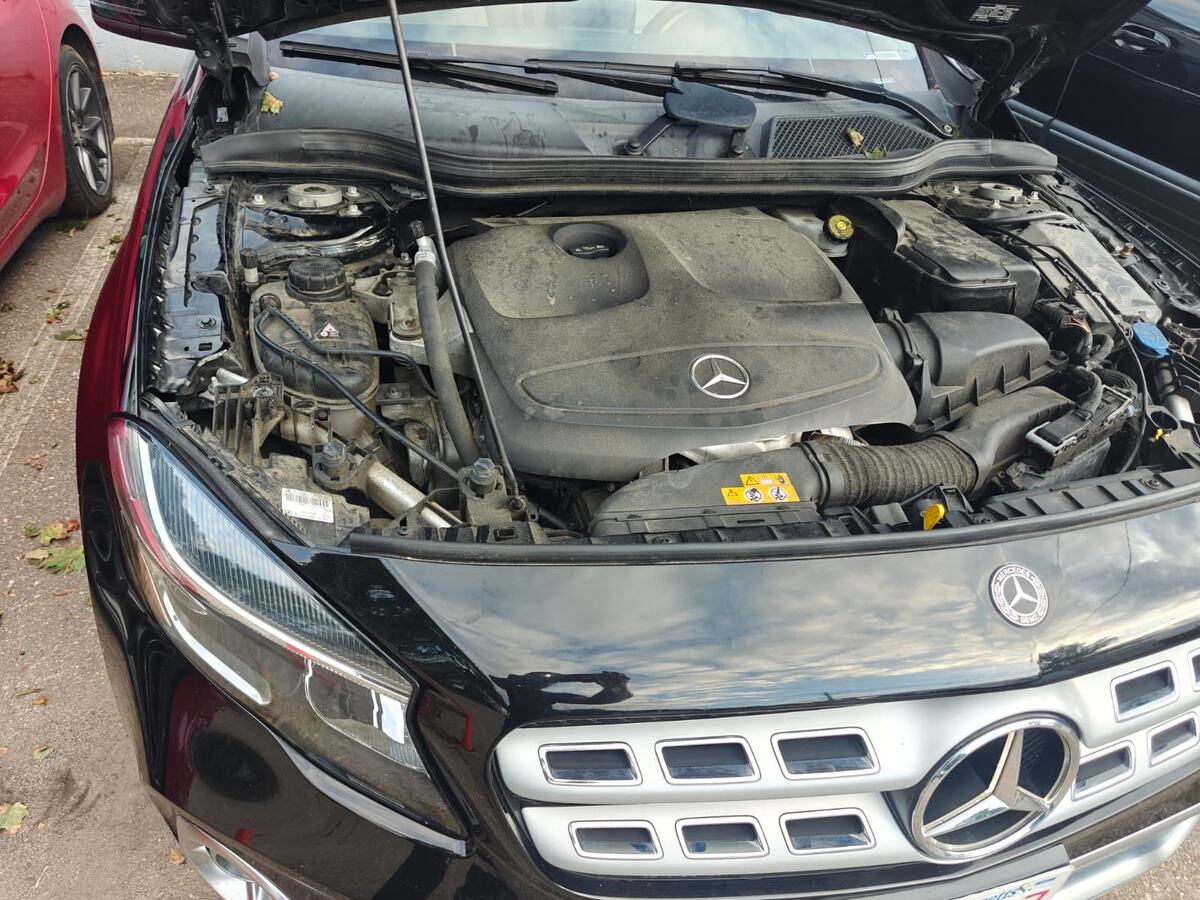
Black Mercedes-Benz GLA250 with the hood raised on arrival at Iron Wolf Motors in Worcester, MA, showing the M270 four-cylinder turbo engine before the oil leak was traced

How it arrived

Flat-bedded in with an active oil leak. The owner saw it dripping and would not drive the car.

Reported symptoms

  • Visible oil leak, still dripping when the car was unloaded
  • Fresh oil down the back of the engine and across the underside
  • Oil puddle where the car had been parked
  • Oil level down on the dipstick
  • No warning lights and nothing stored on the scan tool

Outcome

The cracked oil cooler was replaced as part of a complete genuine Mercedes-Benz oil filter housing assembly, with new seals throughout. The cooling system was flushed and refilled with the correct Mercedes-approved coolant, and the engine oil and filter were renewed. Run up, bled, brought to temperature and re-inspected — dry at the housing and dry on the floor. The repair carries our 12-month / 12,000-mile warranty on parts and labour, whichever comes first.

Most oil leaks we see on these cars are seals. A valve cover gasket goes hard, a filter housing O-ring takes a set, and oil starts finding its way out of a joint that used to hold. This one was not that, and the difference decided how the job was done.

How it arrived

The GLA came in on a flatbed. The owner had found oil under the car, looked underneath, saw it actively dripping, and decided not to drive it. That was the right decision and it is worth saying so plainly, because the alternative gets expensive fast.

Finding where the oil was actually coming from

Oil runs downhill, which is what makes leaks on a transversely mounted four-cylinder awkward. By the time the car is on the lift, the underside is wet from the sump rail backwards and the oil has travelled a long way from wherever it left the engine. The wettest part of the car is almost never the part that failed.

So the first job was not diagnosis, it was cleaning. The engine was degreased and dried, the car run up to temperature, and then inspected again to see where fresh oil reappeared. On the M270 there is a short list of usual suspects — the valve cover gasket, the oil filter housing seals, the turbo oil feed line, and the oil cooler — and cleaning the engine down is what tells them apart.

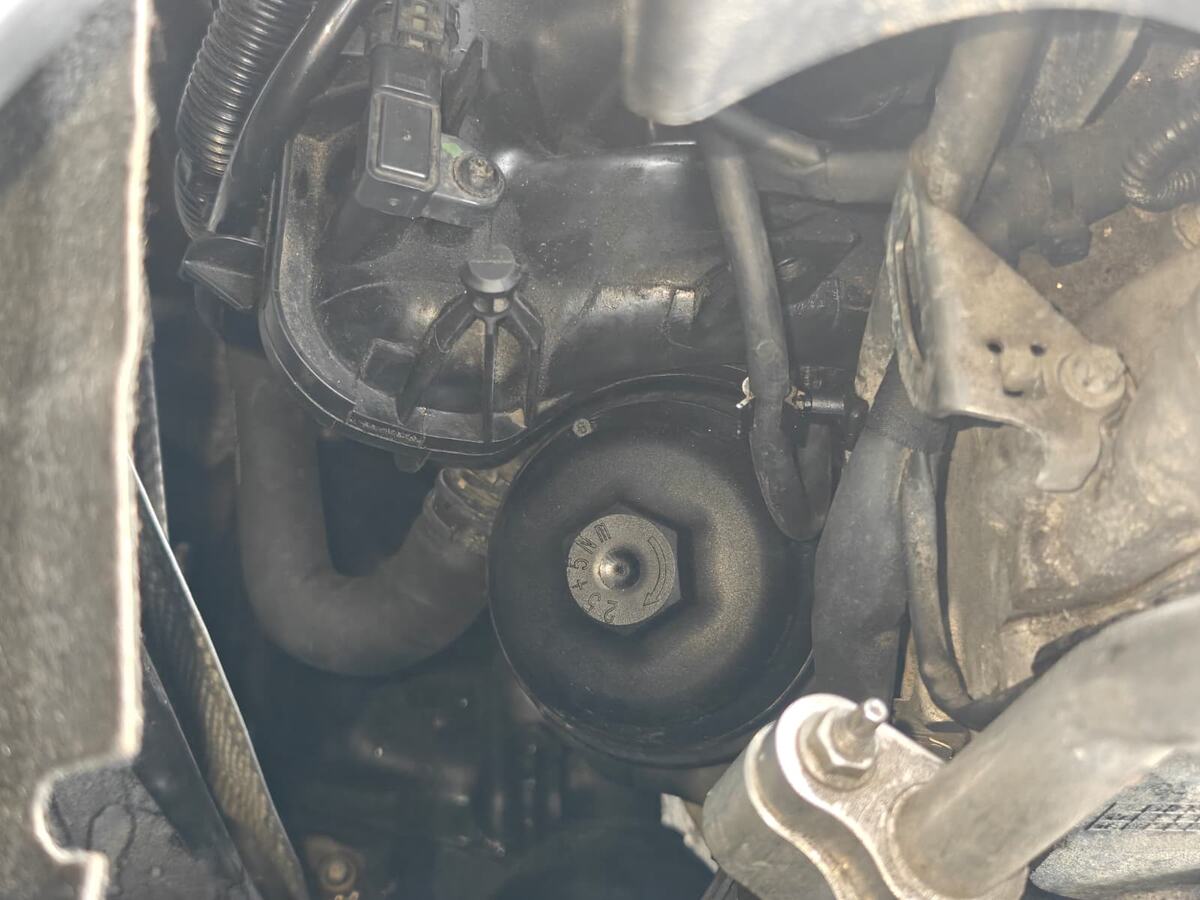
The oil came back at the oil filter housing, low on the front of the block. That narrowed it to two things: the seals between the housing and the block, or the cooler bolted to the housing itself.

What we found

The assembly came off the engine and the answer was visible on the bench. The oil cooler was cracked. Not a hardened gasket, not a seal that had taken a set — a split in the cooler itself, with oil staining tracked right down across the plate stack from where it had been escaping.
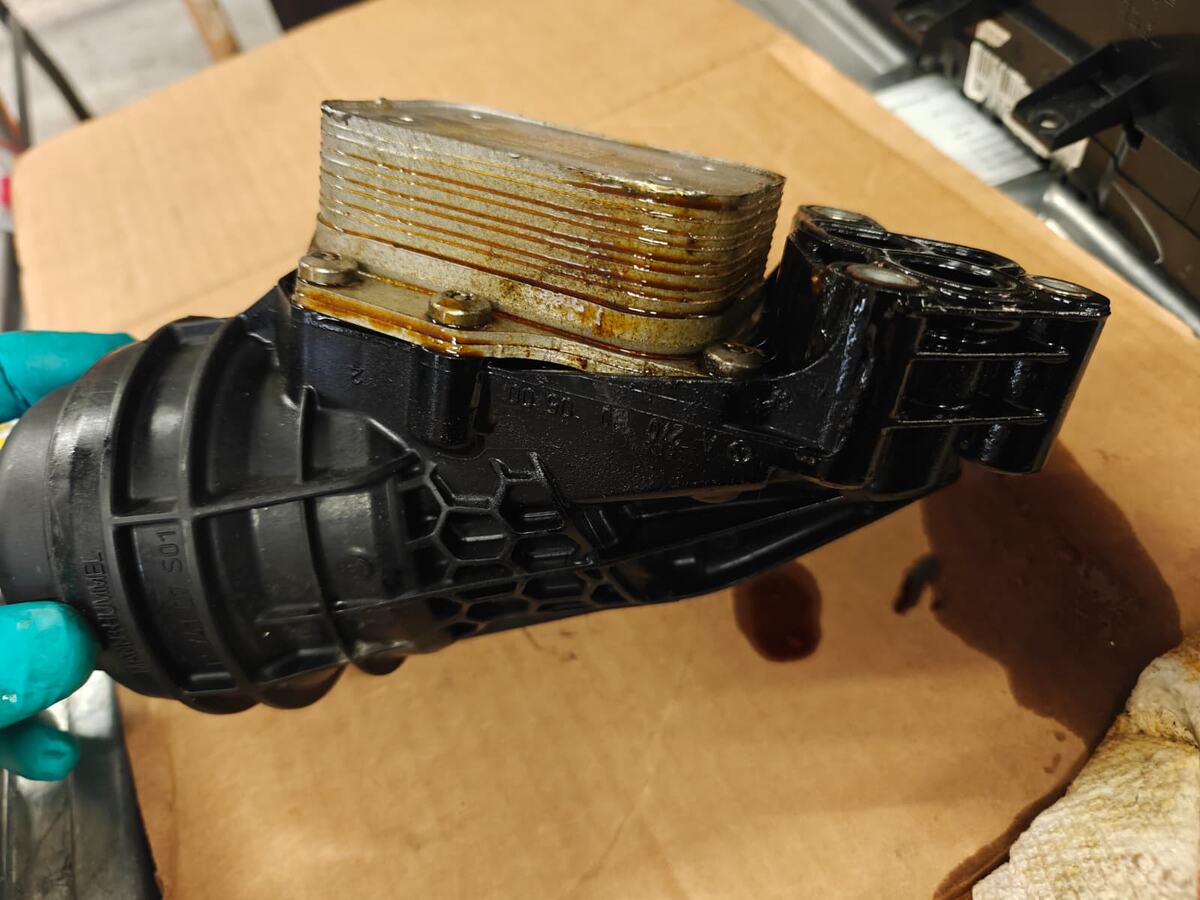
Removed oil filter housing and integrated plate-type oil cooler from a Mercedes-Benz GLA250 held over a workbench, with engine oil weeping out from between the cooler plates and running down the face of the stack
The failed part off the car. Oil is coming out of the cooler plate stack itself and running down the face of it — not out of a joint, not past a seal. That is what makes this a replacement and not a reseal.

One thing worth recording: on this car the oil and the coolant had not mixed. The crack was letting oil out to atmosphere rather than across into the coolant side. The oil on the dipstick was oil, the coolant in the tank was coolant, and there was no mayonnaise under the oil cap. That is a better outcome than it could have been, and it is the first thing we check on any cracked cooler, because a cooler that cross-leaks turns a leak repair into a much larger conversation.

The decision: complete housing, not a reseal

There is a cheaper version of this repair available, and it is the wrong one. A shop can fit new seals to the housing, put the same cooler back on, and hand the car over — the engine is clean, the leak is not visible for a week or two, and the invoice is small.

But a crack is not a sealing problem. New O-rings do not close a split in a heat exchanger, and the part that cracked once under heat cycling and pressure is not going to behave differently with fresh seals around it. So the cooler was replaced — and it was replaced as part of a complete genuine Mercedes-Benz oil filter housing assembly, cooler and seals together.

Replacing the whole assembly rather than the cooler alone is deliberate too. The housing is plastic, it lives directly on a hot block, and it has been through every heat cycle the cracked cooler has. Bolting a new cooler to a housing of that age is a job you do once and then do again. The labour to get in there is the expensive part of this repair; doing it twice is what actually costs the customer money. This is the same reasoning we set out in our guide on aftermarket vs OEM parts — the part price is rarely the number that matters.

Coolant flush and oil service

Because the cooler sits in the coolant circuit, the coolant had to come out to do the job at all. Once it is out, putting the old coolant back in through a brand new heat exchanger makes no sense, so the system was flushed and refilled with the correct Mercedes-approved coolant rather than topped back up. Mercedes coolant specification is not a detail to improvise on, and we cover why in why European cars need a specialist.

The engine oil and filter were renewed at the same time, with the correct specification oil for the engine. The car had been losing oil and running low, the filter housing was off the engine anyway, and there is no sense pushing the old oil back through a new cooler. Our engine oil change guide covers what a proper oil service on a European engine involves.

After reassembly the engine was run up, the coolant bled properly, the system brought to temperature and pressure, and the whole area inspected again dry and clean. No weep at the housing, no drop on the floor.

What to take from this

If you own a GLA, CLA, A-Class or any of the other cars running the M270 family of engines and you find oil on your driveway, the question to ask is not "how much for a gasket." It is "what exactly is leaking, and did you clean it down to find out?" The answers to those two questions are the difference between a repair and a delay.

And if the answer comes back as the oil cooler, ask whether the cooler alone is going on or whether the housing is being renewed with it. The labour is the same either way. Only one of them is finished.
From the job

What we photographed

Black Mercedes-Benz GLA250 with the hood open in the lot at Iron Wolf Motors in Worcester, MA, the M270 turbocharged four-cylinder engine cover visible before any work started
How it arrived. Flat-bedded in, hood up, with oil still finding its way to the floor.
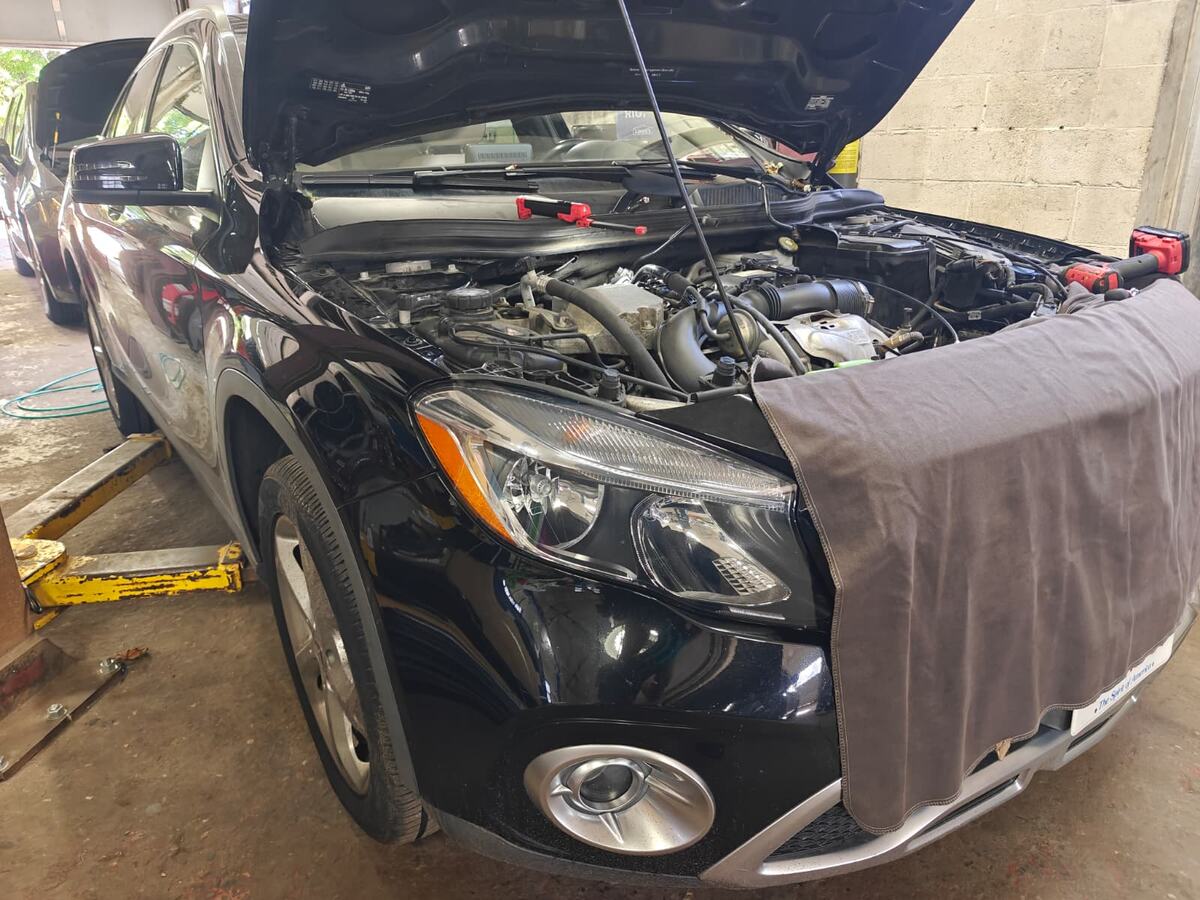
Mercedes-Benz GLA250 pulled into a service bay at Iron Wolf Motors with the hood raised, a fender cover over the front end and the lift arms positioned under the car
Into the bay and onto the lift. The first real job on an oil leak is getting the engine clean enough to tell you something.
Close-up of the oil filter housing cap on the M270 engine of a Mercedes-Benz GLA250, fitted to the engine and surrounded by coolant hoses and wiring, with oil residue across the area
The oil filter housing still on the engine, with the filter cap in view. Fresh oil reappeared here after the engine was degreased and run up — which narrowed the job to the housing seals or the cooler bolted to it.
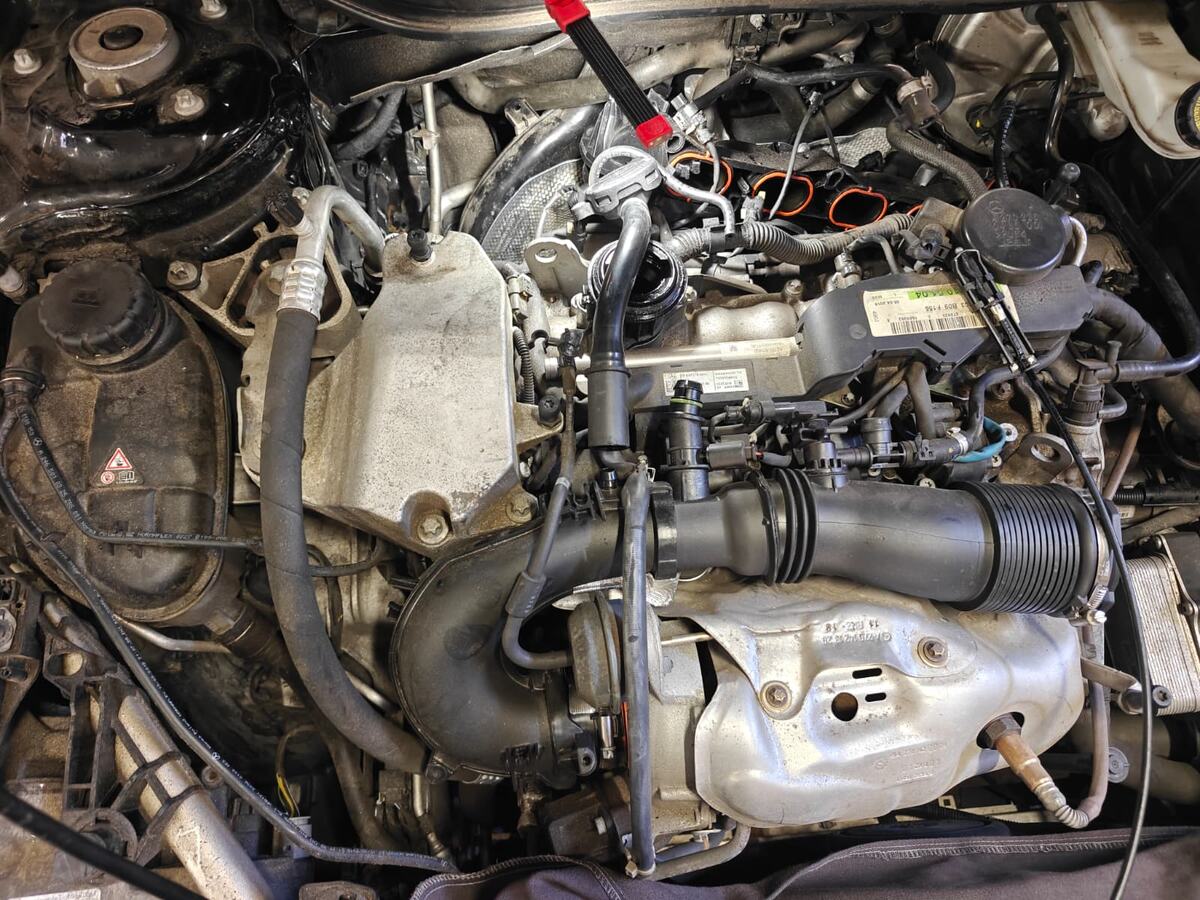
Mercedes-Benz GLA250 engine bay with the engine cover, intake ducting and surrounding components removed to gain access to the oil filter housing and oil cooler on the front of the block
Stripped down for access. The labour on this repair is almost entirely getting to the part — which is exactly why it is worth only doing once.
Gloved hand holding the removed oil filter housing and integrated plate-type oil cooler from a Mercedes-Benz GLA250 on a workbench, with heavy oil staining tracked down the cooler plate stack
The answer, on the bench. The plate-type oil cooler bolted to the top of the filter housing, cracked, with oil staining tracked straight down the plate stack from where it had been escaping. No gasket was ever going to fix that.
FAQ

Questions this job raises

What are the symptoms of a cracked oil cooler on a Mercedes GLA250?

Most commonly an external oil leak low on the front of the engine, oil across the underside of the car, a dropping oil level and a puddle where the car is parked. There is usually no warning light and nothing stored on the scan tool, because no module on the car can detect the crack. If the cooler cross-leaks internally instead, you get the opposite picture — oil in the coolant expansion tank or a milky deposit under the oil filler cap. On this car the oil and coolant had not mixed; the crack was leaking to atmosphere.

Why replace the whole oil filter housing instead of just the seals?

Because the fault was a crack in the cooler, not a seal that had hardened. New O-rings do nothing about a split in a heat exchanger. We fitted a complete genuine Mercedes-Benz filter housing assembly so that the cooler, the housing and every seal went on new together — the plastic housing has been through the same heat cycling as the cracked cooler, and the labour to reach the part is the same whether you renew one piece or all of it.

Why did the job need a coolant flush?

The oil cooler on this engine is a plate heat exchanger that carries engine coolant on one side and engine oil on the other, so it cannot be removed without opening the cooling system. The coolant has to come out regardless. Rather than put the old coolant back through a new cooler we flushed the system and refilled it with the correct Mercedes-approved coolant.

Can you drive a car with an active oil leak?

You should not. A leak that drips slowly on the driveway loses oil far faster at speed and under load, and running an engine low on oil causes damage that costs many times the price of the repair. Oil reaching a hot exhaust or turbo housing is also a fire risk. This customer had the car towed in rather than driving it, which was the correct call.

Will a scan tool find an oil cooler leak?

No. This car had no warning lights and nothing stored in any module. Oil pressure was normal, the coolant was still in the system, and every sensor was reading what it expected to read. Finding the leak meant degreasing the engine, running it up to temperature and inspecting it on a lift to see where fresh oil returned. A clean scan report does not mean the car is healthy.

Which Mercedes engines use this oil filter housing and cooler?

The M270 family used in the GLA250, CLA250, A-Class and related models shares this arrangement, with the oil cooler mounted on the oil filter housing on the front of the block. We see the same repair across those cars at our Worcester, MA shop.