Every year, the first cold week brings the same worry from EV owners: the range estimate has dropped, the car charges more slowly, and the battery suddenly seems smaller than it was in September. In almost every case nothing is wrong. Cold affects an electric car in predictable ways, most of the lost range comes back in spring, and a few habits recover a good part of it in winter too.
This guide covers what happens to a Tesla or other EV in a Central Massachusetts winter, what you can do about it, and the one component that genuinely does leave cars stranded. For the bigger picture on what an independent shop can and cannot do on a Tesla, see independent Tesla service in Massachusetts.
Why EV range drops in the cold
Several things stack up at once:
- The battery chemistry slows down. A cold lithium-ion battery cannot deliver or accept energy as easily as a warm one, so the car limits both until the pack warms up.
- Heat is not free. A gas engine throws off huge amounts of waste heat, and the heater simply uses it. An EV has to make its heat from the battery, both for the cabin and to warm the pack itself.
- Regenerative braking is limited. A cold battery cannot accept a large charge, so the car recovers less energy when you slow down until it warms.
- The roads and the air cost more. Slush, snow and winter tires increase rolling resistance, and cold air is denser than warm air.
How much range does that cost? In a 2019 study, AAA tested five EVs at 20°F. With the cabin heater off, range dropped about 12%. With the heater on, it dropped about 41%. Those cars were 2017 and 2018 models, and newer cars with heat pumps do better, but the pattern holds: the heater is the largest single factor, and short trips are the worst case, because every trip starts with a cold cabin and a cold pack.
Heat pump or resistive heater?
How much winter range you lose depends partly on how the car heats itself. A heat pump moves heat rather than generating it, and uses considerably less energy to keep the cabin warm than a resistive heater does. Tesla introduced a heat pump on the Model Y when it launched in 2020, and added one to the Model 3 with the refreshed 2021 model year. Earlier Model 3 cars use resistive heating and lose more range in the cold.
Whatever the car, seat heaters and a heated steering wheel warm you directly, using far less energy than heating all the air in the cabin. On a cold commute, warm seats with the cabin set a few degrees lower is one of the easiest ways to stretch range.
Precondition while you’re plugged in
This is the habit that makes the biggest difference. Preconditioning warms the cabin and the battery before you leave. If the car is plugged in while it does it, most of that energy comes from the wall rather than from the battery, so you leave with a warm car, a warm pack and close to your full charge.
- Schedule it. On a Tesla, Scheduled Departure lets you set the time you usually leave, and the car times the warm-up to be ready then. You can also start climate control from the app a little before you leave.
- Precondition before fast charging. A cold battery charges slowly at a Supercharger. If you set a Supercharger as your destination in the car’s navigation, the car warms the battery on the way so it arrives ready to charge faster.
- Other EVs have the same tools under different names. Look for “departure time,” “battery preconditioning” or “climate timer” in the car or its app.
Charging in the cold
A cold battery accepts charge more slowly. On a Tesla, a blue snowflake next to the battery icon means the pack is cold and some of its energy and regenerative braking are temporarily limited. It is not a fault and it clears as the battery warms up.
- Charge after driving, not before. Plugging in when you get home, while the pack is still warm from the trip, charges faster than plugging in after it has cold-soaked all night.
- Keep it plugged in during a cold snap. A parked EV uses some energy to look after itself in very cold weather. If it is plugged in, that comes from the wall.
- Follow the charge limit for your battery. Tesla shows its recommended daily charge limit in the car. Cars with an LFP (lithium iron phosphate) battery are a special case: Tesla recommends charging those to 100% at least once a week.
- Home Level 2 charging is the backbone in winter. Slower public charging and longer queues make a home charger more valuable from December to March than at any other time.
The low-voltage battery: what actually strands EVs in January
The big high-voltage pack gets all the attention, but it is rarely the reason an EV will not start on a cold morning. Every EV also has a small low-voltage battery that powers the computers, the screen, the door handles and the contactors that connect the main pack. If it fails, the car can be sitting on a mostly full main battery and still refuse to wake up. Our independent Tesla service guide explains why this is the most common Tesla no-start. Here is what matters in winter.
- Know which battery you have. Model 3 and Model Y cars built until about early 2022 use a 12V lead-acid battery. Later cars use a lithium-ion low-voltage battery. On a Tesla you can check under Controls → Software → Additional Vehicle Information, which shows the low-voltage battery type.
- Lead-acid ones are the ones to watch. Like any lead-acid battery, cold reduces what they can deliver, and an aging one often gives up on the first hard frost.
- Take the warning seriously. If the car shows an alert that the low-voltage battery needs service, or the screen and door handles are slow to respond on cold mornings, have it tested that week, not next month.
- If it does die, the owner’s manual explains how to get into the front trunk with a dead low-voltage battery, by powering the release through the tow-eye cover at the front. It is worth reading before you need it.
We test and replace low-voltage batteries on Teslas, including the lithium-ion units. It is a short job when done before it fails, and a tow when done after. Most manufacturers, including Tesla, say not to use an EV to jump-start another car. For conventional cars, see car won’t start in the cold: battery, alternator or starter?.
Ice on handles, windows and the charge port
Flush door handles, frameless windows and a charge port flap all have one thing in common: they do not like being forced when they are frozen.
- Use the defrost mode. The Tesla app has a defrost setting that runs the heat at full power and helps thaw ice on the glass, the mirrors and the charge port. Give it time before you pull on anything.
- Do not force a frozen handle or charge port flap. Both are easy to break and not cheap to fix. Warm it up first.
- Frameless windows need to drop slightly when the door opens. If they are frozen in place, defrost before opening the door rather than forcing it.
Tires and brakes: the EV winter specifics
An EV is heavier than a gas car of the same size and delivers its torque instantly. Both matter on snow and ice. Winter tires should be fitted as a set of four — two winter tires on one axle make the car less stable, not more — and they should carry the load rating the car needs. Many EV-fitment tires are marked XL (extra load) for this reason. Our winter tire changeover guide covers timing, TPMS and storage.
Brakes are the other winter item. Because regenerative braking does most of the slowing, an EV’s friction brakes barely wear, and in a salt state that turns into a corrosion problem: caliper slide pins seize and pads stick even with plenty of material left. Tesla recommends cleaning and lubricating the calipers every year in areas where roads are salted, and Worcester certainly qualifies. Remember too that with regen limited on a cold morning, the car may rely on the friction brakes more than usual for the first few miles, so the pedal can feel different.
Hybrids in the cold
Hybrid owners see a smaller version of the same effect. The engine runs more often in winter to make heat and to warm itself up, so fuel economy drops, especially on short trips. That is normal. Hybrids also have a 12V battery, which ages and fails in the cold just like any other car’s, and the same testing advice applies.
When it is not the weather
Winter range loss follows the temperature. A problem does not. Have the battery checked if you notice any of these:
- Range stays well below normal on mild days, not just cold ones.
- The estimate drops suddenly rather than gradually.
- Charging stops early, fails, or the car shows battery or charging alerts.
- You are buying or selling a used EV and want to know the real state of the battery.
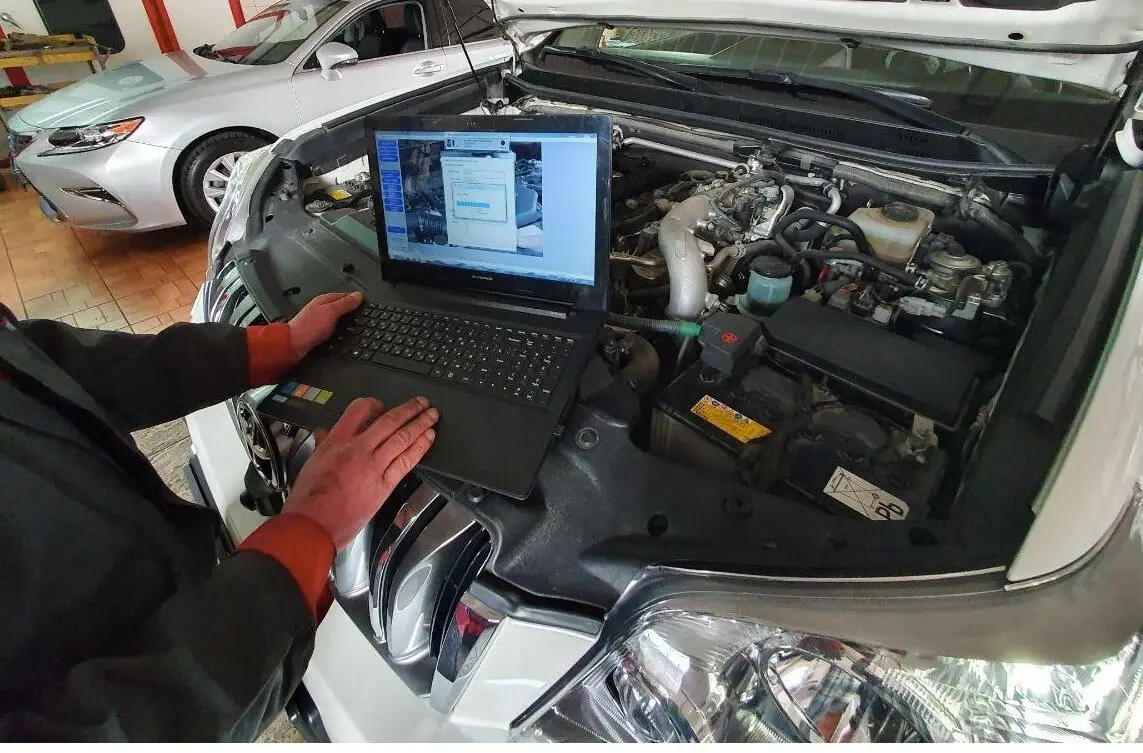
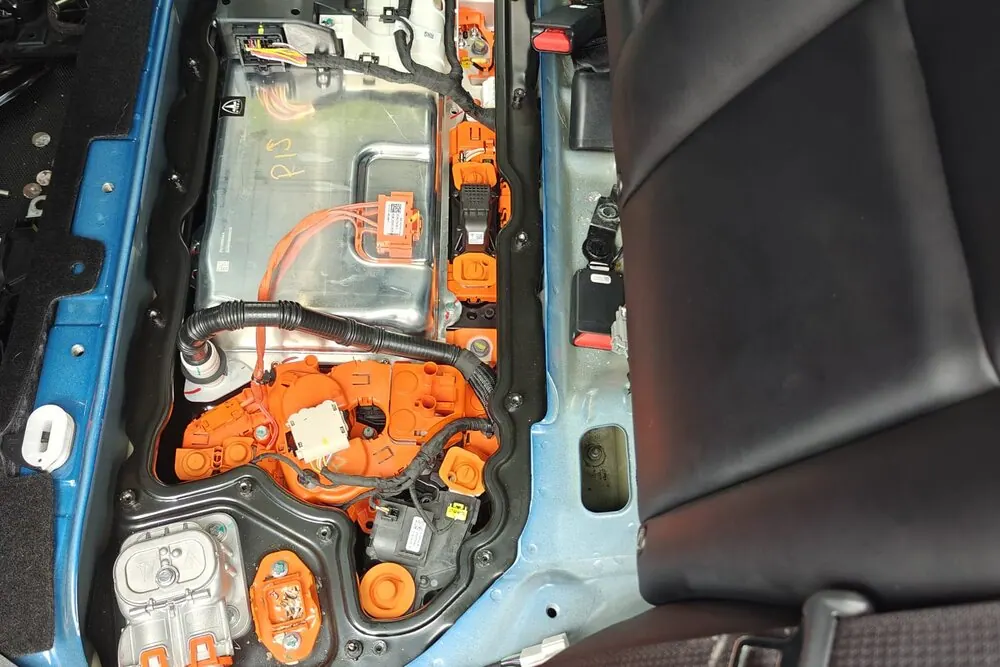
We read the car’s actual battery and fault data with Tesla Toolbox 3 — the same diagnostic software Tesla’s service centers use — and test state of health with a Midtronics EV battery analyzer. Our EV battery health check guide explains what the test measures and what the results mean.
A winter check for your EV
Before the cold sets in, we can test the low-voltage battery, check the tires and their load rating, clean and lubricate the calipers, replace the cabin filter, and look at the coolant system that keeps the battery and drive units at the right temperature. You get a written quote before any work starts. Book it as EV and hybrid service, or see what we do on Teslas in Worcester.
Frequently asked questions
How much range will my Tesla lose in a Massachusetts winter?
It depends on the temperature, trip length and how much you use the heater. In AAA’s 2019 test of five EVs at 20°F, range fell about 12% with the heater off and about 41% with it on. Newer cars with heat pumps lose less, and preconditioning while plugged in recovers much of the difference. The loss is temporary and returns in warmer weather.
Should I keep my EV plugged in when it’s very cold?
Yes, when you can. A parked EV uses some energy to protect its battery in very cold weather, and preconditioning before you leave uses a lot more. If the car is plugged in, that energy comes from the wall rather than the battery.
Does preconditioning use battery power?
Only if the car is not plugged in. When it is plugged in, most of the energy for warming the cabin and battery comes from the charger. That is why scheduling preconditioning for when you leave, with the car still connected, is the best winter habit an EV owner can have.
What does the blue snowflake mean on my Tesla?
It means the battery is cold, so some of its stored energy and regenerative braking are temporarily unavailable. It is not a fault. It clears as the battery warms from driving, charging or preconditioning.
How do I know whether my Tesla has a lead-acid or lithium-ion low-voltage battery?
Go to Controls → Software → Additional Vehicle Information, where the car shows the low-voltage battery type. As a rule of thumb, Model 3 and Model Y cars built until about early 2022 use a 12V lead-acid battery, and later cars use lithium-ion. The lead-acid units are the ones most likely to fail in a cold snap.
Can you service my Tesla’s brakes and low-voltage battery in Worcester?
Yes. We test and replace low-voltage batteries, including lithium-ion units, and do brake and caliper service, tires and alignment, suspension and diagnostics with Tesla Toolbox 3. Warranty repairs and recalls belong at Tesla, and we will tell you when that is the case. All work is quoted in writing before it starts.