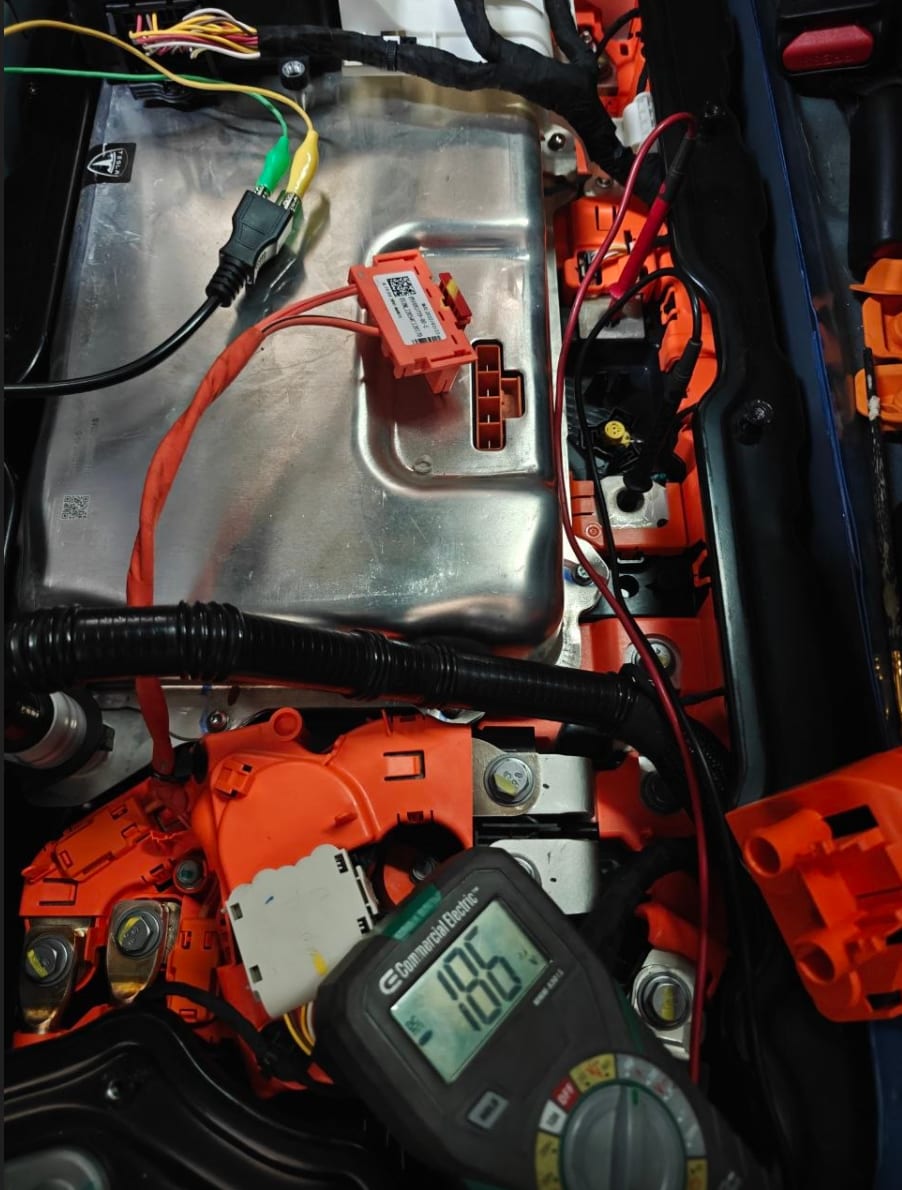
This one is worth writing up because of the decision in the middle of it. The obvious repair was sitting right there on the screen, clearly labelled, and we deliberately did not start with it — and that is the only reason the car was fixed once instead of twice.
How it arrived
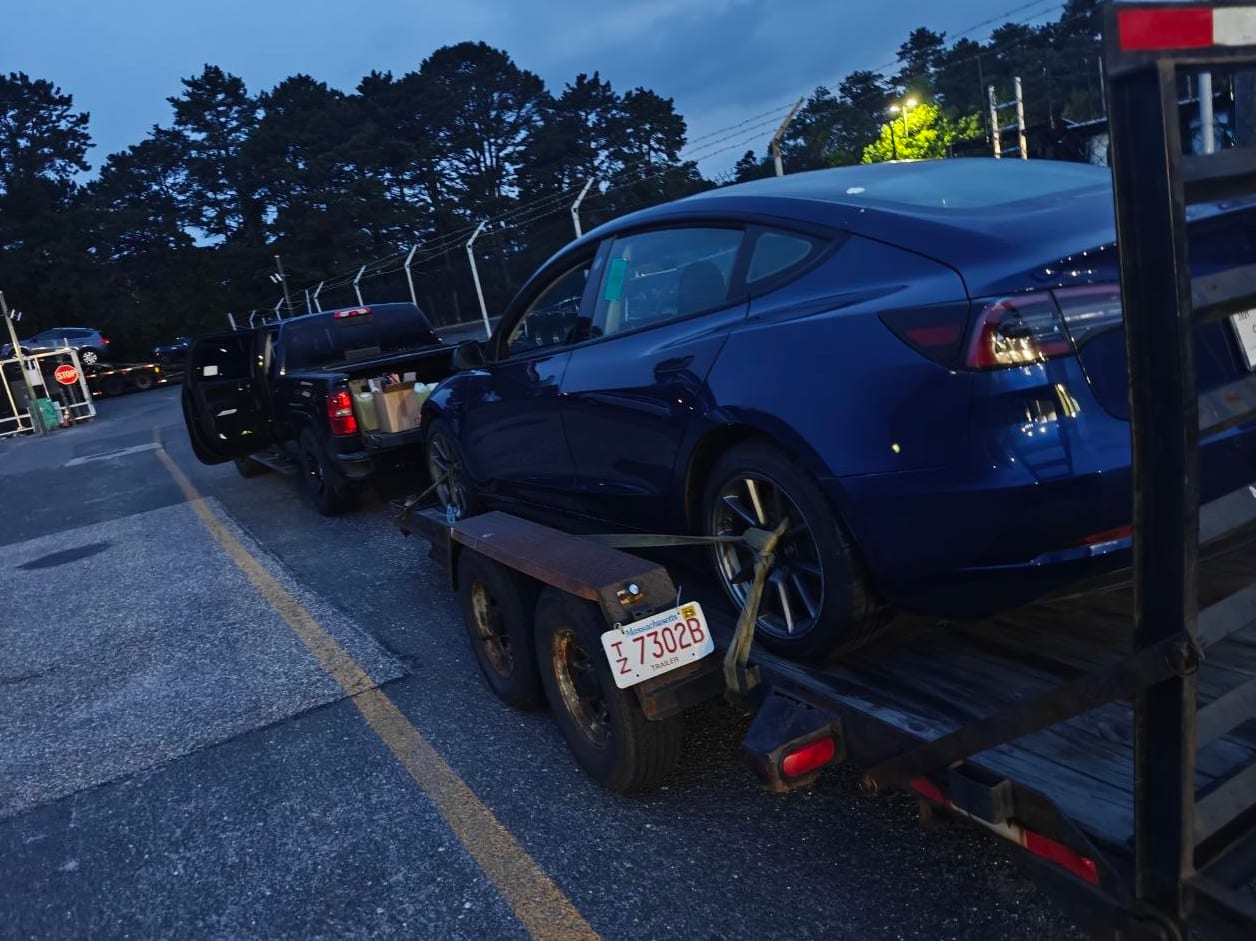
The car came in on a flatbed. No drive, no high voltage, and it would not recognise its key — which on a Tesla is often a symptom of the low-voltage side being confused rather than a key problem in its own right.
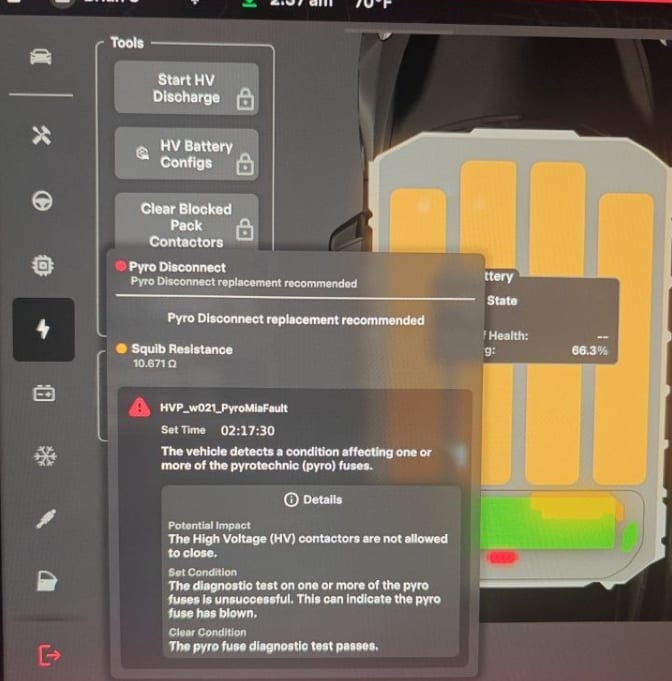
A car that arrives this way is a good reminder of something we cover in our independent Tesla service guide: the high-voltage pack can be sitting at a comfortable state of charge and the car can still be completely immobile. This one showed 66.3% on the pack and was not going anywhere.
What the data added up to
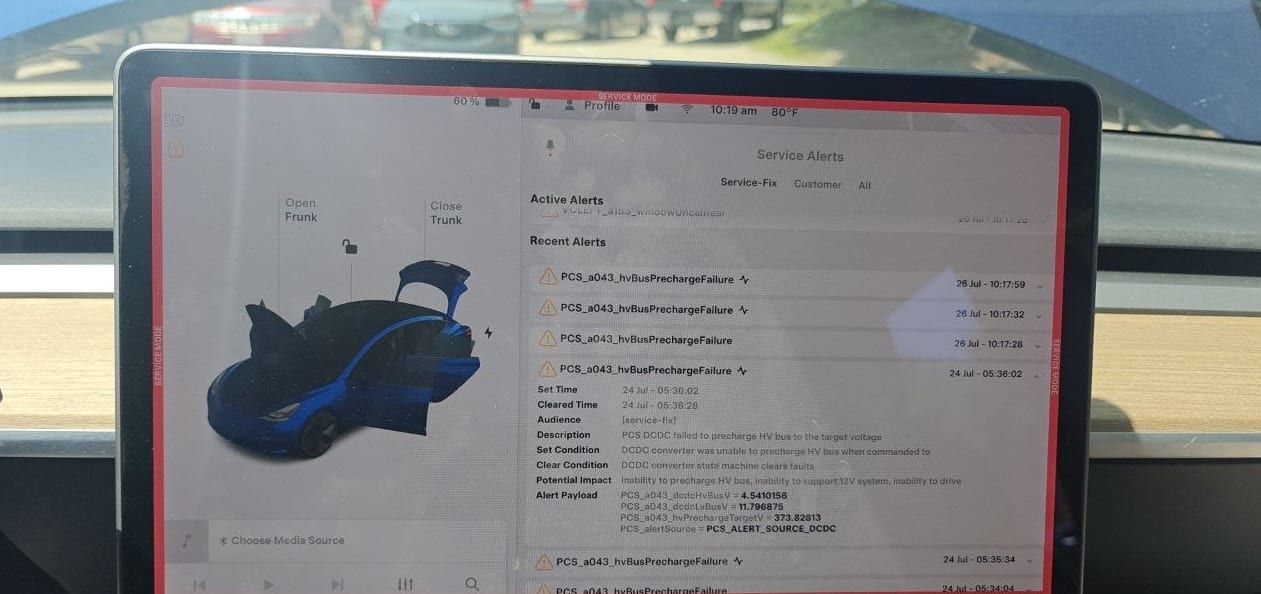
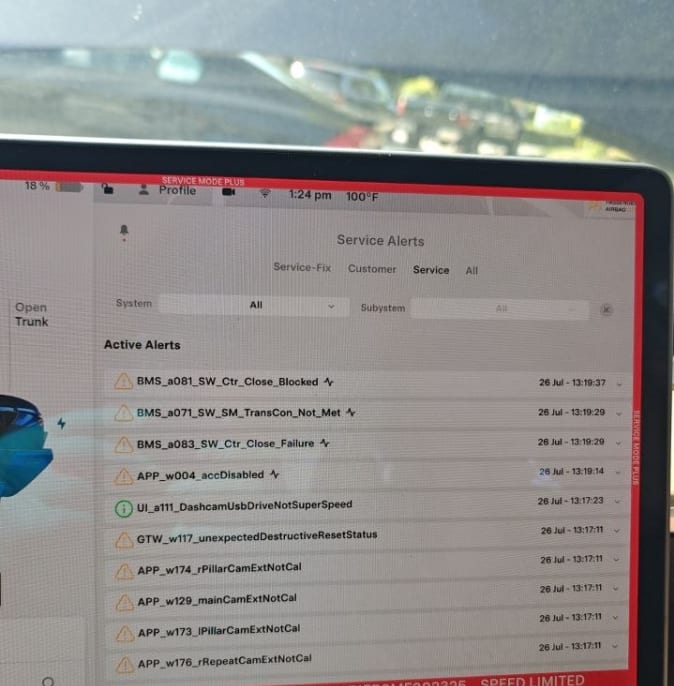
Connected on Tesla Toolbox 3, the picture was consistent and it pointed in one direction. The codes are listed in full above; the useful part is what they mean together.
Read as a set, they describe a car whose 12V side was perfectly alive and whose high-voltage side was simply not there — a bus sitting at a couple of volts against a target near 374, battery management refusing to close the contactors, and a gateway that had been reset abruptly. That is not a sensor disagreeing or a module misbehaving. That is an open circuit.
Which is precisely what a pyro fuse produces when it fires. So the tooling was not wrong, and it was not being vague: the fuse had gone, and the car said so clearly. The only question left was why.
The decision: inspect first, replace second
The tooling was pointing at the pyro fuse and recommending replacement. On a lot of cars, in a lot of shops, that is where the job would have started and ended: order the part, fit it, hand the keys back.
We did not do that, for one reason. A pyro fuse does not blow on its own. It is a one-shot safety device with no wear mechanism — it fires because the car detected something severe. We have seen enough of these to treat a fired pyro fuse as a question rather than an answer.
So before fitting a new one, the car went on the lift for a full inspection of the power conversion system and the entire high-voltage harness — every run, every connector, every point where a cable passes a bracket or an edge, front to back.
What the inspection found
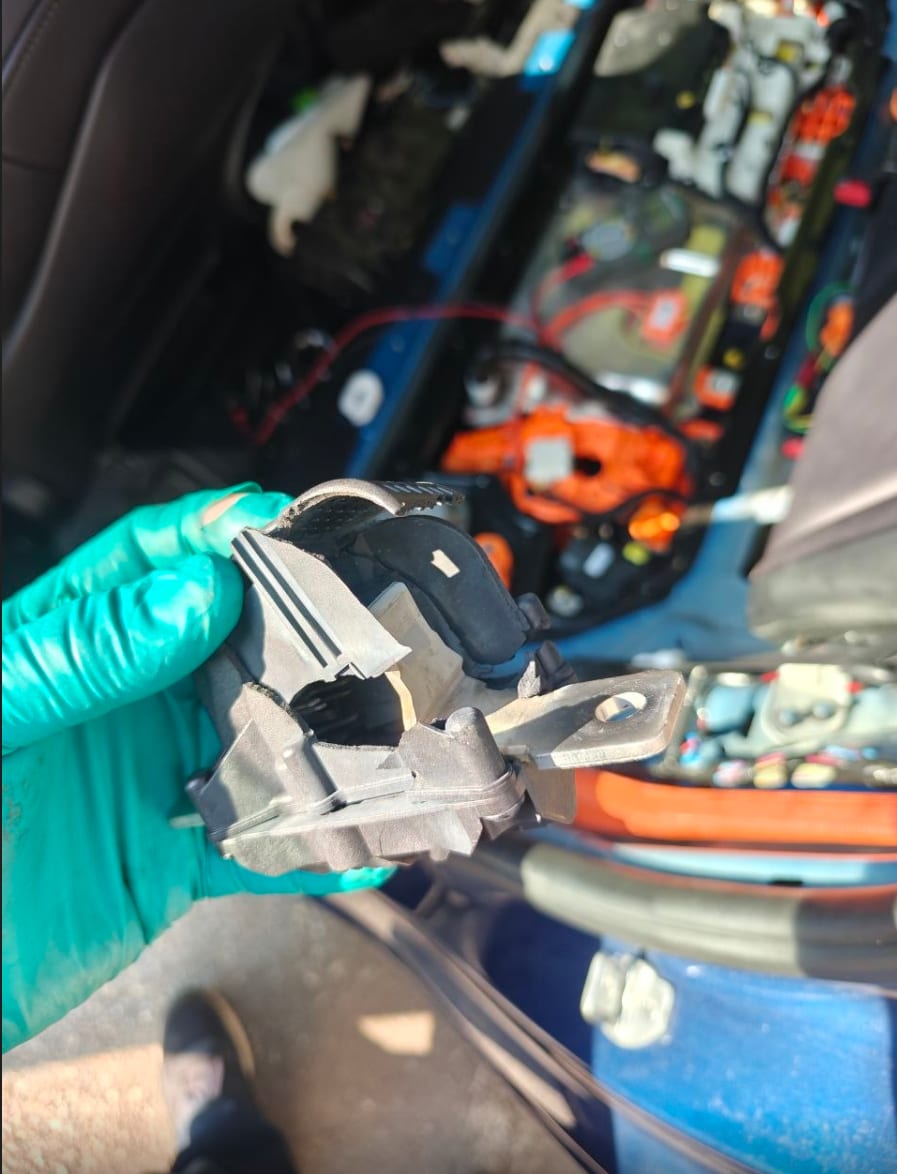
The fault was a high-voltage cable from the rear drive unit that was contacting the body. Movement and vibration over time had worn through the insulation at the contact point until the conductor was finding the chassis. That is a dead short to ground on a several-hundred-volt circuit, and it is precisely the condition a pyro fuse exists to interrupt.
It also explains everything else on the list — including the symptom that looks unrelated. On a Tesla the immobiliser function is handled by the rear drive unit. With that unit off the CAN bus and not communicating, there was nothing for the car to authenticate the key against, so it simply did not see it. The owner experienced that as a key fault. It was never a key fault.
The gateway’s destructive reset fits the same picture: power being removed mid-operation rather than the module shutting down in an orderly way. Every entry in that code list traces back to one worn-through cable.
The repair
The damaged cable was replaced with a new original Tesla part — not a repaired section, not spliced. On a high-voltage run carrying that kind of current, a splice is a future failure and a safety question, and it is not something we are prepared to hand back to a customer.
With the short gone, the pyro fuse diagnostic passed, the contactors were allowed to close, the HV bus precharged to target, and the car came back properly — including seeing its key again. Full re-scan afterwards to confirm nothing was left stored.
What to take from this
If you own an EV and you are told a pyro fuse needs replacing, the question worth asking is not “how much for the fuse.” It is “what made it fire?” A shop that cannot answer that has not finished the diagnosis, and you may well be paying for the same part twice.
There is nothing clever about the fix itself — a cable was worn through and it was replaced. What decided this job was the order the work was done in, and that came from having seen enough of these to know that the part the computer names is not always the part that failed.
And if you are looking at a used EV, this is one of the reasons a proper inspection matters more than a clean dashboard — a chafe point that has not worn through yet looks like nothing at all until it does. Our EV battery health check guide covers the pack side of that inspection.