Every registered vehicle in Massachusetts gets inspected once a year. Most drivers think about it for about ten minutes — the month their sticker runs out — and the rest of the year it is invisible. Then a light comes on in November, the sticker expires in December, and suddenly it is urgent.
This guide covers what the inspection actually looks at, which faults fail cars most often in Central Massachusetts, and what happens when you fail. We should say plainly up front: Iron Wolf Motors is not a licensed Massachusetts inspection station. We cannot issue you a sticker. What we do is the repair side — finding and fixing the things that cost people the sticker, ideally before the month it matters.
What the inspection actually covers
There are two halves to it. The safety inspection applies to essentially every vehicle. The emissions test is an OBD-II scan and applies to vehicles built with that system, which is almost everything on the road today.
The safety half
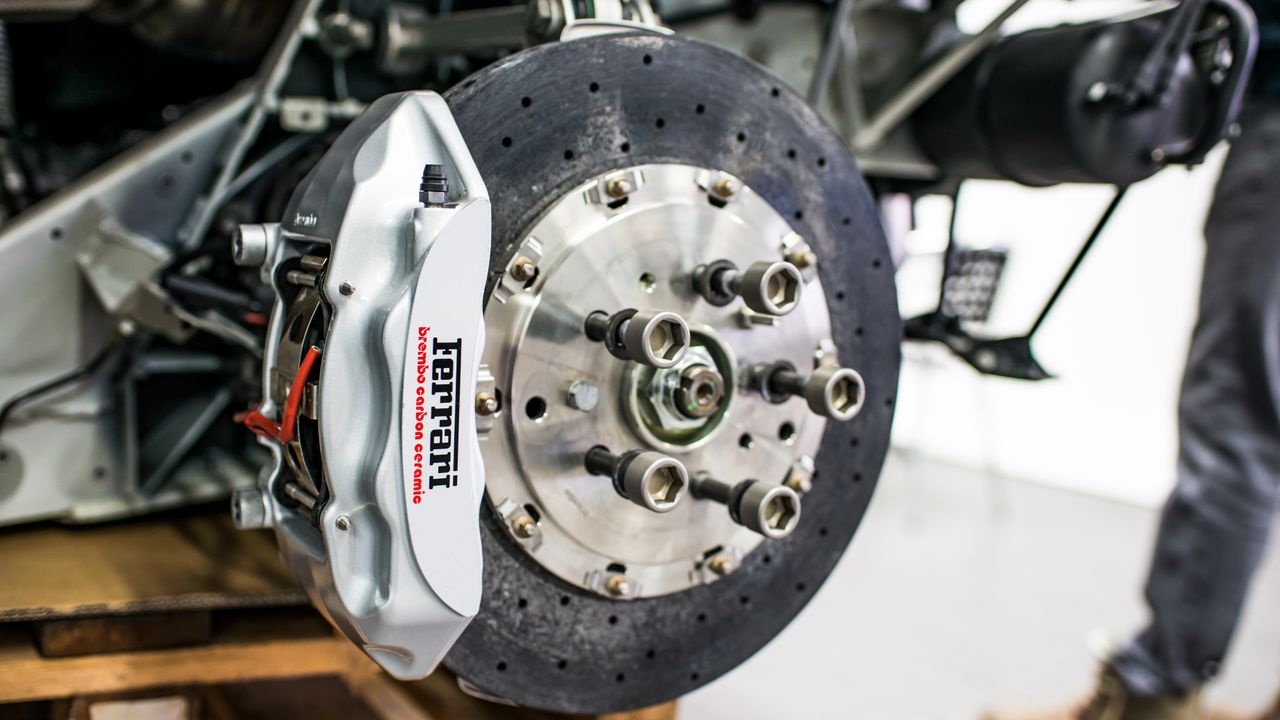
- Brakes — pad and shoe material, rotor and drum condition, lines and hoses, and the parking brake. Corroded brake lines are a real failure item in New England, not a cosmetic note.
- Tires — tread depth, sidewall damage, mismatched or unsafe tires. The legal minimum is 2/32", which is a failure threshold rather than a safe one.
- Steering and suspension — play in the steering, worn ball joints and tie rods, broken springs, blown struts.
- Lights — headlights, tail lights, brake lights, turn signals, markers, plate light. They must work, be the correct colour, and be aimed properly.
- Glass and wipers — cracks in the driver’s field of view, wipers that actually clear the glass, working washers.
- Exhaust — leaks and missing components. A hole ahead of the cabin is both a failure and a carbon-monoxide risk.
- The rest — horn, mirrors, seat belts, doors, and the fuel system.
The emissions half
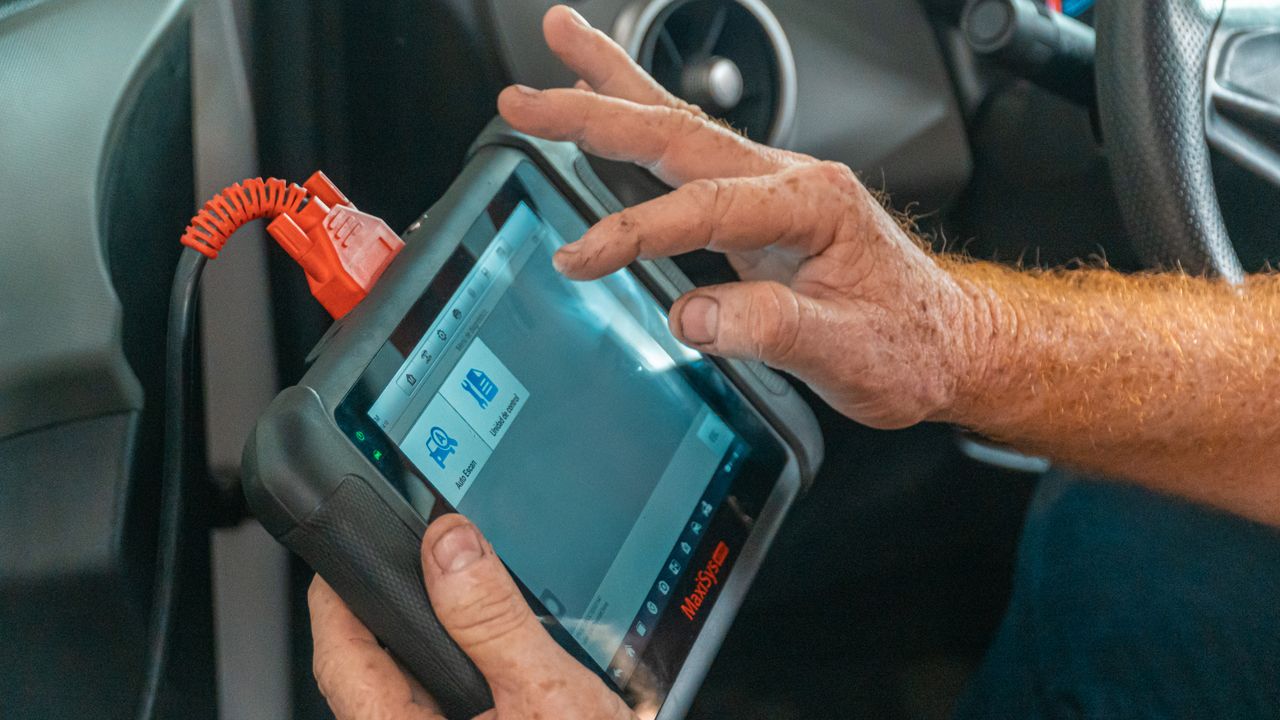
For an OBD-equipped car this is not a tailpipe sniff. The inspector plugs into the diagnostic port and asks the car two questions: do you have any emissions faults stored, and have your self-tests finished running? Fail either one and you fail the test.
Why “just clear the code” backfires
It is the most common piece of bad advice in the trade, and it has been costing people a second trip for twenty years. Yes, clearing the code turns the light off. It also erases the readiness monitors — the car’s own internal self-tests for the catalytic converter, the evaporative system, the oxygen sensors and the rest.
A freshly cleared computer reports those monitors as not ready, and the inspection checks for exactly that. So instead of failing for a stored code, you fail for an incomplete readiness set. Worse, the monitors do not complete on demand. They need days of varied driving — cold starts, highway runs, a range of temperatures — before they all set. Clearing the code the night before your appointment converts a repairable fault into a guaranteed failure plus a week of waiting.
The honest version is slower and cheaper: read the code, find out what it is actually telling you, fix that, and let the monitors set on their own as you drive. Our guide on what a check engine light actually means goes through how to read one properly.
What a rejection sticker means
If a vehicle fails, it does not simply get turned away. The station issues a rejection sticker — the “R” — and that starts a clock. You get a 60-day window to have the vehicle repaired and brought back, and the retest at the same station within that window does not cost you again.
Two things people get wrong about the R sticker. First, it is not a licence to keep driving indefinitely; it is a repair window. Second, the free retest is tied to the station that failed you — going somewhere else means starting over and paying again.
The faults we see fail cars around Worcester
Central Massachusetts has its own failure profile, and most of it comes down to salt and potholes.
- Check-engine light on. Far and away number one, and the one people leave longest.
- Corroded brake lines. Six winters of road salt does this. A line that weeps under pressure is a genuine safety failure, and it is the item that most often turns a routine inspection into a real bill.
- Tyres at or near 2/32". Especially on one axle only, which usually means an alignment problem was quietly eating the tread. Our post on why alignment matters explains how to read that wear.
- Burnt-out bulbs. The cheapest possible failure, and extremely common on the plate light and one rear marker, because nobody walks behind their own car at night.
- Worn suspension. Blown struts and worn ball joints from pothole season.
- Cracked windshields. A chip that spread over the winter into the driver’s sweep.
- Exhaust leaks. Rot at the flex pipe and mid-section joints.
The first and the last two on that list are the ones worth catching early, because they get more expensive the longer they wait. A weeping brake line is a line; a neglected one takes the fittings and sometimes the caliper with it.
How to stop failing in the first place
The cheapest inspection is the one where nothing is wrong. A few weeks before your sticker month, do a five-minute walk-around: have someone stand behind the car while you work the brake pedal and the signals, check the plate light, run the wipers and washers, and look at the tread on all four tyres — not just the outer edge.
If the check-engine light is on, deal with it now rather than in your sticker month. If the car is going in for routine maintenance anyway, that is the moment to have the brake lines and suspension looked at properly, because those are the failures that need parts and time rather than a bulb.
Our fall maintenance checklist covers most of the same ground from the winter-readiness angle, and the overlap is not a coincidence — the things that get you through a New England winter are largely the things the inspection is looking at.
Where we fit
We are not a station and we do not issue stickers, so we have no interest in whether you pass or fail. What we do is the diagnosis and the repair: reading the fault properly instead of guessing at it, replacing the corroded line, fixing the aim on a headlight, sorting the suspension that has been quietly destroying a tyre.
And if you bring us a car with an R sticker and a 60-day clock, tell us that when you book. It changes how we prioritise the work — there is a difference between a repair that can wait for a part to come in and one that has a deadline attached to it.
Every repair we do is backed by our 12-month / 12,000-mile warranty on parts and labour, whichever comes first. You can see our published prices before you call.
Frequently asked questions
Does Iron Wolf Motors do Massachusetts state inspections?
No. We are not a licensed Massachusetts inspection station and we cannot issue stickers. We do the repair work that gets vehicles through the inspection, including diagnosing check-engine faults, brake and brake-line repair, suspension, lighting and exhaust work.
Will a check engine light fail the Massachusetts inspection?
Yes, automatically. On an OBD-equipped vehicle an illuminated check-engine light is an emissions failure regardless of how the car drives. The fault needs to be diagnosed and repaired, not cleared.
Can I just clear the code before my inspection?
It will not work. Clearing codes also erases the readiness monitors, and a vehicle reporting monitors as “not ready” fails the emissions test as well. The monitors need days of varied driving to reset on their own, so clearing the code the night before guarantees a failure.
What is a rejection sticker and how long do I have?
A rejection — the “R” sticker — is issued when a vehicle fails. It gives you a 60-day window to have the vehicle repaired and retested, and the retest at the same station within that window is free. Going to a different station means paying for a new test.
How much does a Massachusetts inspection cost?
The fee is set by the state and is identical at every licensed station, so there is nothing to gain by shopping around. What varies is the cost of any repairs needed to pass.
My car failed on a brake line. Is that expensive?
It depends entirely on how far the corrosion has gone. Caught early it is a line. Left alone, salt corrosion spreads to the fittings and sometimes the caliper, and the job grows. It is one of the most common New England failures and one of the most worth catching before your sticker month.