
209 Stafford St, Worcester, MA 01603Get directionsMon–Fri 8AM–5PM · Sat 8AM–2PM
Steering & Alignment

Maserati Levante, Booked In for an Alignment: Why We Replaced the Tie Rod Ends First

A 2017 Levante came in for a wheel alignment. On the lift, both outer tie rod ends were visibly bent, and with the wheels off the front brakes showed clear wear — a raised lip on the rotor edge and deep scoring across the faces. Rotors out of spec, pads worn: all of it replaced, then the car was aligned.

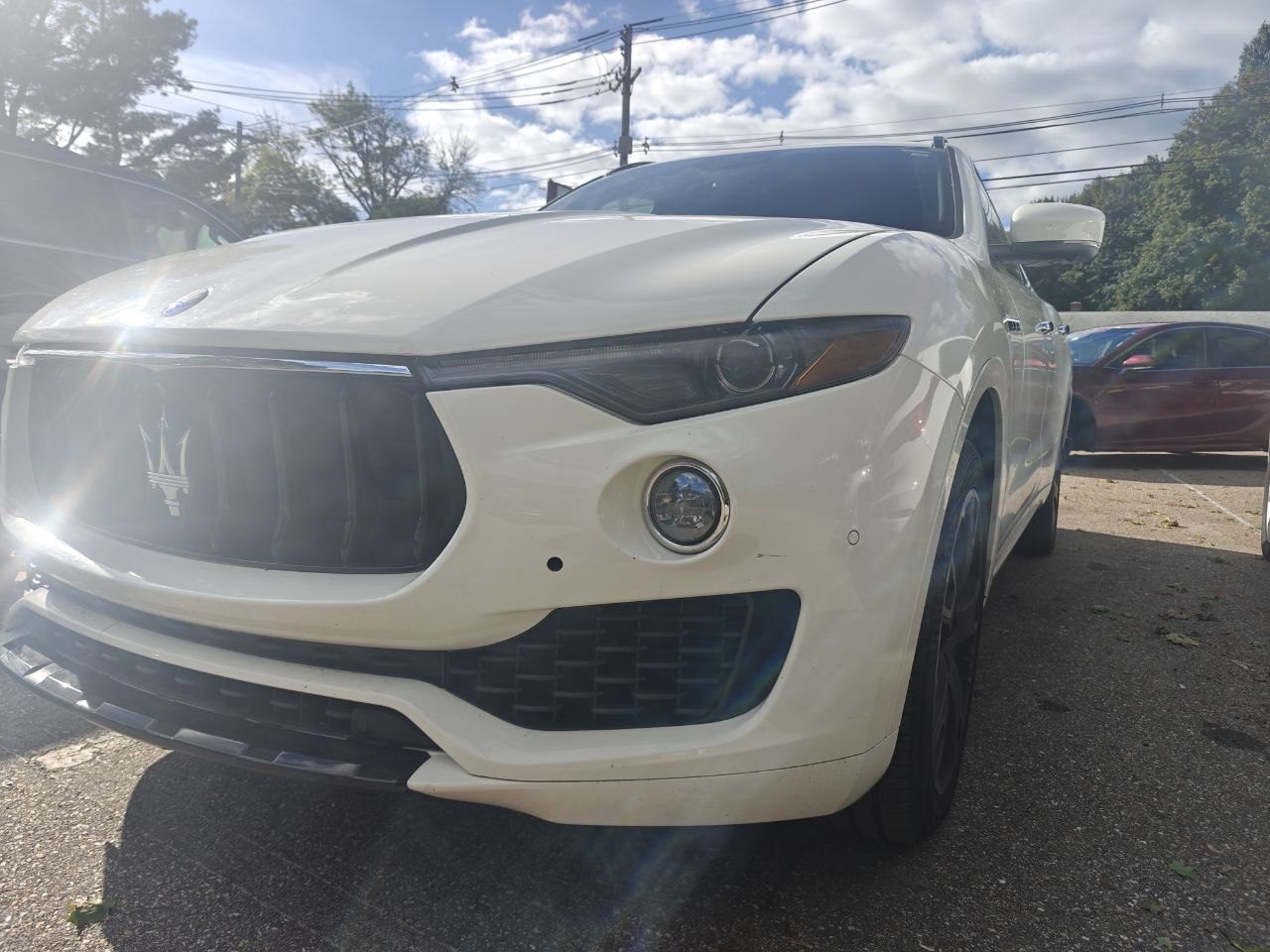
White 2017 Maserati Levante in the lot at Iron Wolf Motors in Worcester, MA, photographed low from the front corner on arrival for a wheel alignment

How it arrived

Driven in for a wheel alignment. Nothing else on the work order.

Reported symptoms

  • Booked in for a four-wheel alignment
  • No steering or suspension repair requested
  • The bent tie rods and the worn brakes were both found on our lift during the pre-alignment inspection, not reported by the owner

Outcome

Both bent outer tie rod ends were replaced with new parts, and a full four-wheel alignment was then carried out on the new steering components, with toe set to Maserati specification and the steering wheel centred. The front brake rotors, found below Maserati minimum-thickness specification, were replaced together with the worn pads as regular maintenance, the new pads bedded in and the car road-tested. The work carries our 12-month / 12,000-mile warranty on parts and labour, whichever comes first.

A wheel alignment is one of the most routine jobs in the shop. The car goes on the rack, the sensor heads go on the wheels, the angles are read and adjusted back into specification. This Levante was booked in for exactly that and nothing else — routine Maserati Levante service, no complaint attached. It left with new tie rod ends as well, and this is why.

Look before you adjust

Before any alignment we get the car in the air and look at the parts the alignment depends on: tie rods and tie rod ends, ball joints, control arm bushings, wheel bearings. An alignment only sets angles. It cannot fix a worn or damaged part, and aligning a car around one is wasted money at best.

On this Levante, the problem did not need measuring. Both outer tie rod ends were badly bent. The one in the photograph below has a clear S-curve along its length — in a part that is supposed to be straight.
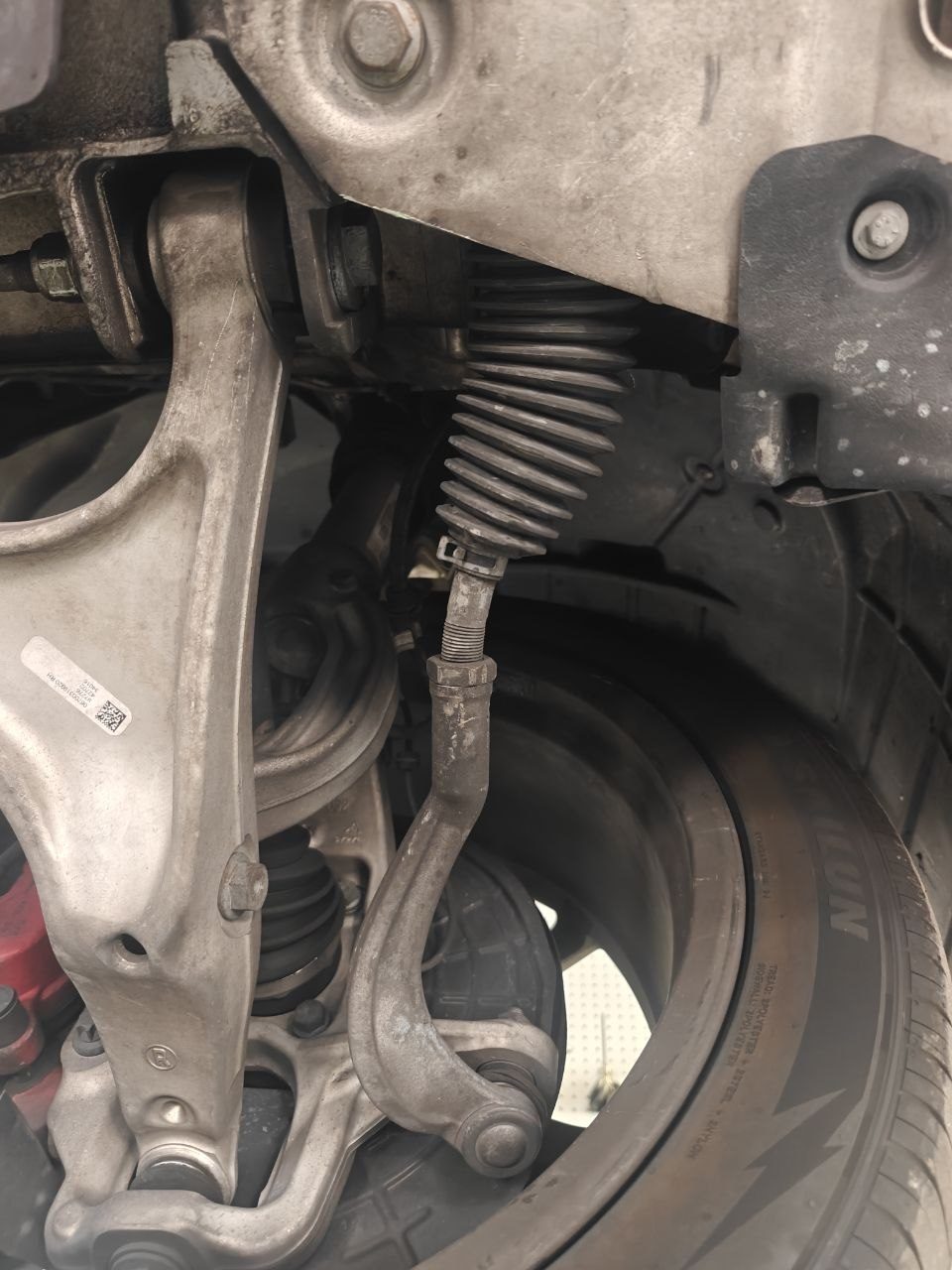
Underside view of the front steering on a 2017 Maserati Levante showing the outer tie rod running from the steering rack boot to the steering knuckle with a visible S-shaped bend along its length
The outer tie rod on the Levante, from the rack boot down to the steering knuckle. It should be a straight line. It is not.

What a tie rod actually does

That is where a bent one causes trouble. A bent tie rod is effectively shorter than it should be, so the wheel on that side is pulled out of line. But the rod is still adjustable. A technician in a hurry can wind the adjuster until the toe reading goes green on the screen, print the report and hand the car back. The paperwork says aligned.

Why we did not align around it

Three reasons, and any one of them would have been enough.

It has already failed once. Steel bends when it is pushed past the point it can spring back from. A tie rod that has taken a permanent set has been overloaded, and it is weaker than a straight one. It is a steering part — if it goes further, steering control goes with it.

The numbers only look right when the car is still. A bent rod changes the steering geometry through its whole travel, not just at the one position the alignment rack measures. Set it straight at rest and it can still steer the wheel on its own over bumps and under braking.

The alignment would not have lasted. Every alignment done on top of a damaged part has to be done again once the part is replaced. The customer pays twice for one result.

So the work was put in order: stop, tell the owner what we had found, replace both outer tie rod ends, and only then align the car on the new parts.

The second finding: the front brakes

An alignment appointment is one of the few times a car sits on the lift with its front wheels off, so the brakes get looked at as part of the same inspection. On this Levante they did not need a measurement to tell the story either.
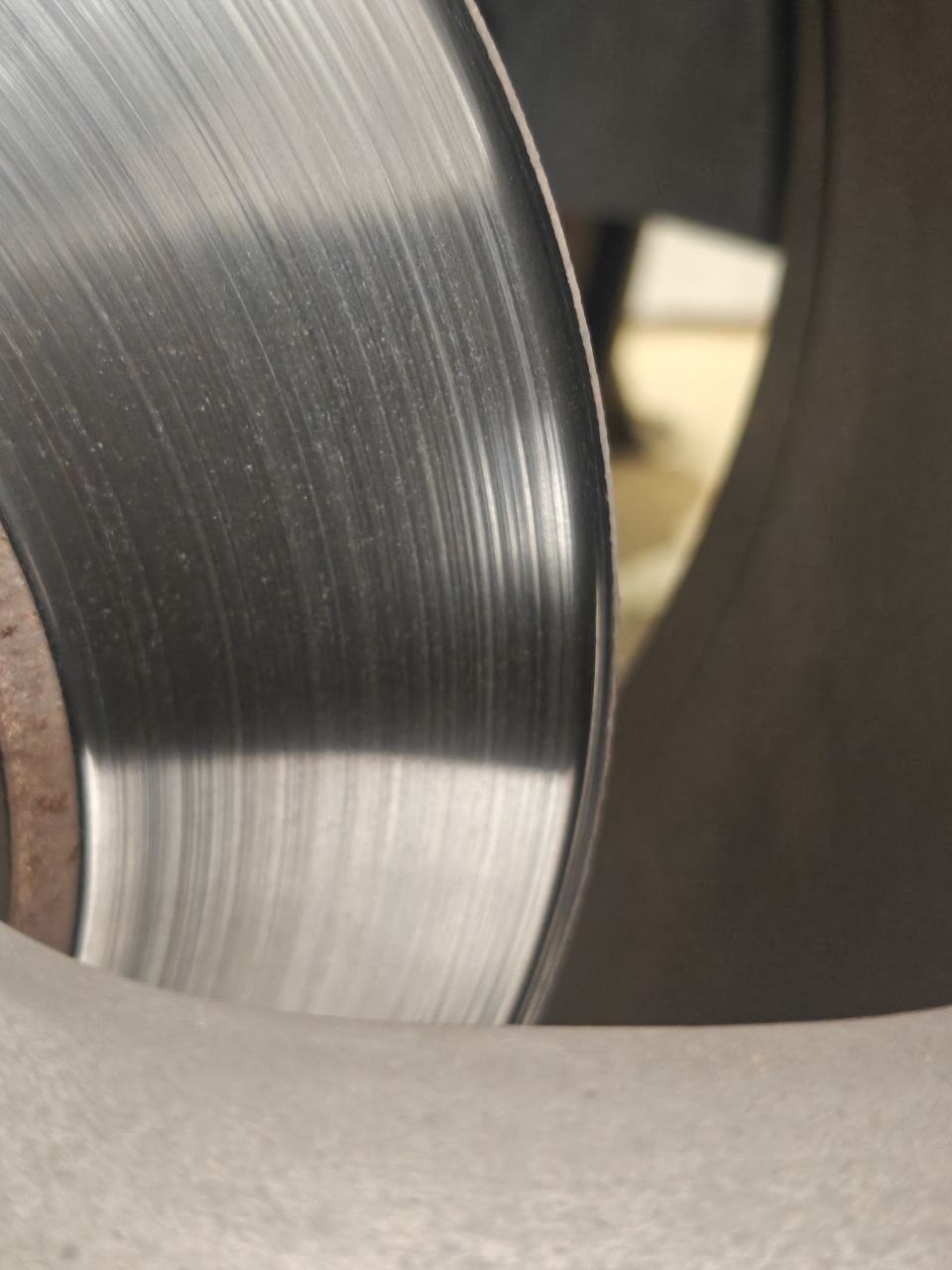
Close-up of a worn front brake rotor on a 2017 Maserati Levante showing a pronounced raised lip around the outer edge and deep concentric grooves scored across the braking surface
The front rotor edge-on. The raised lip around the outside is where the pad never reached — the braking surface inside it has been worn down below it. The concentric grooves across the face are scoring.

The rotors had a clear lip around the outer edge. A brake pad does not sweep the very outer rim of the rotor, so as the braking surface wears down, that rim is left standing proud. The taller the lip, the more metal has gone. Across the face, the rotors were scored with deep concentric grooves rather than the smooth, even finish of a healthy disc. Measured, the rotors were below the minimum thickness in the Maserati specification, and the pads that had been riding on them were worn as well.

The brakes have nothing to do with the alignment angles, and the tie rods came first because a steering part is the more urgent safety issue. This was not damage — it was ordinary wear on a car that was due brakes, and it was handled as regular maintenance: front rotors and pads replaced together as a standard brake service, the new pads bedded in, and the car road-tested. More on what to look for in our guide on when to replace brake pads, rotors and fluid.

How tie rods get bent

Tie rods do not bend from mileage. A bend like this comes from an impact that loaded the front wheel sideways — typically a curb, a deep pothole or debris in the road. It does not always feel dramatic when it happens, and a car with a big tire and a stiff sidewall like the Levante can hide it well. Often the only sign is that the car seems to need an alignment. That is why we recommend an alignment check after any hard impact, and why the check starts with the parts, not the screen. More on that in our guide on why wheel alignment matters.

What to take from this

If you book an alignment anywhere, ask one question when you collect the car: "Did you inspect the steering, suspension and brakes before you aligned it?" A printout full of green numbers tells you the angles were set. It does not tell you what they were set on — and on this car, it would not have told anyone about the brakes either.
From the job

What we photographed

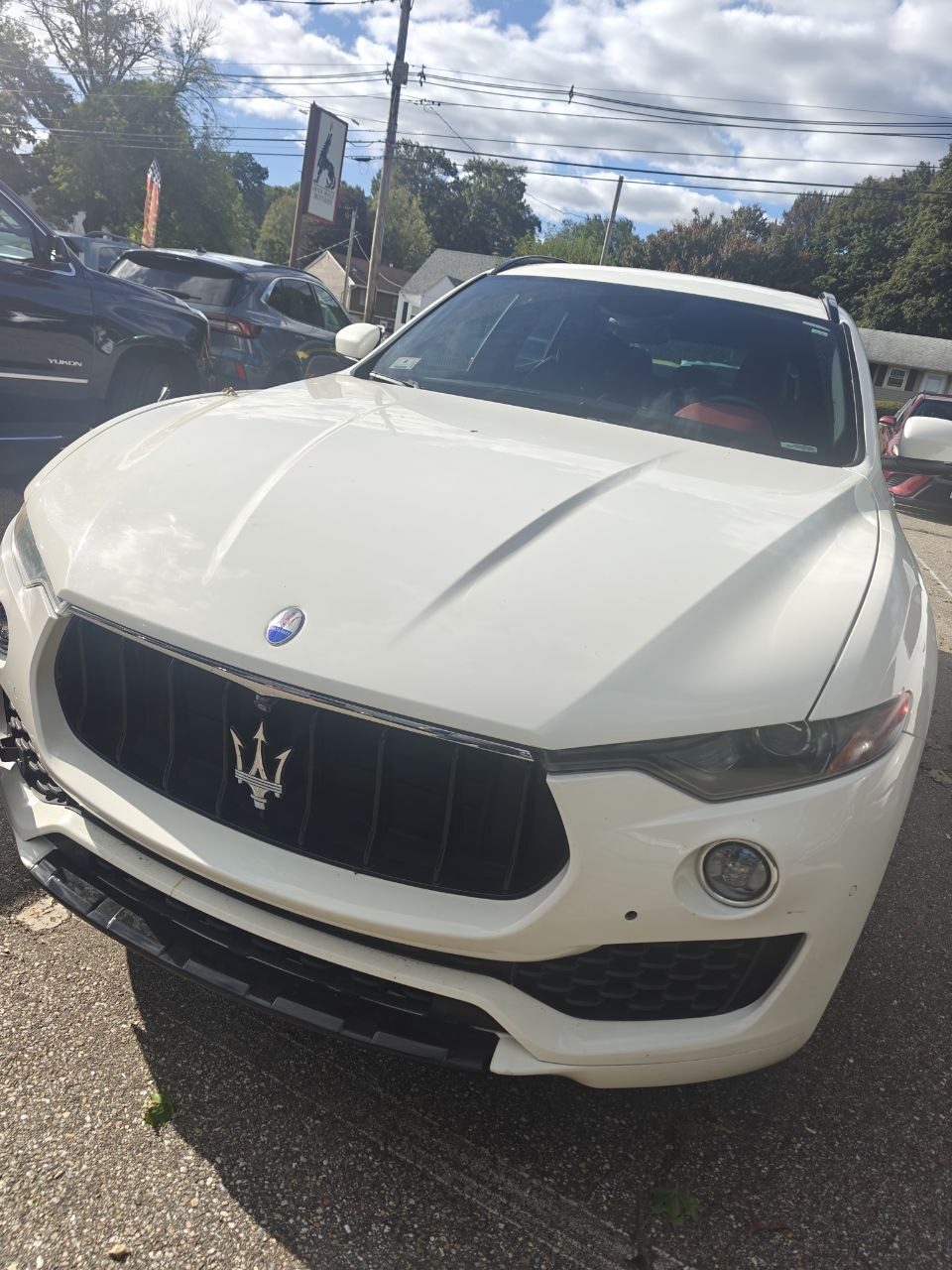
White 2017 Maserati Levante parked in the lot at Iron Wolf Motors on Stafford Street in Worcester, MA, viewed from the front with the shop sign behind it
How it arrived. Driven in, booked for an alignment and nothing else.
Low front three-quarter view of a white 2017 Maserati Levante at Iron Wolf Motors in Worcester, MA
Nothing about the car from the outside says there is a steering problem. That is common with bent tie rods.
Close-up of the front outer tie rod on a 2017 Maserati Levante on the lift, showing a pronounced S-shaped bend between the rack boot and the steering knuckle
The finding. The outer tie rod has a clear S-curve along its length — visible by eye on the lift, before a single sensor was fitted. The other side was bent as well.
Close-up of a worn front brake rotor on a 2017 Maserati Levante with a pronounced raised lip around the outer edge and deep concentric scoring across the braking surface
The second finding. A clear lip stands proud around the outer edge of the front rotor where the pad never reached, and the braking surface is scored with deep concentric grooves. This rotor is worn.
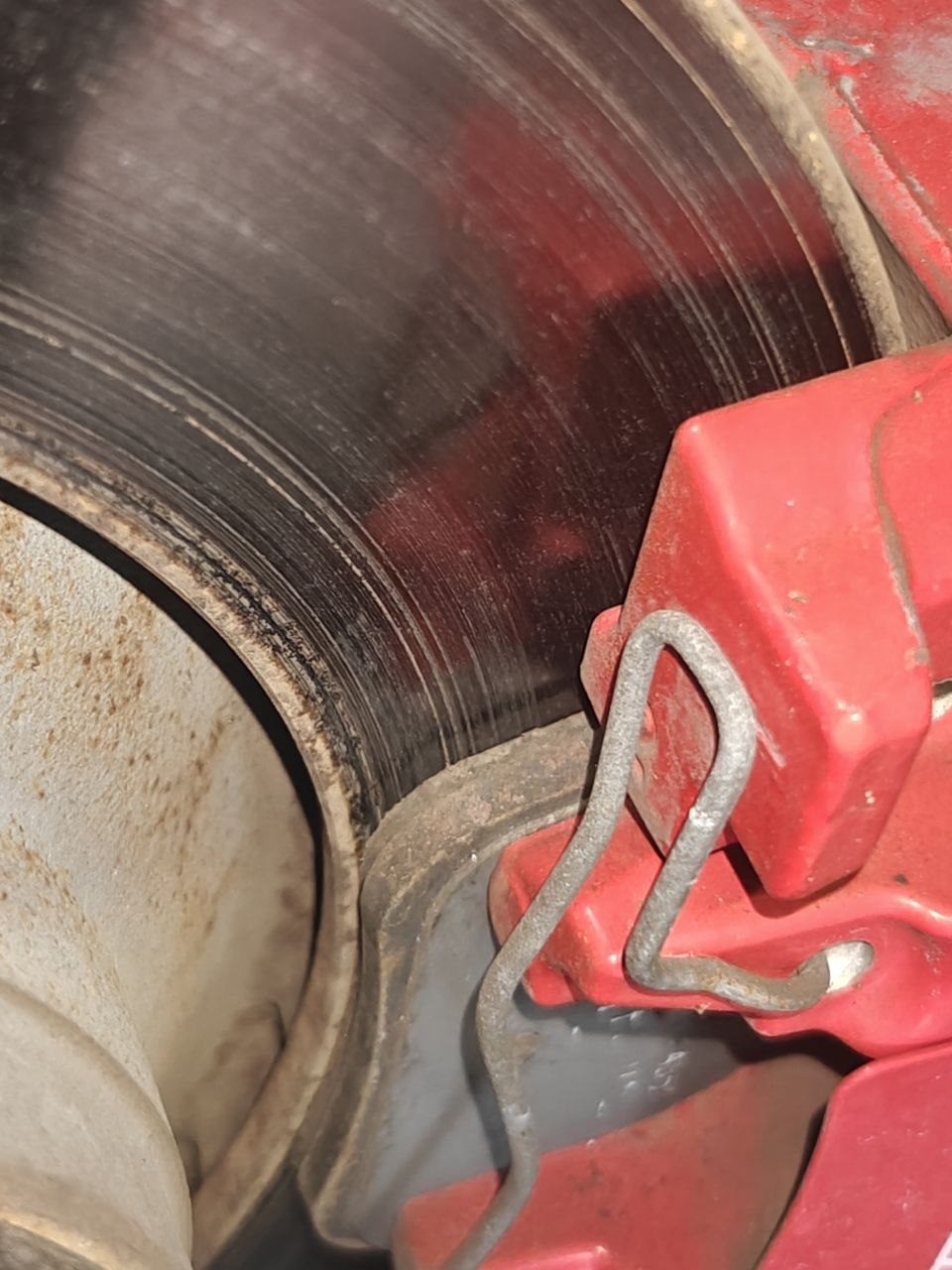
Red brake caliper and pad retaining spring on a 2017 Maserati Levante next to a worn front rotor with heavy grooving across its face and a ridge at the inner edge of the braking surface
Caliper and rotor on the same corner. The grooves run all the way across the braking surface, with a ridge at the inner edge as well. Measured below minimum thickness spec — rotors and pads were replaced together.
FAQ

Questions this job raises

Can you do a wheel alignment with a bent tie rod?

Technically the toe can still be adjusted, which is exactly the problem — the alignment screen can be made to read in specification while the rod is bent. But the bent rod is weaker than a straight one, it changes the steering geometry as the suspension moves, and the alignment has to be redone once the part is eventually replaced. We replace the tie rod first and align afterwards.

How does a tie rod get bent?

From an impact that loads the front wheel sideways — hitting a curb, a deep pothole or debris in the road. Tie rods do not bend from ordinary wear. The impact does not always feel dramatic, especially on a car with large wheels and stiff tires like the Levante.

What are the symptoms of a bent tie rod?

Commonly a steering wheel that sits off-centre when driving straight, a car that pulls to one side, uneven or rapid tire wear on the inside or outside edge, or simply a feeling that the alignment is out. Sometimes there is no symptom the driver notices at all, which is why the parts should be inspected before every alignment. This Levante came in for an alignment only.

Should both tie rod ends be replaced?

On this car both outer tie rod ends were bent, so both were replaced. Where only one side is damaged, the other is inspected for play and straightness and replaced only if it needs it.

Do I need an alignment after replacing tie rod ends?

Yes, always. The tie rod sets the toe angle, so fitting a new one changes it. An alignment after tie rod replacement is part of the job, not an optional extra.

How do you know if brake rotors are worn out?

The two clearest signs are a raised lip around the outer edge of the rotor — the rim the pad never touches, left standing as the braking surface wears down — and deep concentric grooves scored across the face. Both were visible on this Levante with the wheels off. The deciding check is thickness: every rotor has a manufacturer minimum, and these measured below it. Vibration through the pedal or steering wheel under braking is another common sign.

Should rotors and pads be replaced together?

When the rotors are worn like these, yes. New pads laid on a lipped, scored rotor only touch it on the high spots, never bed in properly, and wear quickly. Replacing rotors and pads as a set on the axle gives a flat, even contact surface from the first stop.

Do you align and repair Maserati steering in Worcester?

Yes. We do four-wheel alignments, brakes, and steering and suspension repair on the Levante, Ghibli and Quattroporte at our Worcester, MA shop, with the inspection done before the alignment and the findings shown to you before any extra work is carried out.