Few things sour a drive faster than that little amber engine glowing on the dash. Most drivers react one of two ways: panic, or ignore it and hope it goes away. Neither is right. The check engine light isn’t telling you the engine is about to fail — it’s telling you the car’s computer has spotted something outside of spec and stored a clue about what. Read that clue properly and most fixes are quick and reasonable. Ignore it, and a $40 sensor problem can quietly grow into a $1,500 one. Here’s how to respond like the diagnostics techs do.
What the check engine light actually is
Every car since 1996 has an onboard diagnostics system (OBD-II) that constantly monitors the engine, transmission, fuel, and emissions systems. When a reading drifts outside the range the manufacturer programmed — an oxygen sensor responding slowly, a cylinder occasionally misfiring, fuel vapor escaping somewhere it shouldn’t — the computer stores a diagnostic trouble code and turns on the light. The light itself carries no detail; it’s just the computer’s way of saying “I logged something — come read it.”
Steady vs. flashing — the one distinction that matters right now
Before anything else, look at how the light behaves:
- Steady light — the computer logged a fault, but nothing is being actively damaged. The car is fine to drive normally; get it scanned within a few days, not a few months.
- Flashing light — an active misfire is dumping unburned fuel into the exhaust, where it burns inside the catalytic converter and can destroy it in minutes. Ease off the accelerator, avoid highway speeds and hard pulls, and get to a shop as soon as you safely can.
The most common causes we see
The check engine light can point at hundreds of faults, but in the shop the same handful come up again and again:
- Loose or worn gas cap — the simplest one. A bad seal lets fuel vapor escape and trips the evaporative-emissions monitor.
- Oxygen (O2) sensor — a lazy or dead sensor skews the fuel mixture, costing you fuel economy and eventually the catalytic converter.
- Spark plugs and ignition coils — worn-out ignition parts cause the misfires behind most flashing lights.
- Catalytic converter efficiency — often the result of one of the problems above being ignored.
- Mass airflow (MAF) sensor — a dirty or failing MAF confuses the computer about how much air the engine is getting.
- EVAP system leaks — cracked vapor hoses or a failing purge valve; harmless to drive with, but an emissions and inspection problem.
Can you keep driving with it on?
With a steady light and a car that drives normally — no shaking, no power loss, no strange sounds, no other warning lights — yes, you can drive it while you arrange a visit. But “can drive” isn’t “can ignore.” The computer is often compensating for the fault behind the scenes, burning extra fuel and loading other components while it does. And if the light starts flashing, the engine shakes, or the temperature gauge climbs, that’s no longer a wait-and-see situation — an overheating engine or active misfire does real damage fast.
Why a free parts-store code scan isn’t a diagnosis
Auto parts stores will read your code for free, and there’s nothing wrong with that — we’ll do a quick scan free of charge too. The trap is what happens next. A code like P0171 (system too lean) doesn’t mean “replace the O2 sensor” — it means the fuel mixture is off, which could be a vacuum leak, a dirty MAF sensor, a weak fuel pump, or a bad sensor. The code names the symptom, not the culprit.
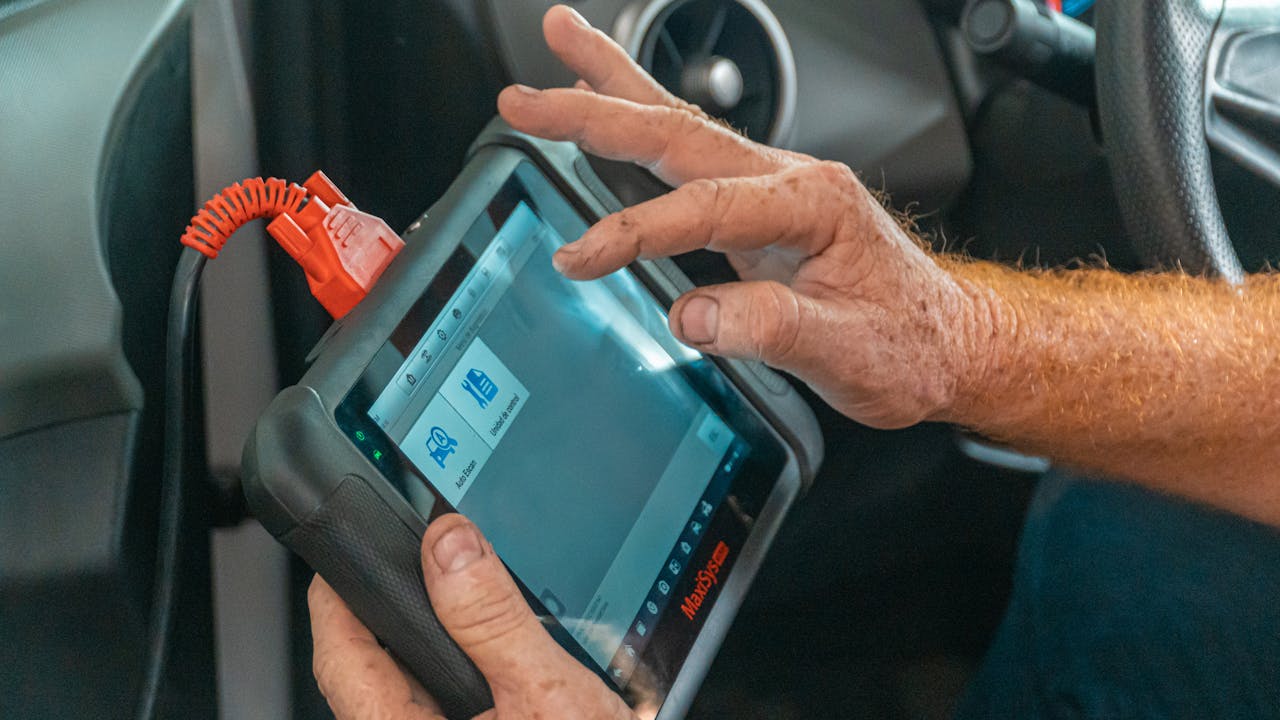
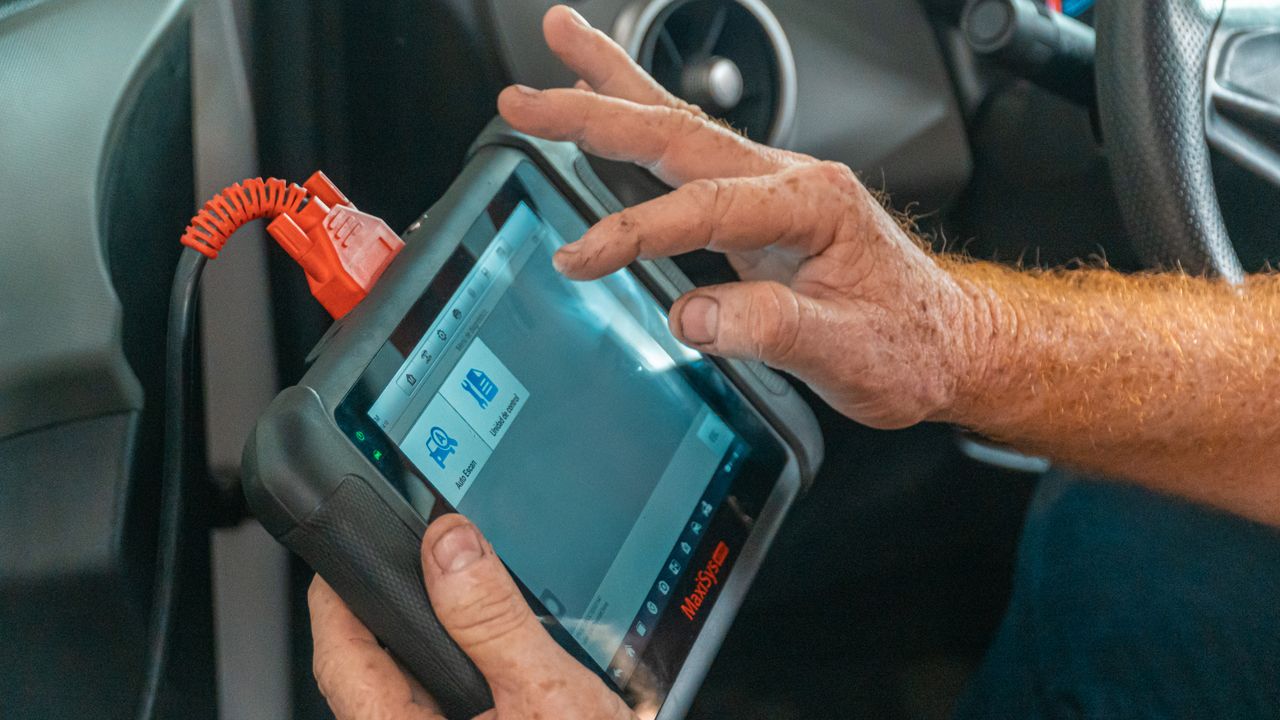
This is why “replace whatever the code says” is the most expensive way to fix a check engine light. We regularly see cars arrive with two or three brand-new parts installed by code-guessing — light still on. Real diagnosis means taking the code as a starting point, then testing: live sensor data, smoke-testing for vacuum and EVAP leaks, scoping ignition events, checking fuel trim. That’s the difference between a parts-store printout and dealer-level equipment in trained hands — and it’s why our full diagnostic pins down the actual cause before a single part goes on the car. Some fixes also require module programming afterward, which we handle in-house.
The Massachusetts inspection problem
Here’s the local angle Worcester drivers can’t ignore: a check engine light is an automatic failure on the Massachusetts annual inspection. The emissions portion of the test reads your OBD system directly — if the light is commanded on, you don’t pass, period.
And no, clearing the code the night before doesn’t work. Wiping codes also wipes the car’s emissions readiness monitors, and the test checks those too — a freshly cleared computer reads as “not ready” and gets rejected until the monitors complete, which takes days of varied driving. The only reliable path to a sticker is fixing the actual fault. If your inspection is coming due with the light on, don’t wait until the week of.
How we handle check engine lights at Iron Wolf Motors
Bring the car in and the first step costs you nothing: a free quick scan to read the codes and tell you honestly how urgent the situation is. If it’s something simple, we say so. If it needs a deeper look, our full diagnostic is billed at a straightforward hourly rate ($150/hr — see pricing), and we quote the repair in plain language before we touch anything. We diagnose all makes and models — domestic, Asian, European, and EV & hybrid — right here in Worcester, MA.
Frequently asked questions
Is it safe to drive with the check engine light on?
If the light is steady and the car drives normally, yes — for a few days while you arrange a scan. If the light is flashing, the engine is misfiring and actively damaging the catalytic converter: ease off and get to a shop as soon as you safely can.
Why is my check engine light flashing?
A flashing light means an active misfire — unburned fuel is reaching the catalytic converter and can destroy it within minutes of hard driving. The cause is often something cheap like a spark plug or ignition coil; the damage from ignoring it is not.
Will my car pass Massachusetts inspection with the check engine light on?
No — a check engine light is an automatic emissions failure on the MA annual inspection. Clearing the code right before the test doesn’t work either, because erasing codes resets the readiness monitors the test also checks.
Can I just disconnect the battery to reset the light?
The light will go out — and come right back once the fault is re-detected. Meanwhile you’ve reset the emissions readiness monitors, which means an automatic inspection rejection until they complete again. Fixing the cause is the only version of this that sticks.
How much does a check engine light diagnosis cost?
At Iron Wolf Motors the quick diagnostic scan is free — we read the codes and tell you how urgent it is at no charge. If the fault needs full diagnosis, it’s $150/hr, and we quote the repair clearly before doing any work.
The parts store read my code — can’t I just replace that part?
The code identifies the system that’s out of spec, not the failed part. A “lean mixture” code, for example, can be caused by a vacuum leak, a dirty airflow sensor, a weak fuel pump, or a bad O2 sensor. Testing tells them apart; guessing gets expensive.