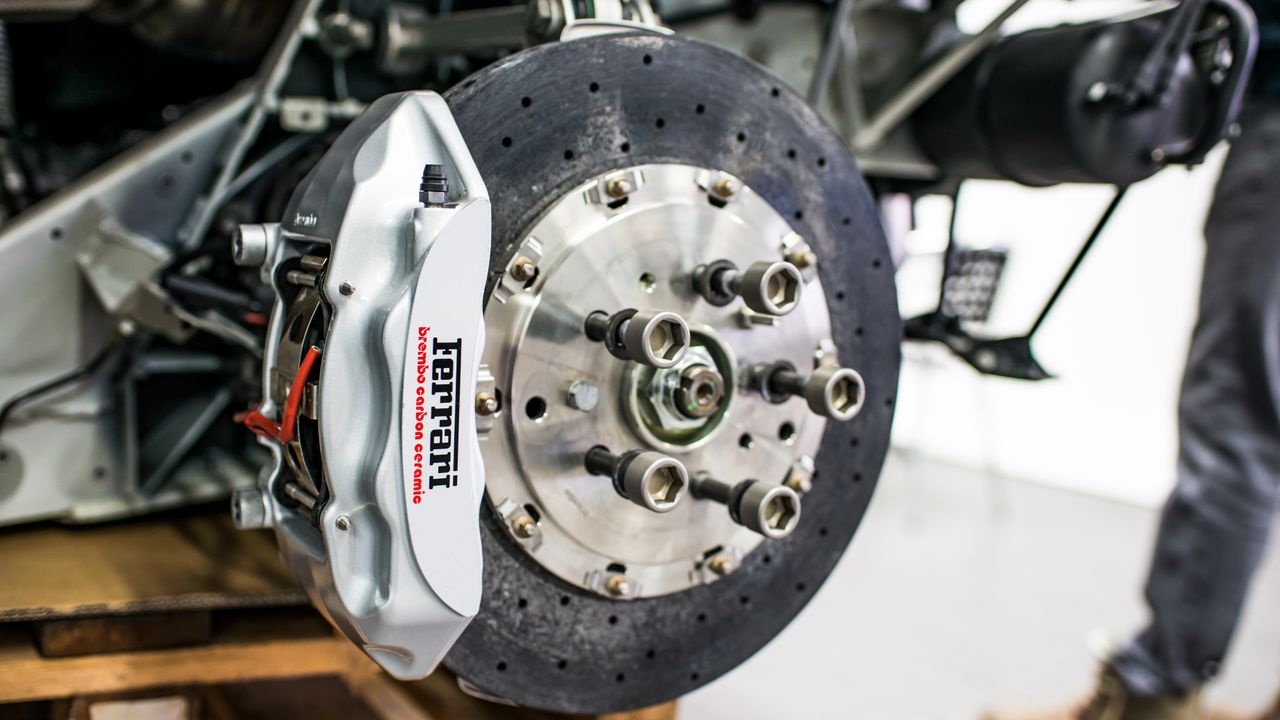
Your brakes are really three wear items that age on different schedules: the pads, the rotors (discs), and the brake fluid. Knowing which one is worn — and catching it early — keeps you safe and keeps repair bills small. Here’s what each part does, how long it lasts, and the warning signs that mean it’s time for brake service.
Brake pads: the part that wears the fastest
Brake pads are the friction material that clamps onto the rotor to slow your car. They’re designed to wear down a little every time you stop, so they’re always the first brake part you’ll replace.
Most pads last 30,000–70,000 miles, but the range is wide on purpose. Lots of stop-and-go city driving, towing, hilly routes, or aggressive braking all wear pads faster.
Signs your pads are worn
- A high-pitched squeal when braking (that’s the built-in wear indicator doing its job).
- Longer stopping distances or a brake pedal that feels different.
- Less than about 3 mm of pad material left at inspection.
- A brake-pad or brake warning light on European cars with pad sensors.
Don’t wait until you hear grinding — that’s metal-on-metal, and it destroys the rotor, turning a cheap pad job into a much bigger one.
Rotors (discs): they wear too — just slower
Rotors are the metal discs your pads squeeze. They get a little thinner each time you replace pads, and they can warp from heat — especially after heavy braking or driving through deep water when they’re hot.
Signs of rotor trouble
- A pulsing or vibrating brake pedal when you slow down.
- A shudder through the steering wheel at highway speed.
- Deep grooves, scoring, or a lip you can feel on the rotor edge.
- A blue tint on the rotor surface from overheating.
Rotors that are still within the manufacturer’s minimum thickness can sometimes be resurfaced; below spec, they need replacing. We measure rather than guess, so you’re not paying for parts you don’t need.
Brake fluid: the part everyone forgets
Brake fluid is hygroscopic — it absorbs moisture from the air over time. That water lowers the fluid’s boiling point (dangerous on long downhill stops) and corrodes calipers and ABS components from the inside.
A soft or spongy pedal can be a sign of moisture-laden or aging fluid. Most manufacturers call for a flush every 2–3 years, regardless of mileage.
Why putting it off costs more
Worn brakes don’t just risk safety — they cascade. Worn-out pads chew up rotors; old fluid damages calipers and ABS; a seized caliper can wreck a fresh set of pads. Catching the cheap problem early almost always prevents the expensive one.
How we handle brakes at Iron Wolf Motors
We measure pad thickness and rotor condition, road-test for noise and pulling, and quote the work in plain language before we touch anything. We use quality pads, lubricate the hardware so they stay quiet, and only replace what’s actually worn. See our brake repair & service page, or for the rest of your routine care, general repair & maintenance.
Brake symptoms often show up alongside other issues. If your car also pulls to one side or wears tires unevenly, that may be alignment — read our guide on why wheel alignment matters.
Frequently asked questions
How long do brake pads last?
Most pads last 30,000–70,000 miles. City driving, towing, and hard braking shorten that, while gentle highway miles extend it. A quick measurement tells you exactly where yours stand.
Do I always need new rotors when I replace pads?
No. If your rotors are still within the manufacturer’s minimum thickness and aren’t warped, they can often be resurfaced or reused. We measure and tell you honestly instead of replacing parts that are fine.
Is it safe to drive with grinding brakes?
No — grinding usually means the pads are gone and metal is contacting the rotor. Stopping power drops and damage adds up fast. Call us and bring it in promptly.
How often should brake fluid be flushed?
Most manufacturers call for a brake-fluid flush every 2–3 years. Brake fluid absorbs moisture over time, which lowers its boiling point and can corrode calipers and ABS parts.
Why does my brake pedal feel soft or spongy?
A soft pedal often points to air or moisture in the brake fluid, or a leak in the system. It’s a safety issue — have it inspected promptly.