Wheel alignment is the adjustment of your suspension angles so all four wheels point exactly where the manufacturer intended. When they don’t, your tires wear unevenly, your car pulls or wanders, and you burn extra fuel — all at the same time. It’s one of the cheapest services that saves you the most money. Here’s why it matters and how often to do it.
What an alignment actually adjusts
- Toe — whether the wheels point in or out as seen from above. This is the biggest cause of rapid tire wear.
- Camber — the inward or outward tilt of the wheel. Too much wears the inner or outer edge and can cause a pull.
- Caster — the steering-axis angle that affects straight-line stability and how the wheel returns to center.
Signs your car is out of alignment
- The car pulls to one side on a straight, level road.
- Your steering wheel sits off-center when you’re driving straight.
- Uneven or feathered tire wear (one edge balding faster).
- Tires squeal in normal turns, or the car feels like it wanders.
A pull can also come from brakes or a bad tire, so it’s worth ruling those out too — our guide on brake pads, rotors & fluid covers the brake side.
How often should you get an alignment?
- At least once a year as routine maintenance.
- With every new set of tires (so they don’t wear out early).
- After hitting a big pothole or curb.
- After any suspension or steering repair.
- Any time you notice the warning signs above.
Why it’s worth doing periodically
Tires are expensive, and a small misalignment can ruin a set in just a few thousand miles. A proper alignment means even tread wear, longer tire life, better fuel economy, safer and more predictable handling, and less stress on your suspension components. It quietly pays for itself.
Our alignment process
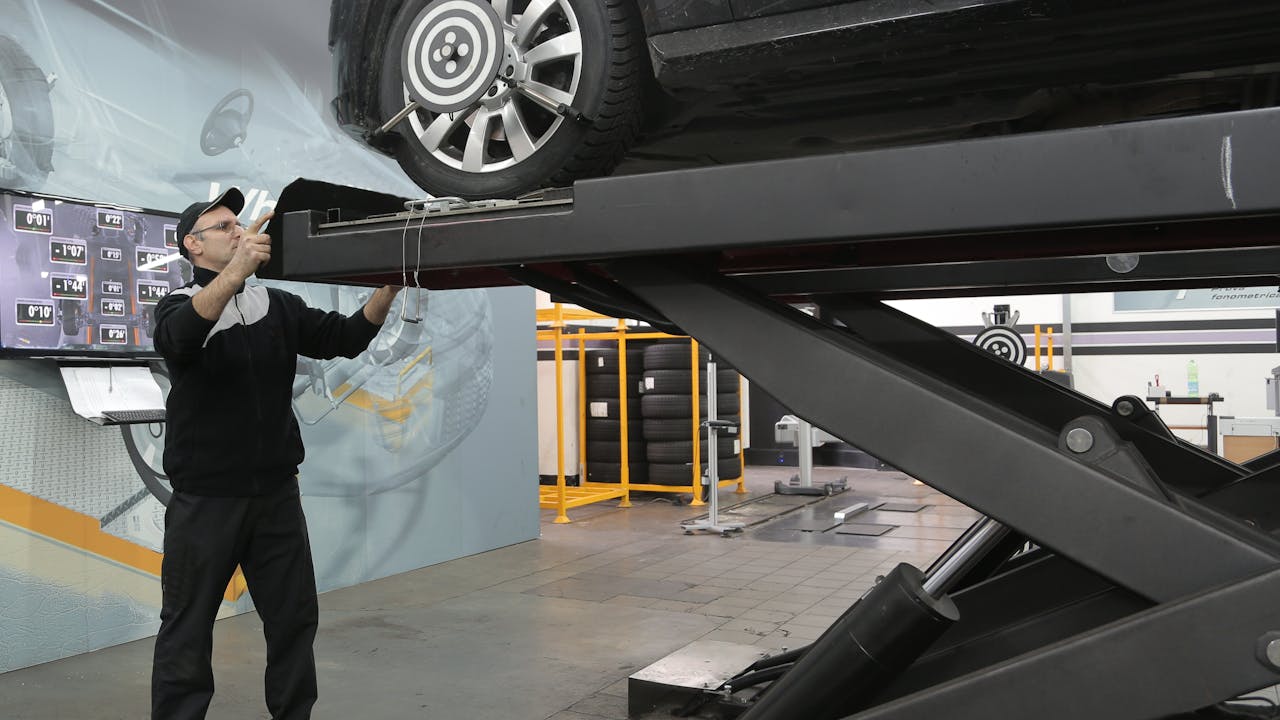
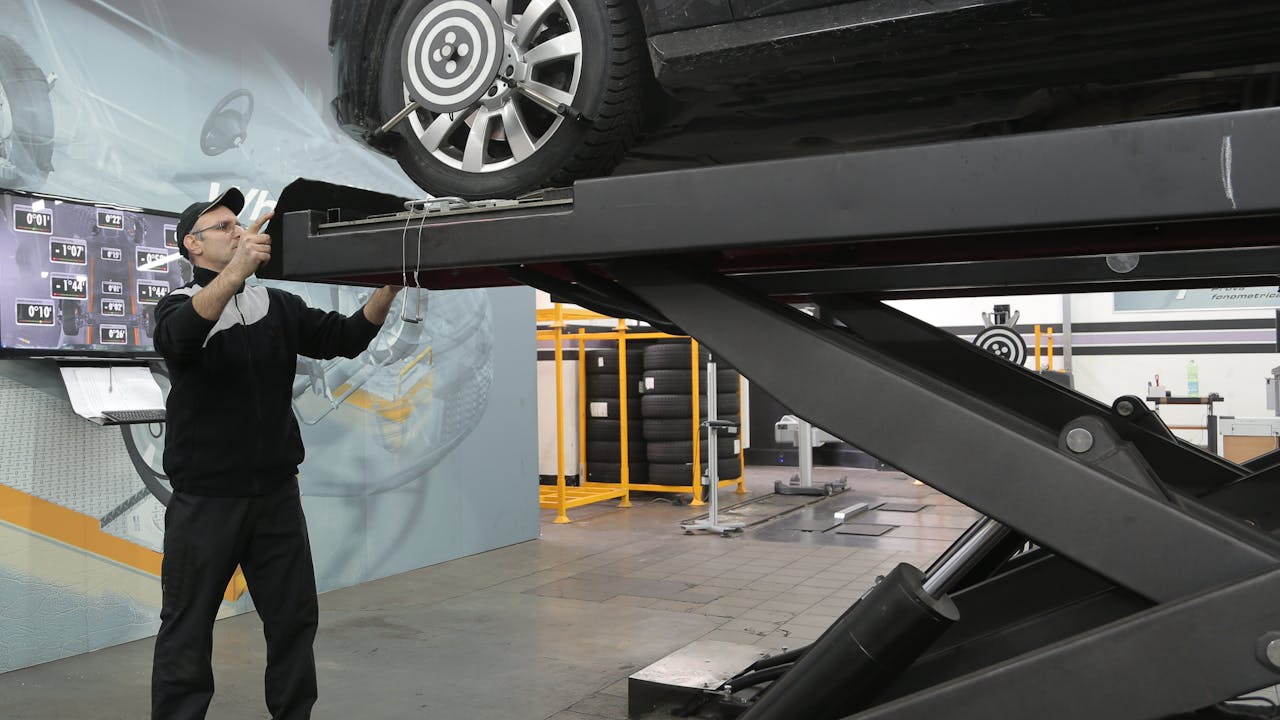
We set your toe, camber, and caster to factory specification with computerized equipment, check your tires and suspension for what threw the alignment off in the first place, and center your steering wheel. See our wheel alignment service. It pairs perfectly with new tires or suspension work — and it’s a great time to have your brakes checked too.
Frequently asked questions
How long does a wheel alignment take?
A standard four-wheel alignment usually takes about an hour. If we find a worn suspension or steering part that’s causing the misalignment, we’ll show you and quote that separately first.
What’s the difference between a two-wheel and four-wheel alignment?
A four-wheel alignment measures and adjusts all four corners and is recommended for most modern cars and all-wheel-drive vehicles. We’ll use the right one for your vehicle.
Will an alignment fix a steering-wheel vibration?
Usually not — a vibration is more often tire balance or a warped brake rotor. We’ll diagnose the real cause rather than just selling an alignment.
What are toe, camber, and caster?
Toe is whether the wheels point in or out (the biggest tire-wear factor), camber is the inward or outward tilt, and caster is the steering-axis angle that affects stability. An alignment sets all three to spec.
Can a pothole really knock my alignment out?
Yes — a hard pothole or curb strike is one of the most common causes, and it can shift your toe enough to start wearing tires within a few hundred miles.