Cooling systems tend to fail in the worst place: stuck in summer traffic with the A/C running. An engine that runs fine on the highway can creep toward the red the moment you’re crawling bumper-to-bumper. Understanding why — and knowing what to do the second the gauge climbs — can be the difference between a small repair and a blown head gasket. Here’s the plain-English version, and how general repair & maintenance keeps your cooling system healthy.
Why summer traffic is when engines overheat
At highway speed, air rushes through your radiator and carries heat away — even a marginal cooling system can coast on that airflow. In stop-and-go traffic that airflow disappears, so the engine relies entirely on the cooling fan and a healthy system to shed heat. Add the extra load of the A/C compressor and a hot day, and any weakness shows up fast.
The common causes
- Low coolant from a leak — by far the most common. Coolant doesn’t get “used up”; if it’s low, it leaked at a hose, the radiator, the water pump, or a gasket.
- A stuck thermostat — if it’s stuck closed, coolant can’t circulate to the radiator.
- A failing water pump — the pump that circulates coolant; a worn impeller or bearing kills flow.
- A cooling-fan fault — a dead fan motor, clutch, or relay means no airflow exactly when you need it in traffic.
- A clogged or bug-blocked radiator — restricts both coolant flow and airflow.
- A bad radiator cap — can’t hold the pressure the system needs, lowering the boiling point.
- A failing head gasket — both a cause and a result of overheating; often the expensive end of ignoring the others.
What your temperature gauge — and the warning signs — are telling you
- The gauge creeping up in traffic and dropping back at speed → marginal cooling (fan, coolant level, or flow).
- The gauge swinging into the red, or a hot-engine warning light → stop as soon as it’s safe.
- Steam or a sweet, syrupy smell → coolant is boiling or leaking onto hot parts.
- Heater suddenly blowing cold while driving → often a sign coolant level has dropped.
- Puddle of coolant (green, orange, or pink) under the car → an active leak.
Why you can’t just “top it off and keep going”
If the coolant was low, it’s because it leaked — topping off without finding the leak just buys you a few miles before it happens again, usually somewhere worse. Air pockets from a low system also create hot spots. And every overheating episode risks warping the cylinder head or blowing the head gasket, which is exactly the repair you’re trying to avoid.
How to prevent it
- Have the coolant condition and level checked, and flushed on your manufacturer’s schedule.
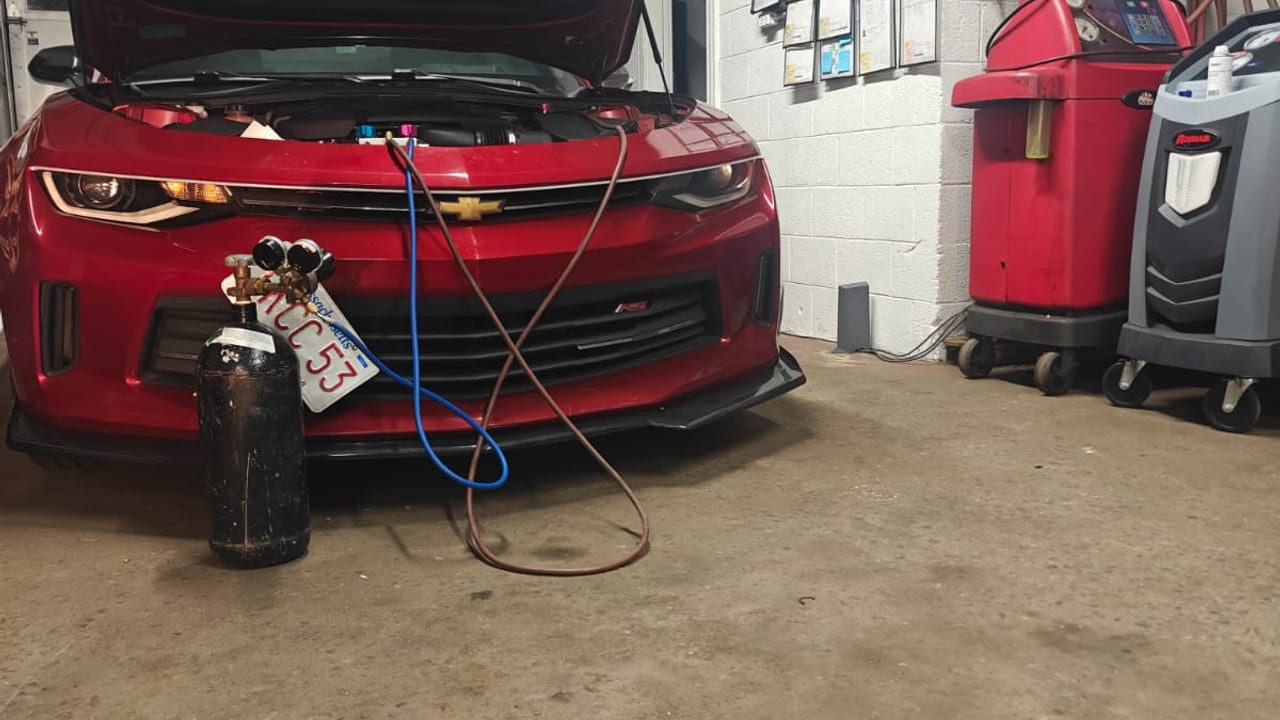
- Get a pressure test before summer to catch small leaks early.
- Have hoses, the radiator cap, and the water pump inspected for age and seepage.
- Make sure the cooling fan actually kicks on — a common silent failure.
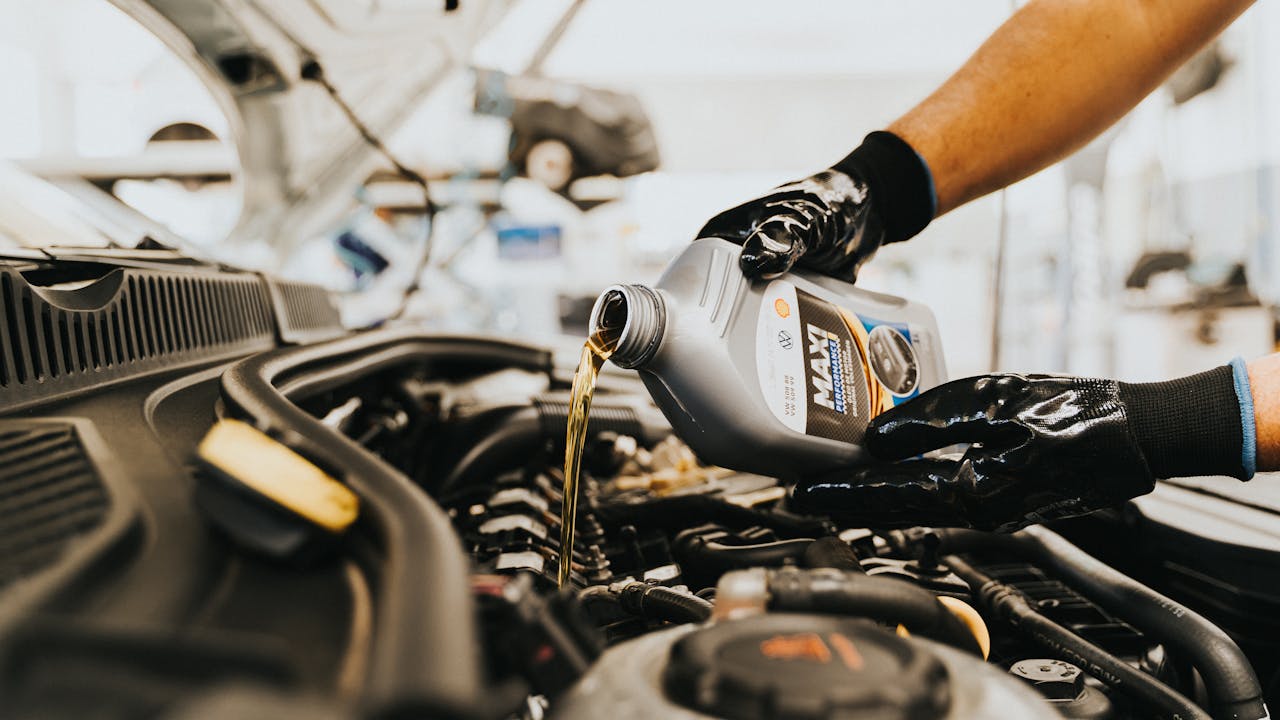
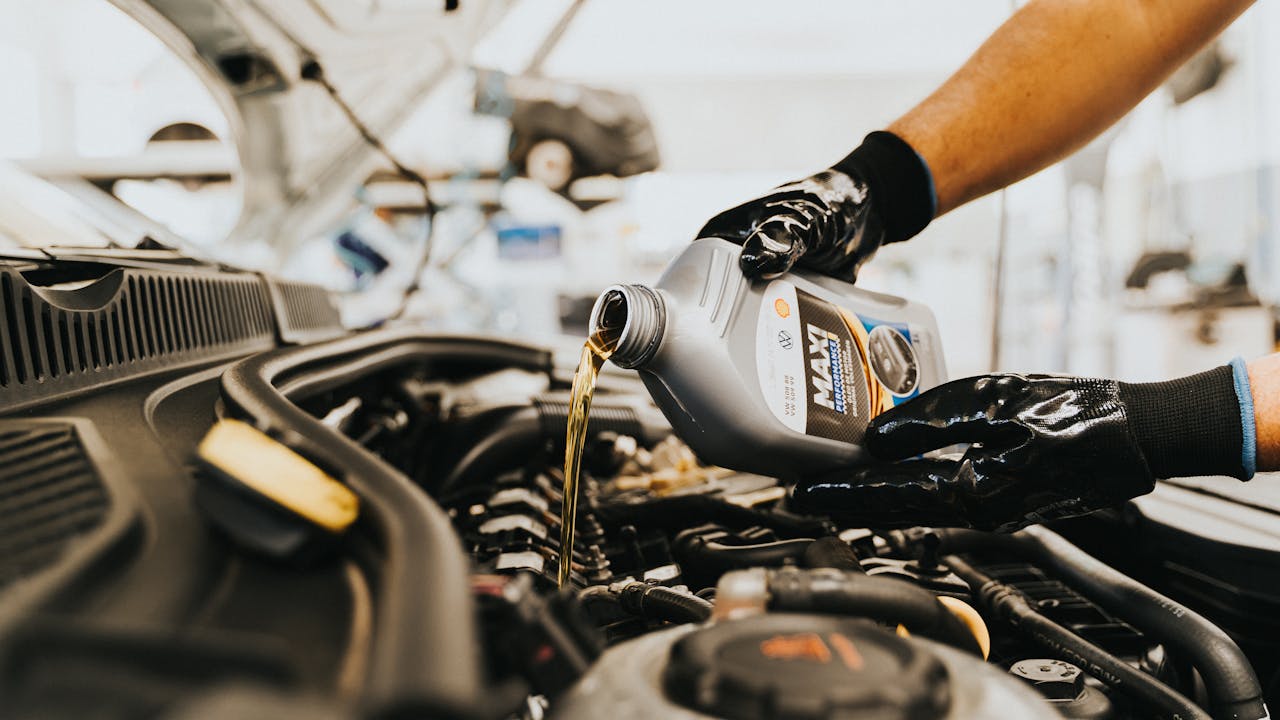
A lot of this gets caught during the free multi-point inspection that comes with an oil change — one more reason routine service pays for itself.
How we handle cooling and overheating
We pressure-test the system to find the real leak, test the thermostat, water pump, fan, and radiator cap, and flush old or contaminated coolant. If the fan or a temperature sensor is the culprit, our electrical & diagnostics team sorts it; if your A/C is adding to the heat load or quit at the same time, see our guide on A/C not blowing cold. We diagnose first and quote before any work.
Frequently asked questions
What should I do if my car starts overheating while driving?
Turn off the A/C, turn the heater to maximum to pull heat out of the engine, ease off the accelerator, and pull over safely as soon as you can, then shut the engine off. Don’t open a hot radiator cap, and don’t keep driving — a few minutes of a hot engine can cause major damage.
Why does my car overheat in traffic but not on the highway?
At highway speed, airflow through the radiator cools the engine even if the system is weak. In traffic there’s no airflow, so the engine depends on the cooling fan and a healthy system — which exposes a failing fan, low coolant, or restricted flow.
Is it safe to keep driving a car that’s overheating?
No. Continuing to drive a hot engine risks warping the cylinder head or blowing the head gasket — a far bigger repair. Stop safely, let it cool, and have it diagnosed before driving on.
Can low coolant cause overheating, and why does it get low?
Yes — low coolant is the most common cause. Coolant isn’t consumed in normal use, so if it’s low it leaked, typically at a hose, the radiator, the water pump, or a gasket. The leak needs to be found and fixed, not just topped off.
How often should engine coolant be changed?
It varies by vehicle and coolant type, but many call for a flush every few years or a set mileage. We check coolant condition at every service and recommend a flush when it’s due — old coolant loses its corrosion protection and cooling ability.