Every autumn goes the same way. The weather stays mild through October, nobody thinks about winter tires, and then a forecast mentions snow. Within a day every tire shop and garage in Central Massachusetts is booked a week or more out, and people are driving on summer tires in the first slush of the year because there was nowhere to get them changed.
The work does not change between October and the week of the first snow. The same changeover takes the same time. What changes is whether it is done calmly, with time to look properly at the tires, the wheels and what sits behind them — or squeezed in between thirty other cars. This guide covers when to switch, what a proper changeover should include, and how to store the tires coming off. For the rest of your winter prep — battery, coolant, wipers, salt protection — see our fall car maintenance checklist.
When to switch: the 45°F rule
Winter tires are not about snow alone. Their rubber compound is designed to stay flexible in the cold, while an all-season or summer tire starts to harden once temperatures fall to around 45°F (7°C). A harder tire grips less on cold, dry pavement too — long before there is any snow on the road.
So the right time to switch is when the average day stays below about 45°F, not the morning of the first storm. In Worcester that usually means November, and sometimes the end of October. Working back from that, the time to book the changeover is now, in October, while shops have space.
What a proper changeover includes
Swapping four wheels is the smallest part of the job. The value is in what gets checked while they are off.
1. The winter tires themselves, before they go on
Tires that have spent six months in a garage or basement need checking before they are fitted, not after.
- Tread depth. A winter tire relies on deep tread and sipes to bite into snow and clear slush. Below about 6/32" it loses much of that ability, even though it is still legal. Below 4/32" it is not a winter tire in any useful sense.
- Age. Rubber hardens with time whether the tire is used or not. The four-digit date code on the sidewall gives the week and year of manufacture. Tires more than about six years old deserve a hard look, however much tread is left.
- Sidewalls. Cracking, bulges or cuts from last winter’s curbs mean the tire is done.
- Even wear. Wear on one edge more than the other is an alignment problem showing itself — and it will do the same to the next set.
2. Mount and balance
If your winter tires are on their own set of wheels, the changeover is a wheel swap and a balance check. If they share wheels with your summer tires, each tire has to be dismounted and remounted, then balanced — an unbalanced wheel shows up as a vibration through the steering at highway speed and wears the tire unevenly. Our mount and balance starts at $19.89; see wheel services and pricing.
3. TPMS sensors
Every car built for the US since 2008 has a tire pressure monitoring system. If your winter set is on separate wheels, those wheels need their own working sensors, or the warning light stays on all winter — and a warning light that is always on is a warning light nobody notices when a tire actually does go down. Check that the second set of sensors reads correctly on the dash before the car leaves.
4. The wheels, before salt season
Curb rash is cosmetic in July. In winter it is where corrosion starts: salt gets under damaged paint and the alloy begins to pit, and on a wheel that has lost its finish at the bead seat, that corrosion eventually lets the tire lose air slowly. A bent rim does the same, and a slow leak gets worse as the cold drops the pressure further.
A changeover is the right moment to deal with it, because the wheel is already off the car. Bent rim repair is $119.89 and cracked rim welding $159.89 — both far cheaper than a new alloy. More in curb rash and bent rims: recondition or replace?.
5. Lug nuts torqued to spec — by hand
Wheels should be tightened with a torque wrench to the manufacturer’s figure, not run on with an impact gun until it stops. Over-tightening stretches studs and can distort brake rotors; under-tightening is how wheels come off. Alloy wheels settle slightly after fitting, so re-check the torque after the first 50 miles or so.
6. A look at brakes and steering while the wheels are off
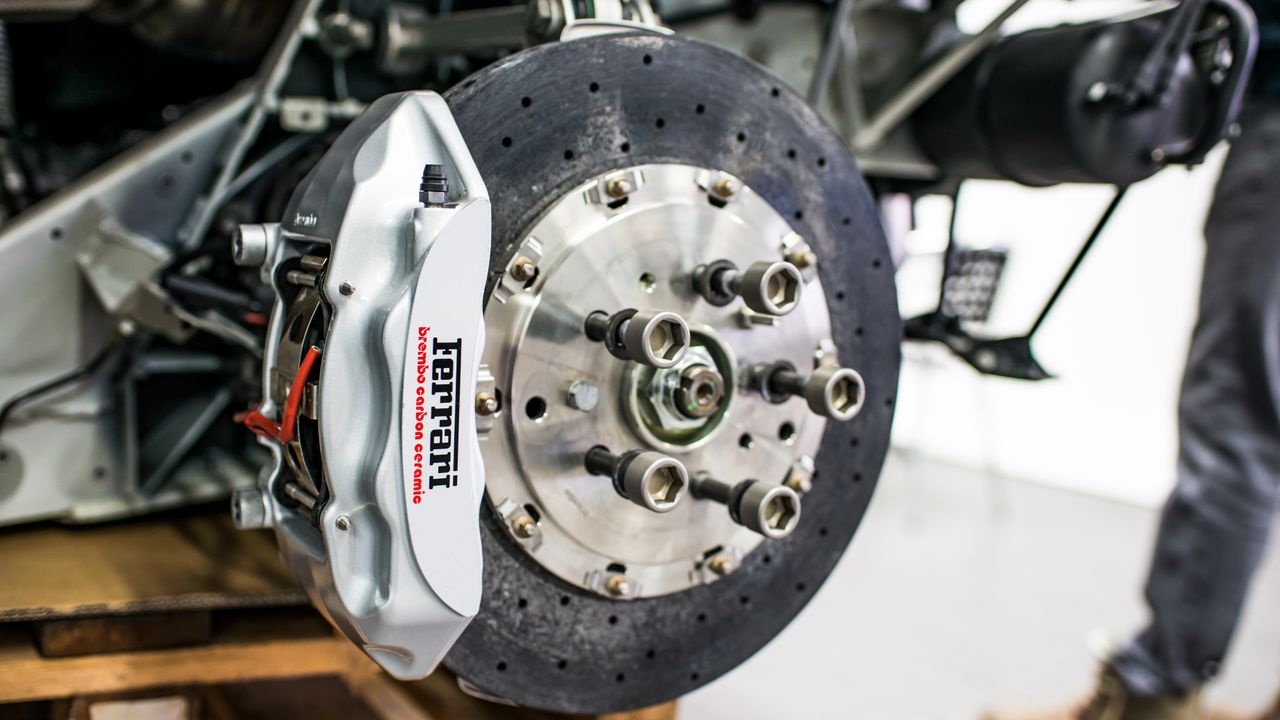
With a wheel off, the brake rotor, pads, caliper and the outer end of the steering are right there in plain view. It takes minutes to look properly — and it is how problems get caught before they matter.
We recently had a Maserati Levante booked in for nothing more than an alignment. With the wheels off, both outer tie rod ends turned out to be visibly bent, and the front rotors were worn below minimum thickness with a raised lip on the edge. Neither had been reported by the owner. The full write-up, with photos, is here: Maserati Levante: why we replaced the tie rod ends first. That is the kind of thing a changeover done in a hurry walks straight past.
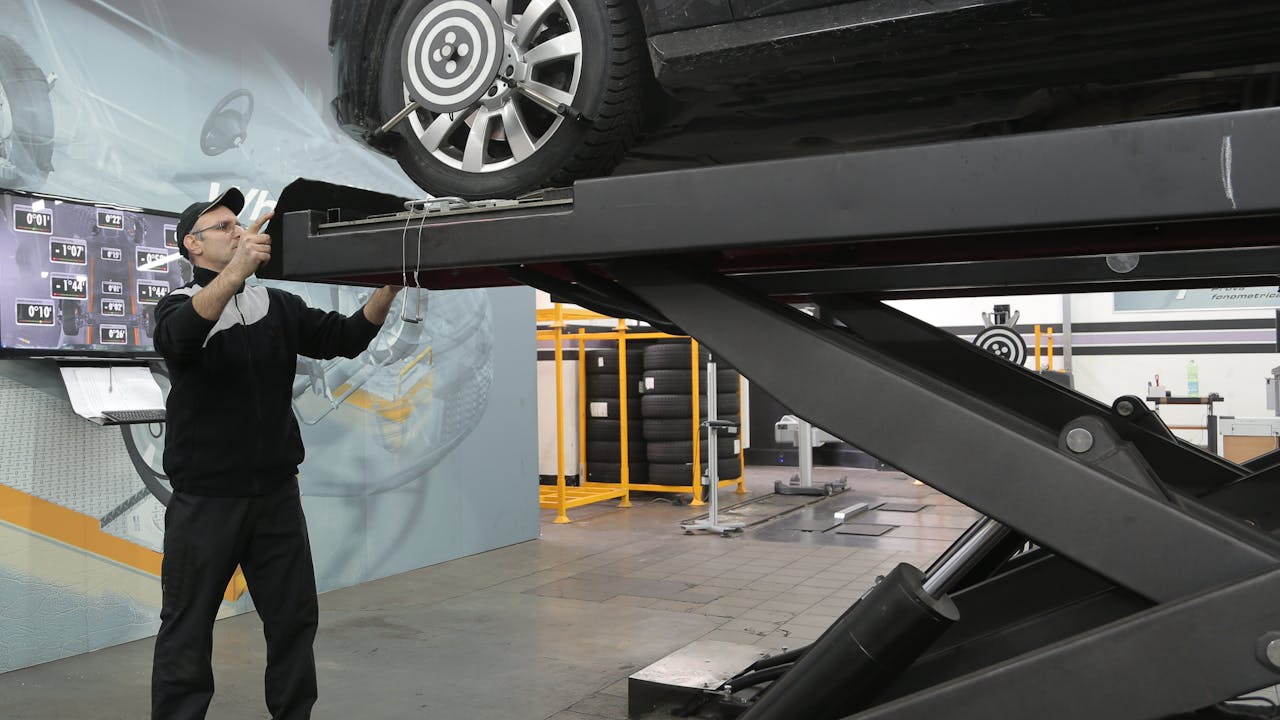
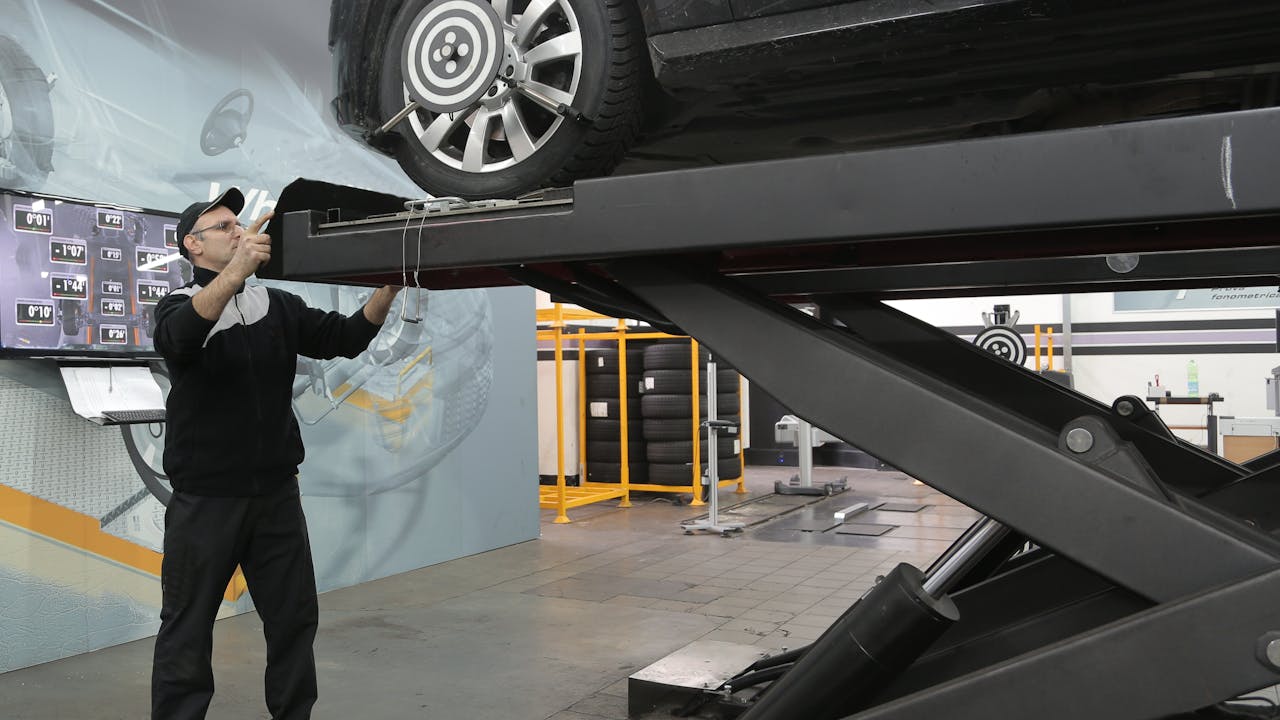
If the car pulls, the steering wheel sits off-centre, or the old tires wore unevenly, have the alignment checked at the same visit — before a new season of wear goes onto the winter set. Our guide on when to replace pads, rotors and fluid covers the brake side.
Storing the tires that come off
Tires stored badly age faster, and the set you take off in November is the set you will want back in April.
- Clean them first, and let them dry. Brake dust and road grime left on for six months do the rubber no favors.
- Mark each tire’s position — front left, rear right, and so on — so they can be rotated sensibly when they go back on.
- Keep them cool, dry and out of sunlight. Ultraviolet light and heat both harden rubber.
- Keep them away from furnaces, freezers and electric motors. These produce ozone, which cracks rubber.
- Tires on wheels can be stacked flat or hung. Tires without wheels are better stored standing upright and turned occasionally.
If you run all-seasons year-round
Plenty of Worcester drivers do, and with good tread that is a reasonable choice for many people. But the same timing applies: an all-season tire near the end of its life is at its worst on cold, wet roads. If your tread is at or near 4/32", replace the tires this autumn rather than after the first storm — and if you are replacing them anyway, that is the moment to consider a dedicated winter set instead. The quarter test and the rest of the tire checks are in our fall checklist.
Book it now, while there are no queues
Bring your winter tires in during October and we will do the changeover properly: tires checked for tread, age and damage, mounted and balanced, TPMS checked, wheels looked at for curb rash and bends, lug nuts torqued by hand, and the brakes and steering inspected while the wheels are off. If anything else needs attention, you get a written quote before anything is touched — and time to decide, because it is still October.
Book it as wheel services, or add it to a general maintenance visit if the car is due anything else before winter.
Frequently asked questions
When should I put winter tires on in Massachusetts?
Once the average daily temperature stays below about 45°F. In Worcester and Central Massachusetts that is usually November, occasionally late October. Book the changeover in October so it is done before the first snow forecast fills every shop in the area.
How much tread do winter tires need?
The legal minimum in Massachusetts is 2/32", but that is a failure point, not a useful one. Winter tires lose much of their snow and slush grip below about 6/32", and below 4/32" they perform little better than a worn all-season. Measure them before they go back on, not after the first storm.
Can I put just two winter tires on my car?
No. Two winter tires and two all-seasons give the car much more grip at one end than the other, and on ice or snow the end with less grip slides first. Winter tires should always be fitted as a set of four.
Do my winter wheels need TPMS sensors?
If they are a separate set of wheels, yes — otherwise the tire pressure warning light stays on all winter. That is not only annoying: a light that is always on stops meaning anything, so a genuine puncture goes unnoticed. Have the sensors checked when the wheels go on.
How old is too old for a winter tire?
Rubber hardens with age whether the tire is used or not, and hard rubber is exactly what a winter tire is designed to avoid. Check the four-digit date code on the sidewall — the week and year it was made. Tires more than about six years old deserve careful inspection even with good tread, and any with cracking in the sidewall or between the tread blocks should be replaced.
Why re-check lug nuts after a tire change?
Alloy wheels settle slightly against the hub in the first miles after fitting, which can reduce clamping force. Re-checking the torque after about 50 miles is a quick, standard precaution, and it matters more on a car that has just had its wheels swapped for the season.