Somewhere around the mid-2000s, “lifetime fluid” started appearing in service schedules, and a lot of drivers read it the way it was written — as permission to never think about the gearbox again. Twenty years later we are the ones opening those gearboxes up.
This is not a conspiracy story. It is a definition problem. “Lifetime” in an engineering document means the life the component was designed and warranted for. That is a number like 100,000 miles or eight years, not the life of a car that is still on the road at 180,000.
The ZF 8HP: what the people who built it say
The ZF 8HP eight-speed automatic is one of the most widely fitted gearboxes on the road — BMW, Audi, Jaguar, Land Rover, Chrysler, Dodge, Ram, and more. It is a genuinely excellent unit. It is also the poster child for this argument.
Several carmakers fitted it and declared the fluid sealed for life. ZF themselves publish a fluid and filter service recommendation for it. When the manufacturer of the gearbox and the manufacturer of the car disagree about whether the gearbox needs servicing, it is worth asking which of the two has to pay for it at 150,000 miles.
The service is not just fluid. The 8HP’s filter is integrated into the pan, so a proper job means pan, filter and fluid together, with the fill done to temperature rather than to a dipstick — these units are filled by level plug at a specified fluid temperature, and getting that wrong causes its own problems.
The symptom that gives you a year of warning
If you feel a fine shudder at a steady throttle, usually somewhere between 35 and 50 mph, often on a slight incline, and it feels a bit like driving over rumble strips or running on a flat tyre that is not flat — that is torque-converter lockup clutch shudder.
It matters because it is typically the first clear symptom, and at that stage it is often still a fluid condition problem rather than a mechanical one. Left alone, the shudder becomes clutch material in the fluid, the clutch material ends up in the valve body, and a fluid service turns into a rebuild.
Other things worth not ignoring: a flare between gears where the revs rise before the next gear catches, a hard clunk into drive or reverse, a delay of a second or more before the car engages, or shifts that have become noticeably harsher than they were a year ago.
CVTs are a different and less forgiving animal
In a conventional automatic the fluid lubricates, cools and transmits pressure. In a CVT it also has to provide a very specific coefficient of friction between the belt or chain and the pulleys. That is a much narrower specification, and it degrades.
Which is why CVT fluid is not interchangeable, not even slightly. The correct fluid for that specific transmission, or you cause the exact failure you were trying to avoid. A CVT that has started to judder on light acceleration, or that flares and hunts on a gentle hill, is telling you something, and the window to act on it is shorter than on a torque-converter automatic.
DSG, S tronic and the wet-clutch boxes
Wet-clutch dual-clutch gearboxes — the DSG and S tronic units in a lot of Volkswagen and Audi products — have a published fluid and filter interval, and it is not optional. These share fluid between the clutch pack and the mechatronic unit, which is the hydraulic and electronic brain of the gearbox.
Dirty fluid in a mechatronic unit means sticking solenoids, and sticking solenoids mean the jerky low-speed behaviour, hesitation from a standstill and occasional harsh engagement that owners describe as “it has got worse in traffic.” Mechatronic repair is a serious bill; the fluid and filter service is not. Our transmission service page covers what we do on these.
“Don’t change the fluid on a high-mileage box or it will fail”
This one is half true, and it deserves an honest answer rather than a slogan either way.
Fresh fluid does not destroy a healthy gearbox. What actually happens is this: a transmission at 170,000 miles on original fluid has worn clutches that are gripping partly because worn fluid and accumulated material are helping them grip. Restore proper fluid properties and the marginal clutch that was just about coping stops coping. The service did not cause that. The service revealed it, on a gearbox that had months left either way.
The practical approach: if the fluid is burnt and the gearbox is already slipping, we will tell you it is a rebuild conversation, not a fluid conversation, and we will not take your money for a service that changes nothing. If it is high mileage but behaving, a drain-and-fill — done more than once rather than one aggressive high-pressure flush — is the conservative way in.
What we actually do
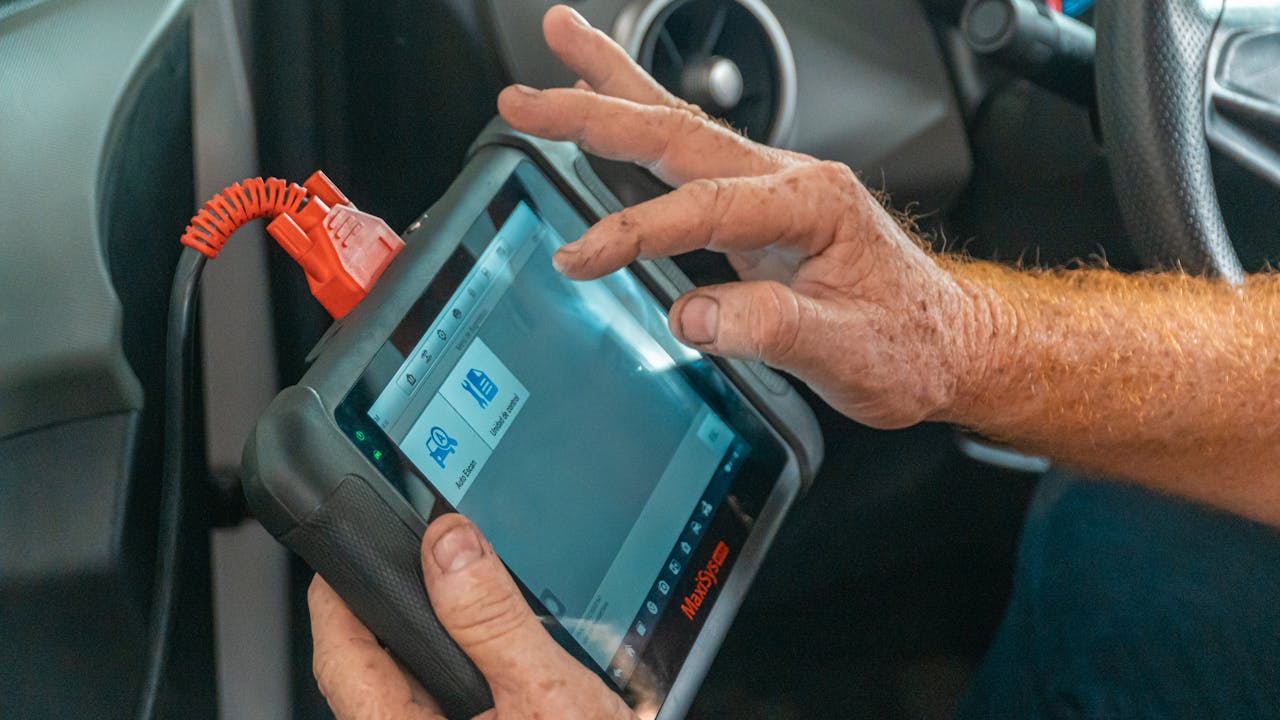
We read the gearbox’s own data first — adaptation values, stored faults, clutch and temperature history where the car records it — rather than starting with the pan off. On European cars that means the factory tooling, which is the same reason European cars need a specialist generally.
Then fluid to the correct specification, filter where the design has one, fill to temperature, and adaptations reset so the gearbox relearns rather than carrying forward the shift strategy it developed to cope with worn fluid. That last step gets skipped a lot and it is why some cars come out of a fluid service feeling no different.
Every job is backed by our 12-month / 12,000-mile warranty on parts and labour, whichever comes first, and you can see our published prices before you call.
Frequently asked questions
Is transmission fluid really “lifetime”?
No, not in the sense drivers read it. “Lifetime” in a service schedule means the design and warranty life of the component — a figure like 100,000 miles or eight years — not the life of a car that is still running at 180,000. ZF, who build the widely fitted 8HP automatic, publish their own fluid and filter service recommendation even where the carmaker markets it as sealed.
What does a shudder at 40 mph mean?
A fine shudder at steady throttle, usually between about 35 and 50 mph, is typically torque-converter lockup clutch shudder. At that stage it is often still a fluid condition problem. Left alone, clutch material ends up in the valve body and a fluid service becomes a rebuild.
Can I use any CVT fluid?
No. CVT fluid provides a specific coefficient of friction between the belt or chain and the pulleys, not just lubrication. The wrong fluid causes exactly the failure you were trying to prevent. It must be the correct specification for that transmission.
Will changing the fluid on my high-mileage transmission make it fail?
Fresh fluid does not damage a healthy gearbox. On a very high-mileage unit with worn clutches, restoring proper fluid properties can expose a clutch that was only just coping — but that gearbox was already failing. If yours is already slipping with burnt fluid, we will tell you it is a rebuild conversation rather than sell you a service that changes nothing.
How often should DSG or S tronic fluid be changed?
Wet-clutch dual-clutch gearboxes have a published fluid and filter interval and it should be kept to. They share fluid between the clutch pack and the mechatronic unit, so dirty fluid means sticking solenoids — which is where the jerky low-speed behaviour and harsh engagement come from. Mechatronic repair costs many times what the service does.
Do you reset the adaptations after a fluid service?
Yes, and it matters. A gearbox develops a shift strategy to compensate for ageing fluid and worn clutches. If the adaptations are not reset it carries that strategy forward and the car can feel no different after the service. This step is skipped often enough that it is worth asking any shop whether they do it.