209 Stafford St, Worcester, MA 01603Get directionsMon–Fri 8AM–5PM · Sat 9AM–2PM
Brakes

Brake Pads, Rotors & Fluid: When to Replace Each (and Why It Matters)

Brake pads, rotors, and brake fluid each wear on their own schedule. Here’s how to know when each one needs attention — and the warning signs you should never ignore.

Brake Pads, Rotors & Fluid: When to Replace Each (and Why It Matters) — Iron Wolf Motors, Worcester, MA

Your brakes are really three wear items that age on different schedules: the pads, the rotors (discs), and the brake fluid. Knowing which one is worn — and catching it early — keeps you safe and keeps repair bills small. Here’s what each part does, how long it lasts, and the warning signs that mean it’s time for brake service.

Brake pads: the part that wears the fastest

Brake pads are the friction material that clamps onto the rotor to slow your car. They’re designed to wear down a little every time you stop, so they’re always the first brake part you’ll replace.

Most pads last 30,000–70,000 miles, but the range is wide on purpose. Lots of stop-and-go city driving, towing, hilly routes, or aggressive braking all wear pads faster.

Signs your pads are worn

  • A high-pitched squeal when braking (that’s the built-in wear indicator doing its job).
  • Longer stopping distances or a brake pedal that feels different.
  • Less than about 3 mm of pad material left at inspection.
  • A brake-pad or brake warning light on European cars with pad sensors.

Don’t wait until you hear grinding — that’s metal-on-metal, and it destroys the rotor, turning a cheap pad job into a much bigger one.

Rotors (discs): they wear too — just slower

Rotors are the metal discs your pads squeeze. They get a little thinner each time you replace pads, and they can warp from heat — especially after heavy braking or driving through deep water when they’re hot.

Signs of rotor trouble

  • A pulsing or vibrating brake pedal when you slow down.
  • A shudder through the steering wheel at highway speed.
  • Deep grooves, scoring, or a lip you can feel on the rotor edge.
  • A blue tint on the rotor surface from overheating.

Rotors that are still within the manufacturer’s minimum thickness can sometimes be resurfaced; below spec, they need replacing. We measure rather than guess, so you’re not paying for parts you don’t need.

Brake fluid: the part everyone forgets

Brake fluid is hygroscopic — it absorbs moisture from the air over time. That water lowers the fluid’s boiling point (dangerous on long downhill stops) and corrodes calipers and ABS components from the inside.

A soft or spongy pedal can be a sign of moisture-laden or aging fluid. Most manufacturers call for a flush every 2–3 years, regardless of mileage.

Why putting it off costs more

Worn brakes don’t just risk safety — they cascade. Worn-out pads chew up rotors; old fluid damages calipers and ABS; a seized caliper can wreck a fresh set of pads. Catching the cheap problem early almost always prevents the expensive one.

How we handle brakes at Iron Wolf Motors

We measure pad thickness and rotor condition, road-test for noise and pulling, and quote the work in plain language before we touch anything. We use quality pads, lubricate the hardware so they stay quiet, and only replace what’s actually worn. See our brake repair & service page, or for the rest of your routine care, general repair & maintenance.

Brake symptoms often show up alongside other issues. If your car also pulls to one side or wears tires unevenly, that may be alignment — read our guide on why wheel alignment matters.

Frequently asked questions

When should brake rotors be replaced?

When they are worn below the manufacturer’s minimum thickness, or when they cause a pulsing pedal, a shudder at highway speed, deep grooves or a lip at the edge, or show blue heat marks. There is no fixed mileage: as a rule of thumb rotors last about every other set of pads, but they should be measured, not guessed — rotors still within spec can sometimes be resurfaced.

How often should brake pads be replaced?

Most pads last 30,000–70,000 miles. City driving, towing, and hard braking shorten that, while gentle highway miles extend it. A quick measurement tells you exactly where yours stand.

Do I always need new rotors when I replace pads?

No. If your rotors are still within the manufacturer’s minimum thickness and aren’t warped, they can often be resurfaced or reused. We measure and tell you honestly instead of replacing parts that are fine.

Is it safe to drive with grinding brakes?

No — grinding usually means the pads are gone and metal is contacting the rotor. Stopping power drops and damage adds up fast. Call us and bring it in promptly.

How often should brake fluid be flushed?

Most manufacturers call for a brake-fluid flush every 2–3 years. Brake fluid absorbs moisture over time, which lowers its boiling point and can corrode calipers and ABS parts.

Why does my brake pedal feel soft or spongy?

A soft pedal often points to air or moisture in the brake fluid, or a leak in the system. It’s a safety issue — have it inspected promptly.
Have a question about your car?

We’ll give you a straight answer — book online or call us today.

From the workshop

We wrote one of these up in full

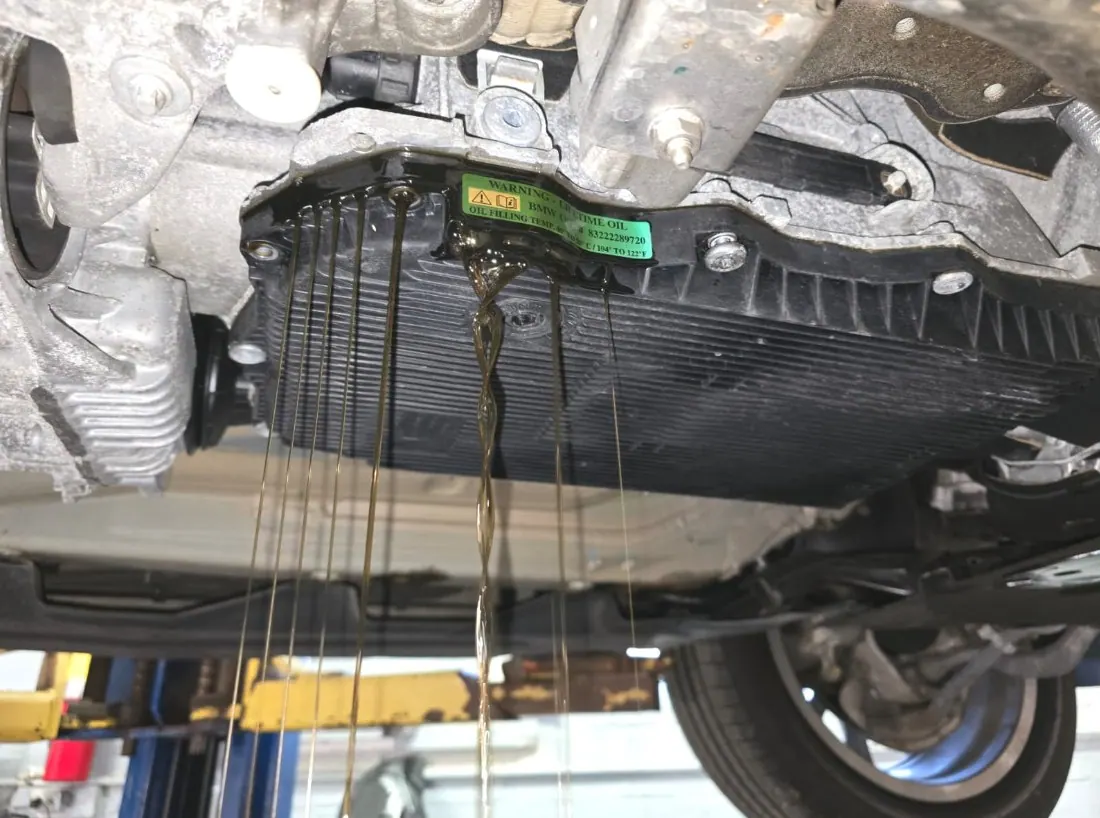
Old transmission fluid draining in streams from the ZF 8-speed transmission pan of a 2021 BMW X3 on a lift, below a green BMW “Lifetime oil” warning sticker
2021 BMW X3

BMW X3 Transmission Service: Draining the “Lifetime” Fluid From a ZF 8-Speed

A 2021 BMW X3 came in for transmission fluid maintenance. The pan carries a green sticker that says “Lifetime oil” — the fluid came out anyway, along with the old pan and its built-in filter. New pan and filter, fresh fluid, and the level set at the temperature printed on that same sticker. Here is the job, photo by photo.

Read the write-up
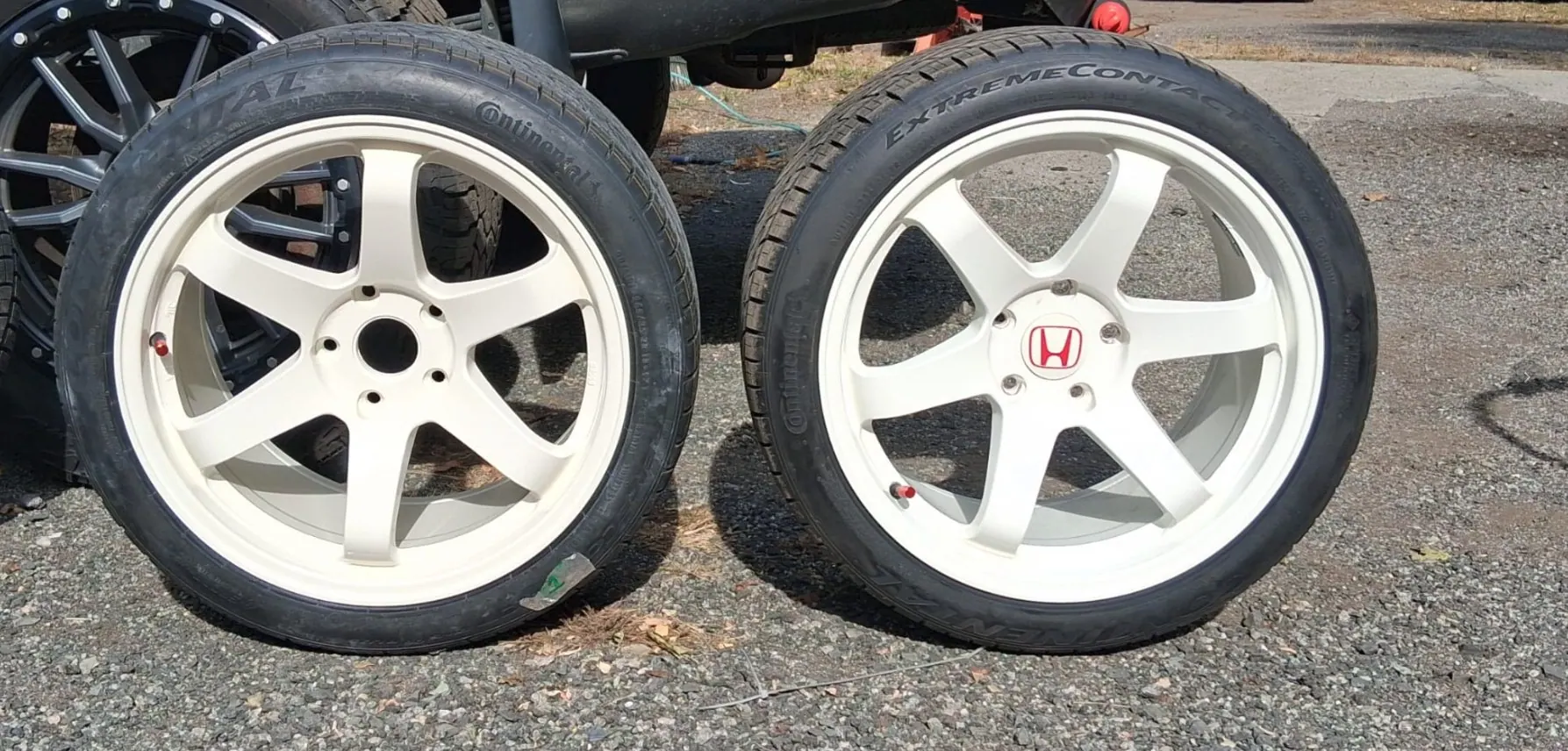
Two white six-spoke Honda Civic Type R wheels with Continental tires side by side: the refinished wheel on the left and the original on the right with its red H center cap
Honda Civic Type R

Bent Honda Civic Type R Wheel: Straightened, Then Refinished White to Match the Car

A white six-spoke wheel from a Honda Civic Type R came in bent, with a wobble you could see as it spun. We straightened the rim, then refinished it in a white matched to the car, so the repaired wheel sits with the other three instead of standing out. Before and after.

Read the write-up
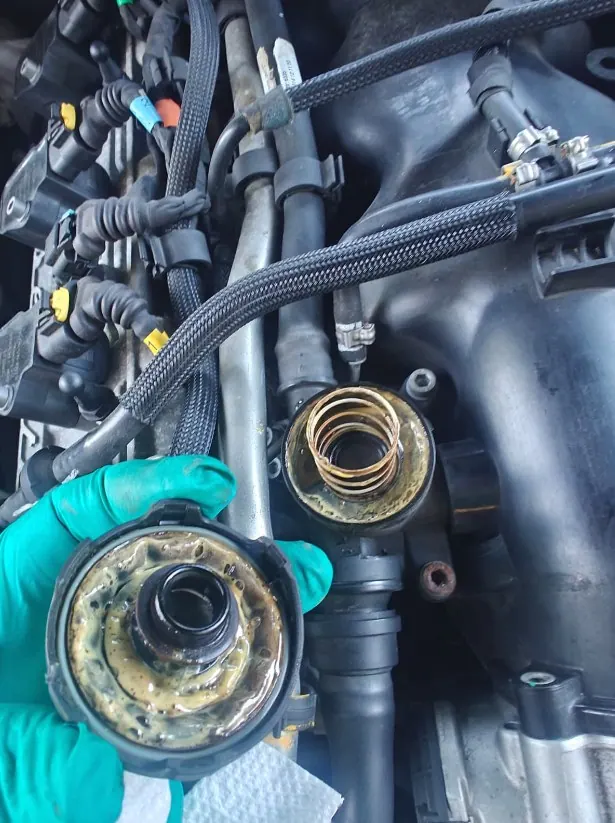
Failed PCV valve cover from a Maserati Ghibli held in a gloved hand, its inside coated in oily yellowish sludge, next to the open valve housing with its spring on the engine
Maserati Ghibli

Maserati Ghibli Check Engine Light: A Failed PCV Valve, Coated in Sludge

A Maserati Ghibli came in with the check engine light on. The cause was the PCV valve — the small diaphragm valve that controls crankcase ventilation. With its cover off, the inside was coated in oily, yellowish residue and the valve had failed. A new PCV valve fixed it. Here is what it looked like and why such a small part turns the light on.

Read the write-up
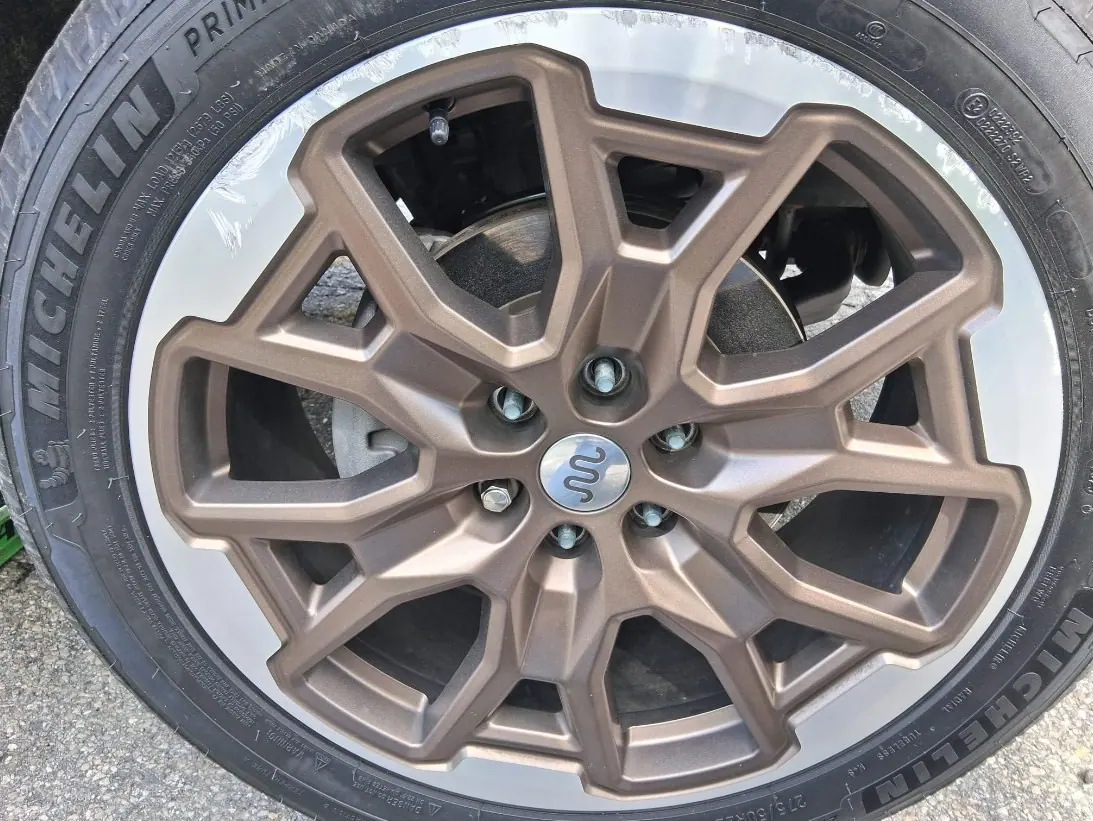
Refinished two-tone wheel on a Ford Expedition King Ranch: bronze spokes, bright outer face and the King Ranch center cap, on a Michelin tire
Ford Expedition King Ranch

Ford Expedition King Ranch Wheels Refinished in Two-Tone Bronze

The wheels on a Ford Expedition King Ranch, refinished in their two-tone look: bronze spokes and a bright outer face. Here is how they came out, and why a refinish is often the better answer than new wheels.

Read the write-up
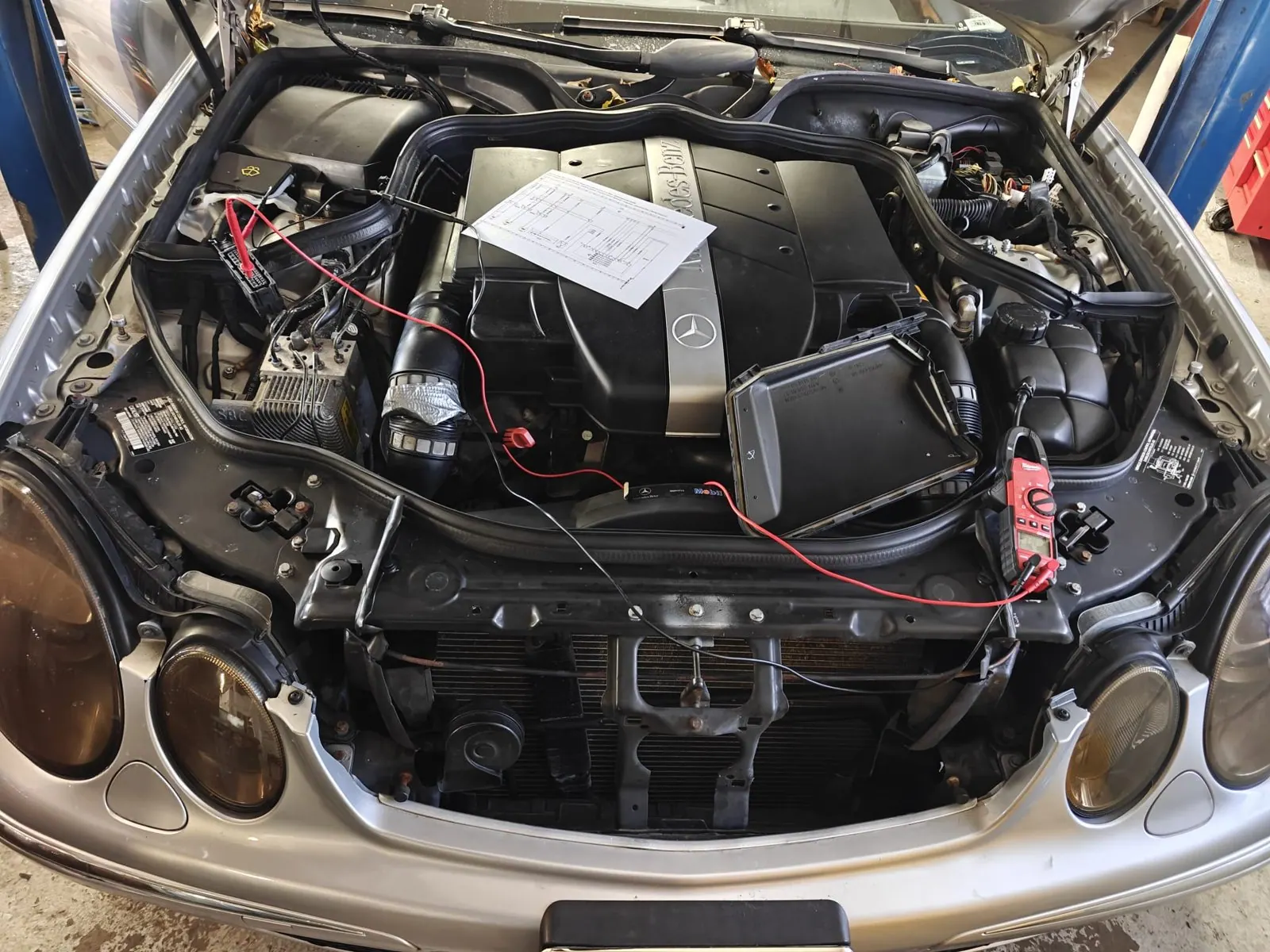
Engine bay of a silver Mercedes-Benz E320 wagon with a printed wiring diagram on the engine cover, test leads back-probing the SBC brake unit connector and a clamp multimeter on the radiator support
Mercedes-Benz E320 Wagon

Mercedes E320 Wagon SBC Brake Fault: Traced to a Corroded Connector

A Mercedes-Benz E320 wagon came in with an SBC brake system fault. The SBC unit itself is the expensive guess; we traced the circuit with the wiring diagram and a multimeter instead, and found a corroded connector in the rear of the car with green and orange corrosion on its terminals. The connector was repaired and the fault was gone.

Read the write-up
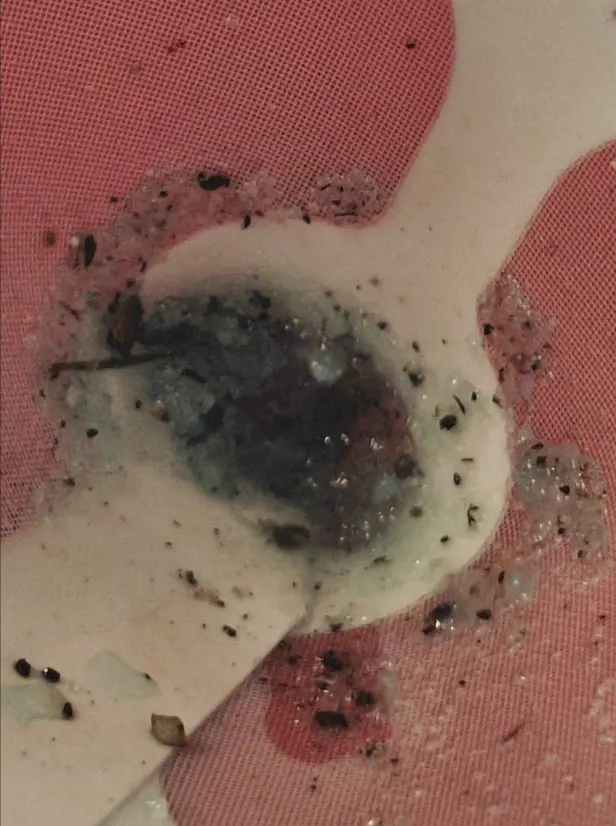
Dark debris and gritty deposits caught in a strainer after draining old coolant from a 2017 Volkswagen Jetta
2017 Volkswagen Jetta

Volkswagen Jetta Coolant Flush: What Aged Coolant Leaves Behind

A 2017 Volkswagen Jetta came in for a coolant flush. What came out of the system — debris caught in the strainer, and crusted deposits around the bottom of the radiator — is exactly why aged coolant is worth replacing on time, before it clogs the system and turns into overheating or a heater that stops working.

Read the write-up
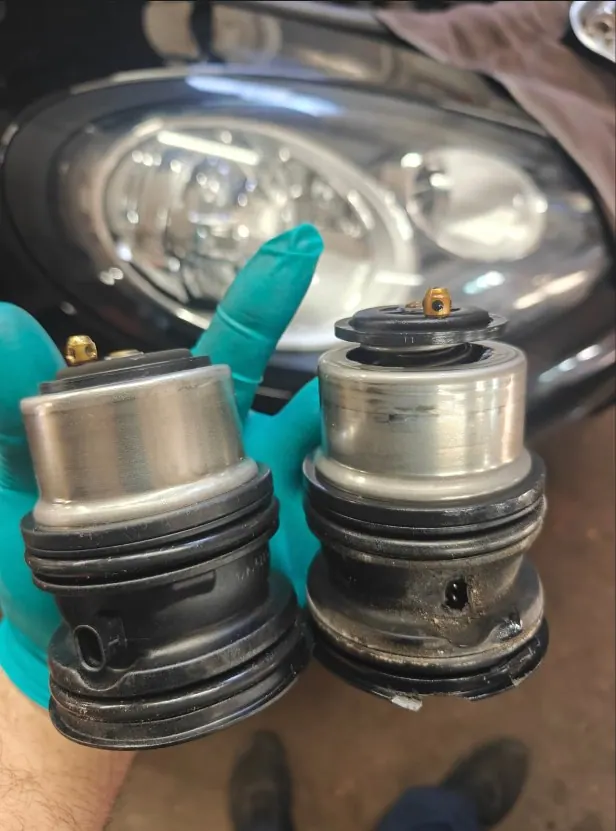
Gloved hand holding the new OEM coolant thermostat next to the old, dirty thermostat from a Porsche Panamera, in front of the car’s headlight
Porsche Panamera

Porsche Panamera Check Engine Light: Thermostat Stuck Open

A Porsche Panamera came in with the check engine light on. The cause was a coolant thermostat stuck open, so the engine was not reaching its proper operating temperature. We replaced it with an OEM thermostat and performed a complete coolant system flush. Old and new side by side.

Read the write-up
Gray 2022 Alfa Romeo Giulia raised on a two-post lift at Iron Wolf Motors in Worcester, MA, hood open, with a technician inspecting underneath
2022 Alfa Romeo Giulia 2.0 Turbo

Alfa Romeo Giulia at 60,000 Miles: What the Scheduled Service Actually Includes

A 2022 Alfa Romeo Giulia 2.0 turbo came in for its 60,000-mile service, with an owner who wanted it done by a shop they trust with an Alfa. Oil and filter, original-equipment spark plugs, engine and cabin air filters, a brake and suspension inspection, and everything else re-checked against the mileage schedule. Here is what that looks like on the car.

Read the write-up
White 2017 Maserati Levante in the lot at Iron Wolf Motors in Worcester, MA, photographed low from the front corner on arrival for a wheel alignment
2017 Maserati Levante

Maserati Levante, Booked In for an Alignment: Why We Replaced the Tie Rod Ends First

A 2017 Levante came in for a wheel alignment. On the lift, both outer tie rod ends were visibly bent, and with the wheels off the front brakes showed clear wear — a raised lip on the rotor edge and deep scoring across the faces. Rotors out of spec, pads worn: all of it replaced, then the car was aligned.

Read the write-up
Black Mercedes-Benz GLA250 with the hood raised on arrival at Iron Wolf Motors in Worcester, MA, showing the M270 four-cylinder turbo engine before the oil leak was traced
Mercedes-Benz GLA250

Mercedes-Benz GLA250, Towed In Leaking Oil: A Cracked Oil Cooler, Not a Gasket

A GLA250 arrived on a flatbed with oil still dripping off the underside. The leak was not a seal or a gasket — the oil cooler itself was cracked. Replaced as a complete genuine Mercedes filter housing assembly, with an oil service and a coolant flush to finish.

Read the write-up

See all documented repairs