An oil change is the single cheapest way to protect your engine — but only when it’s done with the correct oil and a quality filter. “Cheap and fast” shops too often use the wrong grade, skip the filter, or rush past obvious problems. Here’s what a proper oil change service actually involves, and why it’s worth doing right.
Why the right oil matters more than you think
Engine oil does five jobs at once: it lubricates, cools, cleans, seals, and protects against corrosion. Modern engines run tight tolerances and demand a specific viscosity and an approved specification.
Using an oil that’s too thick, too thin, or simply not approved for your engine can trigger warning lights, accelerate wear, hurt fuel economy, and — on many European cars — even affect your warranty. “5W-30” alone isn’t a spec; the approval printed next to it is.
How often should you change your oil?
- Full-synthetic: typically 5,000–7,500 miles.
- Synthetic blend: around 5,000 miles.
- Severe service (short trips, towing, heavy idling, extreme heat or cold): sooner.
- Always follow your manufacturer’s interval and your car’s oil-life monitor.
What a proper oil service includes
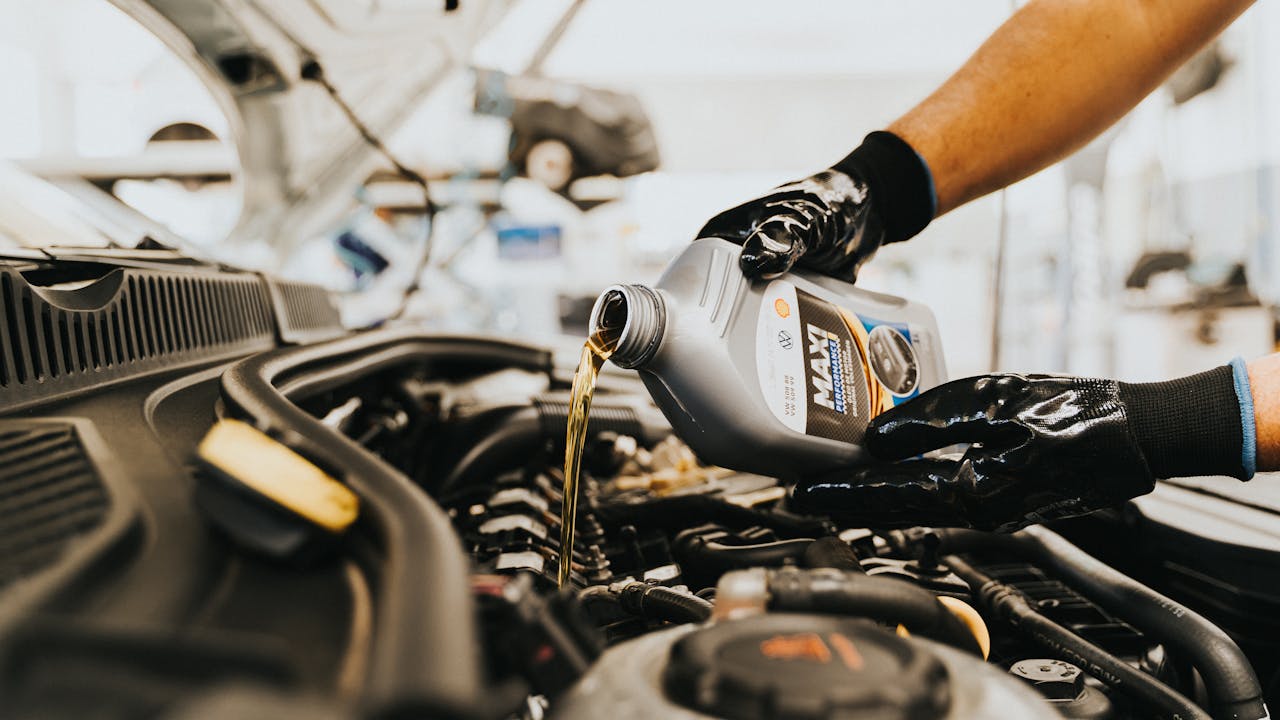
- Drain the old oil and remove the old filter completely.
- Install a new OE-grade filter — never reused, never skipped.
- Refill with the exact specification and viscosity your engine calls for.
- Reset the oil-life / service-reminder system.
- Carry out a free multi-point inspection (brakes, tires, belts, fluids).
- Top off washer, coolant, and other fluids to level.
That inspection is where we catch small problems early — a weeping brake component, low coolant, or a tire wearing oddly because the car needs an alignment.
European and diesel oils are a different story
BMW, Mercedes-Benz, Audi, Volkswagen, Volvo, and many diesels require approved long-life oils to precise standards (BMW LL-04, MB 229.x, VW 504/507, GM dexos, ACEA grades). We stock the right approved oils so we never substitute a cheaper generic. If you drive a German or European car, see our European specialists service.
Why you can trust Iron Wolf Motors with it
We show you the oil and the spec we’re using, we never reuse a filter, and we tell you honestly when something needs attention versus when it can wait. No upsells, no scare tactics — just honest maintenance.
Curious whether the filters and parts we use are “OEM”? We break that down in aftermarket vs OEM parts.
Frequently asked questions
Synthetic or conventional oil — which do I need?
It depends on your engine. Many newer and European cars require full-synthetic to a specific approval (like dexos or ACEA). We use exactly what your manufacturer calls for rather than a cheaper substitute.
Is it bad to drive past my oil-change interval?
Occasionally a little over is usually fine, but consistently overdue oil breaks down, sludges, and accelerates engine wear. It’s cheap insurance to stay on schedule.
Do you use a quality oil filter every time?
Yes — a new OE-grade filter on every service. A clogged or cheap filter can bypass and send unfiltered oil through your engine, so we never cut that corner.
How long does an oil change take?
Most are done while you wait, usually in under an hour, including the free multi-point inspection.
What counts as “severe service” for oil changes?
Lots of short trips, towing, heavy idling, or extreme temperatures. Much of Worcester’s stop-and-go winter driving counts, so those drivers often benefit from shorter intervals.