Tesla Model 3 Repair & Service in Worcester, MA
Model 3 brakes, suspension, 12V and high-voltage diagnostics — in Worcester.
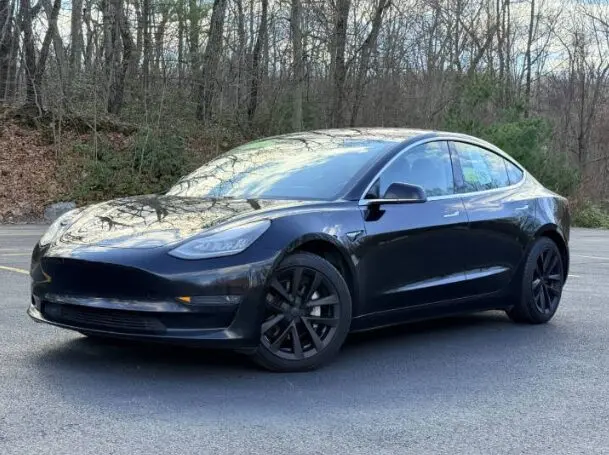
The Model 3 is the most common Tesla on Massachusetts roads, and after a few Massachusetts winters it needs the same things most often: brake calipers that have been seized by salt rather than worn out, front suspension noises, a low-voltage battery that stops the car waking up, and the occasional high-voltage fault. Iron Wolf Motors services the Model 3 on Stafford Street in Worcester with Tesla Toolbox 3 for diagnostics — brakes, suspension, alignment, 12V and coolant — and inspects before replacing, as on the Model 3 that arrived with a fired pyro fuse.
Backed by our 12-month / 12,000-mile warranty on new parts.
What’s in a Model 3, and why it matters for service
Single-motor rear-wheel drive, or Dual Motor all-wheel drive (Long Range, Performance)
Double-wishbone front, multi-link rear, coil springs — no air suspension
12-volt lead-acid on earlier cars; lithium-ion low-voltage battery on later cars
Resistive heater on early cars; heat pump from the 2021 model year
What we see — and fix — most
Regenerative braking does most of the stopping, so the friction brakes barely wear — and in a salt state that is the problem. Slide pins seize and pads stick while they still look new, which shows up as a grinding noise, uneven pad wear or a drop in range. Tesla’s own schedule calls for the calipers to be cleaned and lubricated every year in salt-belt states; we do exactly that.
Front upper control arms and their ball joints are a well-known noise source on the Model 3, especially over speed bumps and on cold mornings. We find the noisy joint on the lift and replace the part that is actually worn, then align the car.
When the 12-volt or low-voltage battery weakens, a Model 3 may refuse to wake, lose its door handles, or show a battery warning — even with a full high-voltage pack. We test it under load and replace it with the correct type before chasing anything else.
Alerts like a fired pyro fuse or contactor and precharge faults need inspection, not just a part. A pyro fuse is a one-shot safety device that does not blow on its own, so we look for the reason it fired first — on one Model 3, a chafed high-voltage cable that was still shorting.
Instant torque and a heavy battery wear tires quickly, and a slightly-off alignment wears the inner edges fast. We rotate, balance and align to Tesla specification and read the tread for early warning signs.
The battery pack forms most of the floor, so a Model 3 must be lifted only at its designated lift points with the right pads. A floor jack under the pack can damage it. Every Model 3 goes on our lift the way Tesla specifies.
Real Model 3 jobs from our bays

Dealer-level work, independent pricing
Calipers cleaned and lubricated every year in salt-belt states, as Tesla’s schedule calls for, plus a brake fluid check.
About every 6,250 miles, or sooner when the tread depth difference between tires reaches 2/32".
Replaced on schedule for clean airflow and a defroster that works properly in winter.
Tested every fall, before the first cold snap finds a weak one.
Control arms, ball joints, links and bushings checked on the lift for play and noise.
Stored alerts read and explained in writing, so small faults are caught before they become a tow.
Model 3 owners often ask
Does a Tesla Model 3 need brake service if the pads aren’t worn?
In Massachusetts, yes. Regenerative braking means the pads rarely wear out, but road salt seizes the caliper slide pins and sticks the pads. Tesla’s maintenance schedule calls for the calipers to be cleaned and lubricated every year in cold-weather areas where roads are salted. That is a short job that stops a much more expensive one.
Why is my Model 3 creaking over bumps?
Most often the front upper control arms or their ball joints. It is a well-known Model 3 noise that tends to be worse on cold mornings and over speed bumps. We confirm which joint is making it on the lift before replacing anything, and align the car afterward.
Can an independent shop work on a Model 3’s high-voltage system?
With the right training, tools and procedures, yes. We run Tesla Toolbox 3, follow high-voltage safety procedures, and have diagnosed and repaired Model 3 high-voltage faults, including a fired pyro fuse. Warranty repairs and recalls still go to Tesla.
How often should Model 3 tires be rotated?
Tesla recommends about every 6,250 miles, or sooner if the tread depth between tires differs by 2/32" or more. Regular rotation matters on a Model 3 because the instant torque wears the driven tires faster.
How we keep your Model 3 running
EV & Hybrid Service
Specialized service, diagnostics, and repair for electric and hybrid vehicles — done right.
Learn moreBrake Repair & Service
Pads, rotors, calipers, and brake-fluid service done right — quiet, confident stopping you can trust.
Learn moreSuspension & Steering Repair
Clunks, pulling, a loose wheel or a bouncy ride — shocks, struts, control arms, tie rods, ball joints and air suspension repaired.
Learn moreBattery, Alternator & Starter Repair
Slow crank, clicking or a dead battery every morning — battery, charging and starting systems tested properly, then repaired.
Learn moreLearn more before you book

Independent Tesla Service in Massachusetts: What We Can Do, and What Only Tesla Can
An honest breakdown of which Tesla work an independent shop can take on, which jobs genuinely have to go to a Service Center, and the maintenance items New England quietly adds to every Model 3 and Model Y.
Read article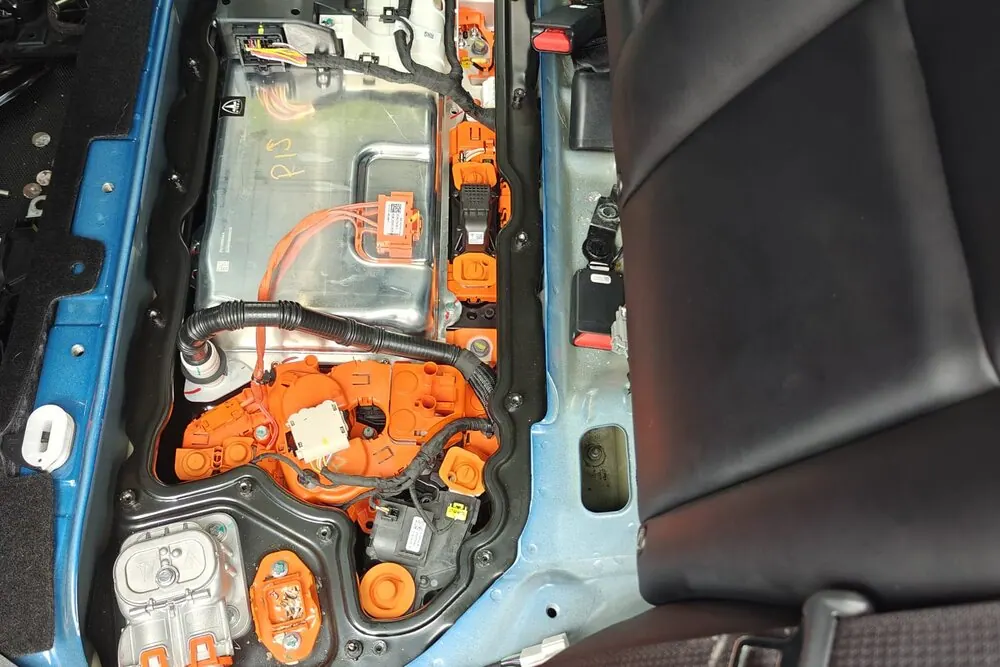
Your Tesla or EV in a New England Winter: Range, Charging and the Low-Voltage Battery
Why a Tesla or EV loses range in a Worcester winter, how to precondition and charge in the cold, and the low-voltage battery check that prevents a no-start.
Read article
EV Battery Health Checks: How We Test Your Battery and Why It’s Worth Doing
Your EV or hybrid battery is its most valuable part. A periodic health check catches degradation early, protects resale value, and gives you peace of mind. Here’s how it works.
Read articleReady to get your Model 3 in?
Book online or call — factory diagnostic tools, written quotes, 4.7★ from 77 Google reviews.
We service the whole Tesla range
Iron Wolf Motors is an independent repair facility and is not an authorized Tesla dealer, nor affiliated with, sponsored by, or endorsed by Tesla. Tesla, Model 3 and their logos are trademarks of their owner, used here only to identify the vehicles we service.
Didn’t find your make? No problem.
We repair all makes and models — gas, hybrid, and electric. Call us or send a message and we’ll get back to you as fast as possible.