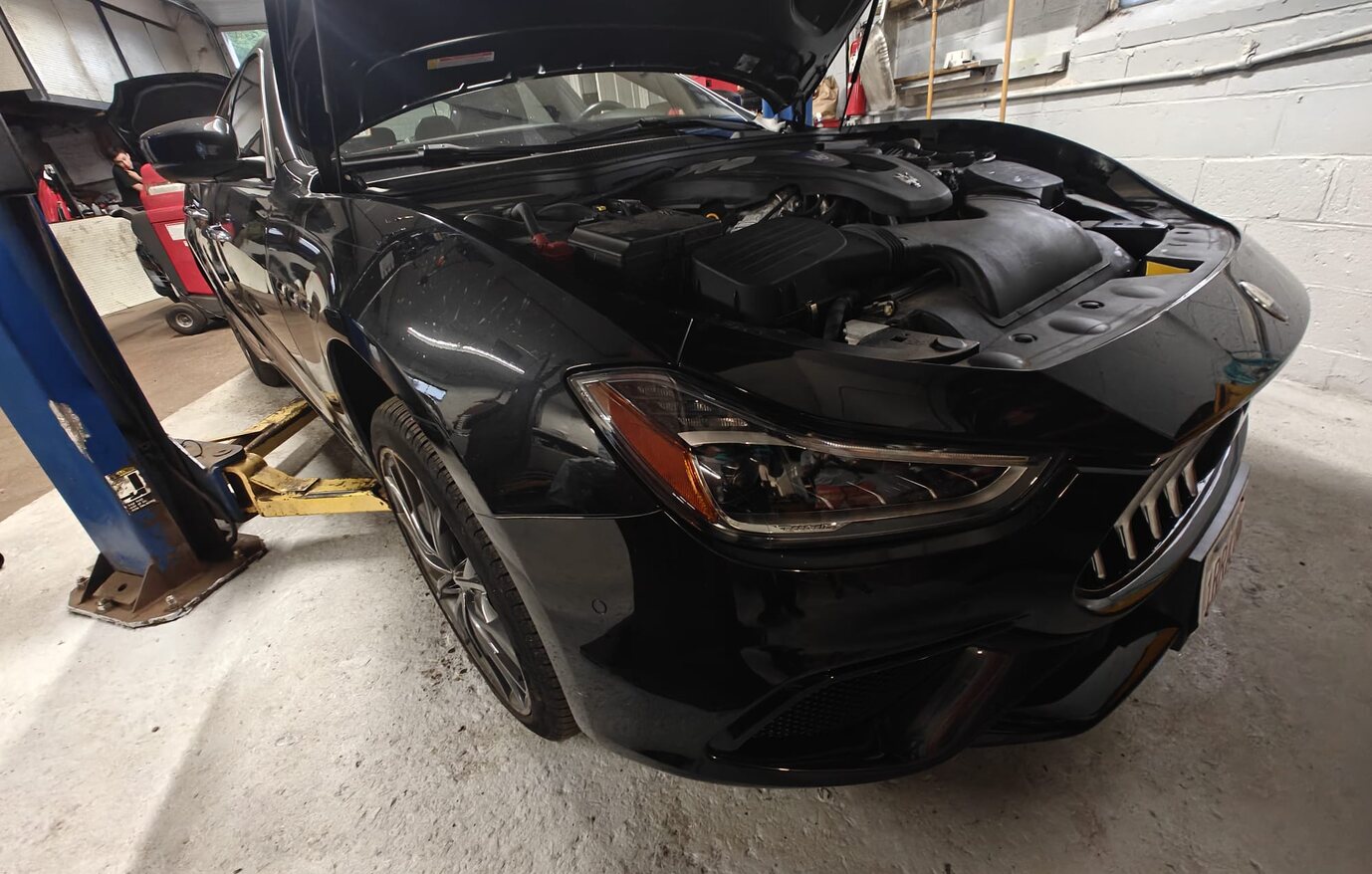
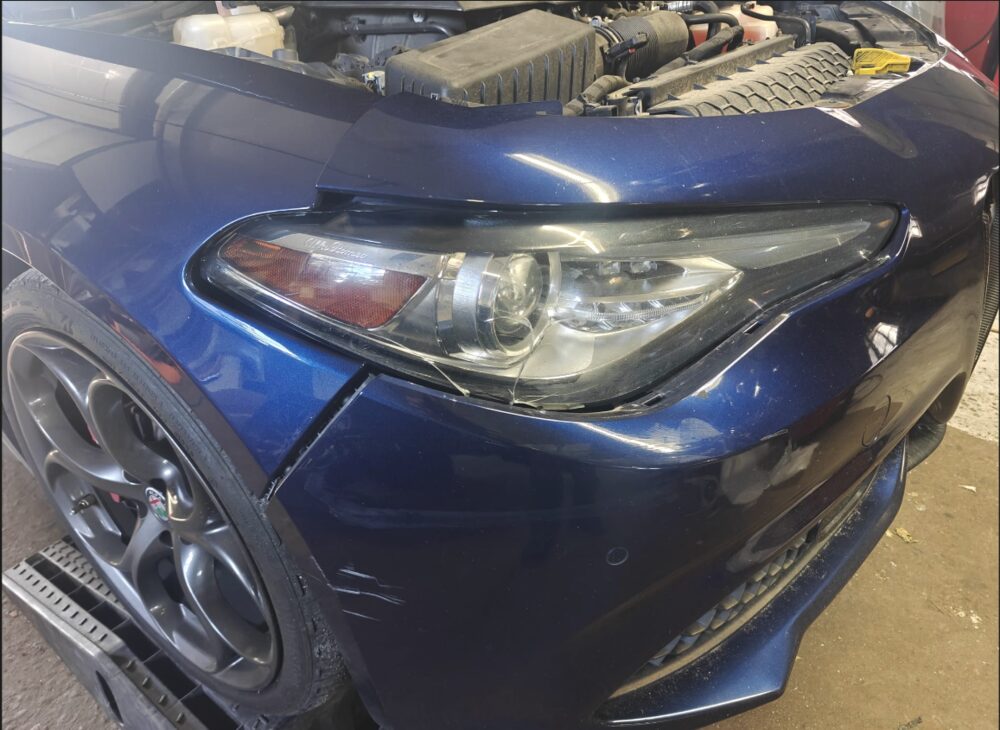
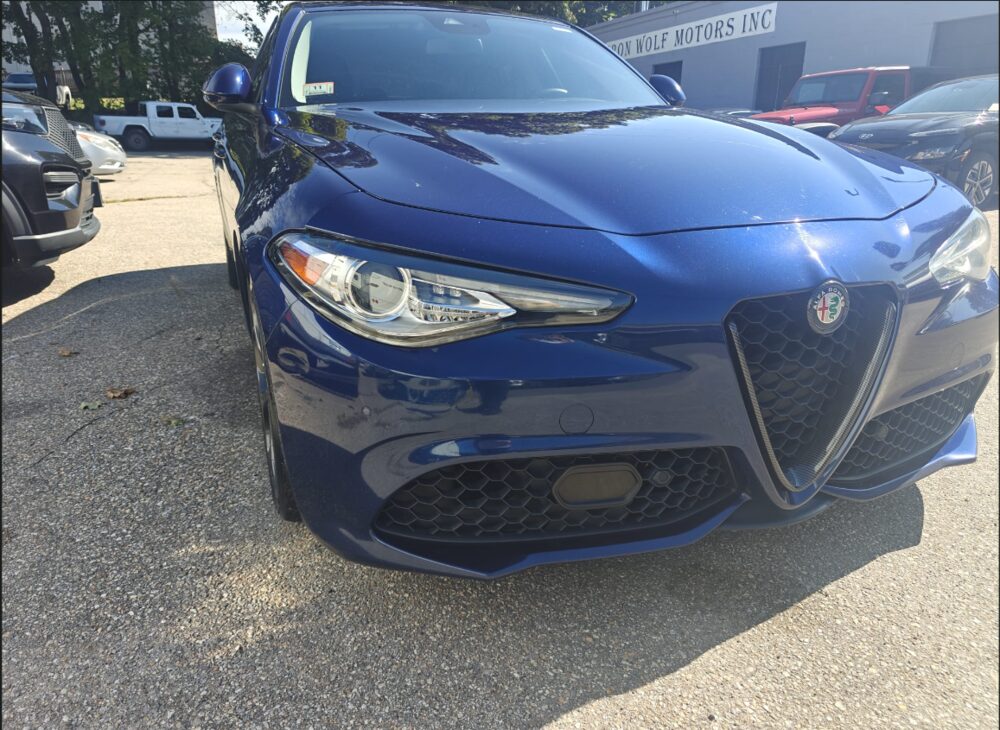
This dark blue Giulia came in with the kind of damage that looks minor from ten feet away and stops being minor the moment you price the parts: a cracked outer headlamp lens, a bumper corner pushed out of line, and a scuffed fender. One parking-lot-speed impact. On a car from twenty years ago it would have been a headlight, a bumper cover and an afternoon. On a modern Alfa Romeo it is a rather different conversation — and worth understanding before you get the estimate.
Why a modern headlight isn’t a “bulb job” any more
Depending on year and trim, a Giulia or Stelvio left the factory with bi-xenon or full-LED headlamps. Either way, what is bolted behind that lens is a sealed optical assembly: projector optics, LED boards or a xenon burner and its igniter, a ballast or driver module, the daytime-running-light signature, a leveling motor, and on the adaptive units a control module that steers the beam as you turn.
Almost none of that is sold separately. The manufacturer sells you the whole housing, sealed at the factory, and the price reflects it — an OE assembly for these cars generally lands in four figures before labour. That single fact drives every decision that follows.
What actually goes wrong with these headlights
- Impact damage — a cracked lens or, more often, snapped mounting tabs. The car in these photos had both the lens and the surrounding panels affected.
- Moisture and condensation — headlamps are vented, so a light mist that clears as the lamp warms up is normal. Water that pools in the bottom, or fog that never leaves, means a failed seal or a crack somewhere you cannot see.
- LED or xenon failure — a dead section of the DRL strip, a xenon burner that has gone pink or flickers, or a failed ballast or LED driver. Some of these are individually replaceable, many are not.
- Leveling-motor and adaptive faults — the lamp aims itself low, high, or hunts up and down. Frequently the motor or a ride-height sensor rather than the lamp.
- Hazing and yellowing — the factory UV coating on the polycarbonate lens breaks down with age and sun. Output can drop dramatically while the lamp still “works”.
- Wiring and connector damage — corroded or melted connectors behind the lamp, a common find after water has been getting in for a while.
Repair or replace? The honest split
Given what a new assembly costs, the first job is finding out whether you actually need one. Broadly:
Usually repairable
- Broken mounting tabs — the most common “write-off” that isn’t one. The lamp is fine; the plastic ear that holds it is snapped. These can often be rebuilt properly rather than binned.
- A failed seal or minor lens crack — cleaned, dried and resealed before water reaches the electronics.
- Hazed, yellowed lenses — restoration with a proper sealed UV coating restores most of the lost output, and costs a small fraction of a housing.
- External electronics — ballasts, igniters, leveling motors and wiring that sit outside the sealed section.
- Aim that has drifted — a headlamp that lights up the trees or the tarmac instead of the road often just needs setting.
Usually replacement
- Cracked or crazed internal reflectors and projectors — nothing to be done once the optics themselves are damaged.
- Dead LED boards inside a sealed unit — no serviceable path in on most designs.
- Long-term water damage — corroded connectors and a failed internal module.
- Structural damage to the housing body — a lamp that can no longer be located accurately will never aim correctly.
What you should expect from any shop is that they look before they quote. We will tell you which category your lamp falls into, in writing, with the price for each option — and if the honest answer is that the housing has to be replaced, you will hear that too.
OE, OE-equivalent, or the cheap one off the internet
Once replacement is on the table, the price gap between a genuine Alfa Romeo assembly and a no-name copy is wide enough to be tempting. It is worth knowing what the gap buys.
- Fit and alignment — headlamps set the panel gaps for the entire front of the car. A copy that sits two millimetres proud is visible forever, on a car whose face people actually look at.
- Beam pattern — the reason the good ones cost what they do. A poor projector throws a fuzzy, scattered pattern that dazzles other drivers and lights the road worse than the lamp you replaced.
- Matching signature — the DRL and indicator look have to match the other side. Colour temperature and shape differences between an OE lamp and a copy are obvious at night.
- Electronics that speak the right language — CAN-controlled lamps that the car does not fully recognise can throw persistent faults or refuse features like adaptive beam.
Our general position is the same one we take across the whole shop: genuine or genuine-equivalent parts, from a supplier who stands behind them. We go into the reasoning in aftermarket vs OEM parts. Alfa is a Stellantis brand, so parts availability is rarely the bottleneck people expect — the same supply chain as the Jeep and Ram work we do every week.
The part nobody mentions: the lamp has to be set up
Bolting the assembly in is the easy half. On a car with xenon or LED headlamps, three things generally follow:
- Aim. Every replaced headlamp needs its beam set on the vertical and horizontal — measured against a target, not eyeballed against a garage wall. This is also an inspection item.
- Leveling calibration. These cars self-level their headlamps using ride-height sensors. If a lamp, a sensor or suspension components have been disturbed, the system needs its zero point re-taught or the beam sits permanently wrong.
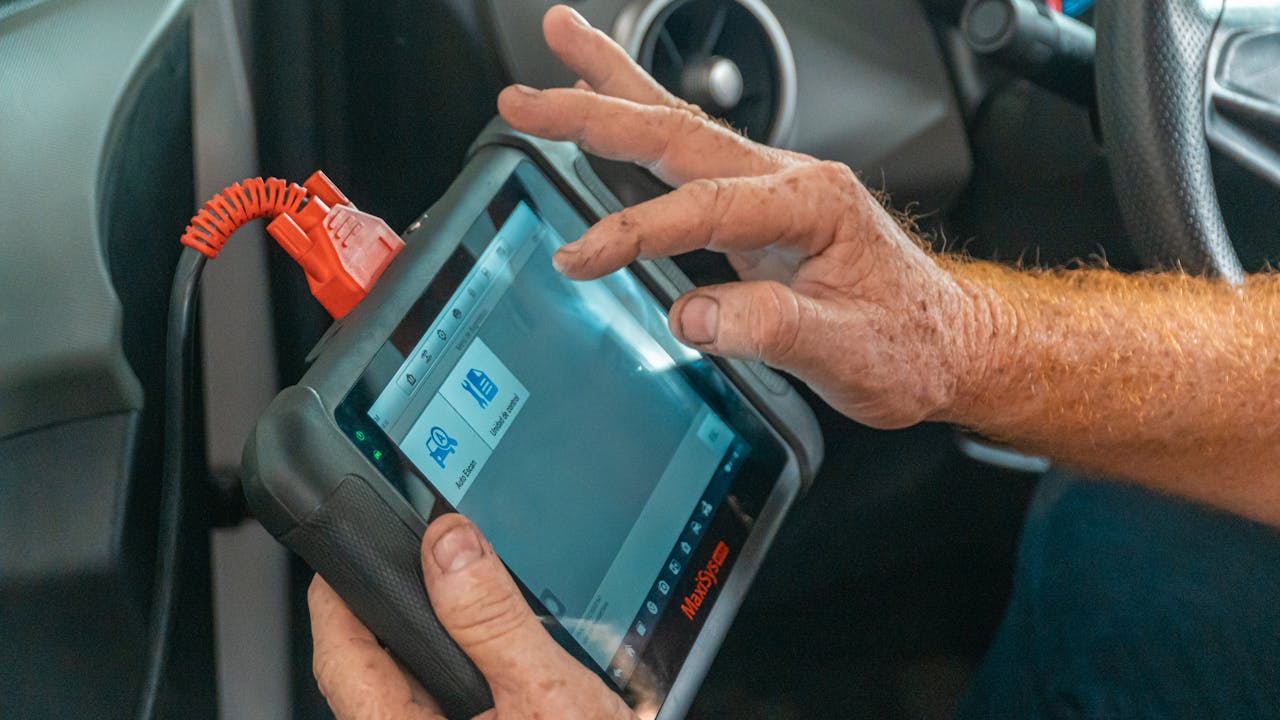
- Module recognition and fault clearing. On adaptive units, the car has to see and accept the new lamp. Where the assembly carries its own control module, that step is a programming and coding job, and until it is done you keep a light on the dash.
This is where a lot of cheap headlight jobs come unstuck — the part goes in, the aim is never set, the fault never clears, and the owner concludes the new lamp is faulty. Scan-tool work on these cars is electrical diagnostics, not guesswork; the same discipline we apply to any European car.
Insurance, and why the estimate looks the way it does
If the damage came from a collision, headlamps are usually the single biggest line on the estimate for a European car — often more than the bodywork around them. Two things are worth knowing. First, you choose the shop; an insurer can recommend one, but the decision is yours. Second, ask specifically what is being quoted: a genuine assembly, an aftermarket copy, or a used unit are three very different repairs at three very different prices, and the estimate does not always make that obvious.
Why this matters beyond the way it looks
A damaged headlamp is a safety item, not a cosmetic one. In Worcester the sun is down before 4:30 in December, so a serious share of your driving happens in the dark. A hazed lens can cut usable light dramatically, a misaimed lamp either blinds oncoming drivers or lights ten feet of pavement, and a cracked housing lets in the water that ends up destroying the electronics inside — turning a reseal into a replacement over one winter.
It is also an annual inspection item in Massachusetts: lights have to work, be the correct colour, and be properly aimed. If your sticker is due, it is worth handling the lamp in the same visit as the rest of your autumn checklist.
Alfa Romeo headlight work in Worcester
Iron Wolf Motors is on Stafford Street in Worcester, and the nearest authorized Alfa Romeo service department is on the far side of the state — which is a long way to drive to be told your headlight is expensive. We will inspect the lamp, tell you honestly whether it can be repaired or has to be replaced, source the right part, fit it, and set it up properly — aim, leveling and any coding the car needs.
Details of what else we handle for these cars are on the Alfa Romeo repair page, and there is more background on independent service for Italian cars in Maserati & Alfa Romeo service in Central Massachusetts. Quote before anything is touched, as always.
Frequently asked questions
How much does an Alfa Romeo headlight replacement cost?
It depends almost entirely on the part. Genuine xenon and LED assemblies for the Giulia and Stelvio are typically four-figure items before labour, which is why it is worth confirming that replacement is genuinely necessary first — cracked mounting tabs, a failed seal, or a hazed lens can often be repaired for a small fraction of that. Bring the car in and you will get a written quote covering each option that actually applies.
Can a cracked headlight be repaired instead of replaced?
Often, yes. Broken mounting tabs, a failed seal, small lens cracks and hazed or yellowed lenses are all commonly repairable. What is not repairable is damage inside the sealed section — cracked reflectors or projectors, failed internal LED boards, or corrosion after long-term water ingress. The only way to know which you have is to inspect the lamp.
Why is there condensation inside my Alfa Romeo headlight?
Headlamps are vented, so light misting in cold or damp weather is normal and should clear within about twenty minutes of the lights being on. Fog that never clears, or standing water in the bottom of the lamp, means the seal or the housing has been breached. Fixed early that is a reseal; left alone the water reaches the electronics and you end up buying the whole assembly.
Do new headlights need to be programmed or calibrated?
Xenon and LED headlamps always need their aim set after replacement. Cars with automatic headlamp leveling generally need the leveling system recalibrated with a scan tool, and adaptive units that carry their own control module usually need to be recognised by the car before the fault light clears and the features work. Skipping those steps is why a lot of replacement headlights appear not to work properly.
Will a hazy headlight fail Massachusetts inspection?
It can. The annual safety inspection covers whether your lights work, are the correct colour, and are properly aimed, and a badly clouded or fogged lens that cuts output or scatters the beam is a legitimate failure. Lens restoration is inexpensive and usually restores most of the lost light.
Do I have to use my insurer’s recommended shop for headlight damage?
No. An insurance company can recommend a shop, but choosing where your car is repaired is your decision. It is worth asking what the estimate is actually based on — a genuine assembly, an aftermarket copy, and a used unit are three different repairs, and on a European car the headlamp is often the largest single item on the bill.